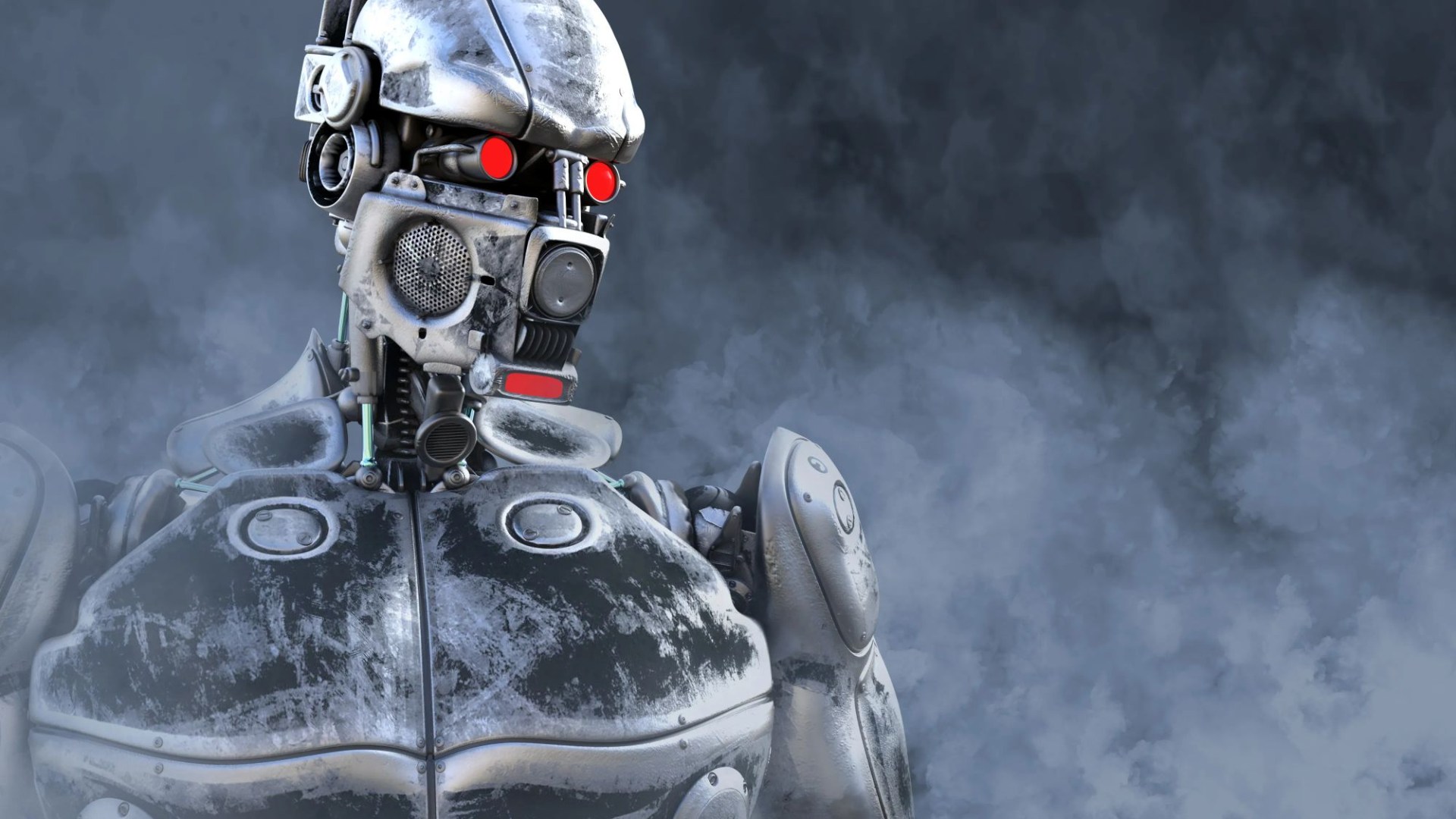
EUROPE could be heading for a future so dark it sounds like it’s ripped from a science fiction script, according to a bombshell EU police report.
A 48-page study by Europol predicts that robots could groom children and terror drones could cripple cities, all within the next decade.
The bleak report also envisions angry unemployed mobs rioting against machines they blame for stealing their jobs.
Cops armed with “robo freezer guns” and “nano net grenades” are pictured blasting swarms of terrorist drones threatening to cut off electricity and water supplies.
Critics say these Hollywood scenes are over the top, but Brussels insists they are “plausible future scenarios”.
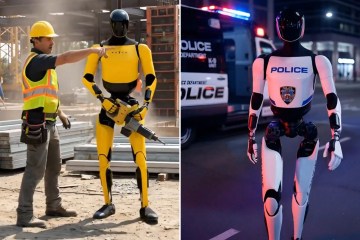
Researchers sketch out a world where robots are a “fixture of daily life across Europe, gliding silently through shopping centres, delivering parcels to fifth-floor flats and cleaning public transport platforms by night.”

Hard-up “displaced workers” are imagined driven to the brink and taking to the streets for bouts of furious “bot bashing”.
The report adds: “In this uneasy climate, even minor malfunctions, such as a hospital care robot administering the wrong medication, are magnified into national scandals, fuelling populist calls to ‘put people first’.”
One of the most chilling warnings claims cyber crooks could hijack AI-powered care robots, turning helpers into predators able to harvest personal data or even groom vulnerable people.
The report also claims that “the empathetic capabilities of social robots might, in the future, be abused by criminal and terrorist actors for a variety of malicious activities.”
Terror groups are tipped to unleash swarms of “pocket-sized” AI-driven quadcopters scavenged from the Ukraine war to sabotage power and water networks or bust criminals out of prison.
Mexican cartels and Islamic extremist networks are already mastering cheap drones.
And security experts say governments must wake up to this new era of terror technology.
Cops across the UK, Belgium, China and Australia are already firing nets and lasers at hostile drones.
Europol insists human-robot teamwork is set to become vital in future policing, with officers and machines responding to emergencies and gathering evidence together.
Police may find their day-to-day activities, like “patrolling” and “traffic management”, quietly handed to machine replacements, and creating animosity in the ranks.
The report even raises the nightmare of seized robots slipping custody.
An info-box explains the headache of “questioning a robot” and how police might struggle to tell if a driverless car caused an accident by mistake or on purpose.
The warnings are backed by real life examples.
Chilling CCTV footage from a Chinese factory showed a humanoid robot lashing out at its handlers.
Experts warned of weaponised “AI girlfriends” built with a malicious design to steal cash from victims.
Criminal crews are also turning to drones to ferry contraband, spy on drug labs and even attack rivals.
In July, the Colombian Navy seized drugs from an unmanned narco submarine guided by Starlink.
Some pilots are openly touting their services to gang bosses online.
But tech boss Denis Niezgoda from Locus Robotics, which builds AI-powered warehouse bots, rubbished the idea of Robocop-style officers roaming the streets anytime soon.
Niezgoda told The Telegraph: “There are not only technical barriers but regulatory barriers to some of those very extreme scenarios becoming a reality by 2035.
“I don’t see Robocop crossing our streets and policing, I simply don’t believe that robots will erase work.”
He says drones mapping crime scenes and robots tackling dangerous rescues make sense, but much of the forecast is “very extreme”.
Workers fearing for their livelihoods are also barking up the wrong tree, he insists.
“The natural question that always comes up is, ‘is this going to take my job?’
“But the reality is we don’t get enough people to do this job, a) because most European countries have an ageing demographic, there’s less labour available.
“B) At the same time people don’t want to do it, it’s not a very pleasant environment and we look to automate that.
“You take away the dust, dullness, and dangerousness away from people.”
He adds that human command in policing will stay, although drone battles between cops and criminals could erupt thanks to the cheap and easy kit pouring out of the Ukraine conflict.
A Europol spokesman stressed the agency “can’t predict the future” and said the goal was simply to “anticipate plausible future scenarios that enable us to make more informed decisions today”.