Do you procrastinate? You’re not alone: almost everyone does to one degree or another. To use myself as an example, one item appeared on my to-do list for more than two years: writing my will.
I knew it was a good idea to do it, I wanted it to be done, and yet repeatedly I began almost everything else on the list without getting round to it.
Mostly, procrastination like this is a relatively unimportant problem. It only really starts to matter if it becomes part of a chronic pattern – which it does for as many as a fifth of adults.
At the extreme, it can lead to missed deadlines, substandard work and the added stress of feeling guilty about your inaction.
It can even have an impact on your health, if, for instance, you constantly postpone exercising or eating more healthily or getting a potentially serious medical problem checked out.
And in the end it can threaten to overwhelm us.
You might think that procrastination is a time-management problem. However, research shows that it’s actually an emotion-management problem.
Scans of the brains of procrastinators show that they tend to differ from the non-procrastinators’ brains in two notable areas – the parahippocampal cortex and the prefrontal cortex.

At the extreme, procrastination can lead to missed deadlines, substandard work and the added stress of feeling guilty about your inaction, writes Claudia Hammond

Research shows that procrastination is actually an emotion-management problem
The first of these regions is one that we use when we consider the future, when we’re planning ahead. If the rewards feel a long way off, we tend to procrastinate more.
But the second area relates to our capacity for what’s known as emotional regulation – how good we are at changing how we feel – cheering ourselves up when we feel sad, for example, or how much we can stop ourselves worrying.
Procrastinators, it turns out, can lack some of these skills.
So, if we are to procrastinate less, we need to do something more fundamental than manage our time better. We need to manage our emotions – which isn’t an easy thing to do.
As Fuschia Sirois, a professor in social and health psychology, told me in an interview for my podcast, ‘Often we look down on procrastinators – “Just get on with it, what’s the matter with you, just do it!”
‘But it’s not about that. It has a lot to do with people’s emotional states and the way that they manage those negative moods.’
So it’s important to try to understand what is happening when we procrastinate.
We fear that we’ll fail, so instead of getting on with the task, we put it off and choose another one which we are more confident we can complete successfully.
In the long term there are negative consequences, but in the short term our worries melt away.
Sometimes procrastination is simply a case of dreading or disliking the task we’re faced with. I kept putting off cleaning the muck from my gutters because it was a dirty and difficult job and almost anything else was preferable.

If we are to procrastinate less, we need to do something more fundamental than manage our time better. We need to manage our emotions – which isn’t an easy thing to do

Sometimes we convince ourselves that in the future we’ll make a better job of the daunting task we’re putting off. This, of course, makes delay feel like a doubly good idea
At other times, our tendency to procrastinate is a manifestation of deeper fears. This was the case with my will, as it meant thinking about my own death. It meant making difficult decisions about who to trust with my affairs; it was bound to bring up uncomfortable feelings.
All in all, it felt much easier to put it off to another time and do something less onerous instead.
Suddenly, cleaning out the gutters didn’t seem quite so bad after all.
Fear can also be involved when we postpone making decisions.
This can lead to a state of paralysis, where you’re so afraid of making the wrong decision that you seek out more and more information before committing. The result: you make no progress at all.
Sometimes we convince ourselves that in the future we’ll make a better job of the daunting task we’re putting off. This, of course, makes delay feel like a doubly good idea.
But there’s a problem with this line of thinking: we erroneously believe that in the future we’ll be better versions of ourselves, whereas in fact we’re largely stuck with the current, sub- optimal version.
This falsely optimistic tendency is very common, but Professor Sirois has found that people who are more prone to procrastinate have particularly unrealistic views of their future selves.
We tend to estimate that we’ll have more time in the future – even the immediate future.
Indeed, studies have shown that we think that just two days away from now we’ll have more free time than we have today – but sadly for those of us who feel overwhelmed with tasks that need doing, it’s a total illusion.

Claudia Hammond’s book Overwhelmed deals with procrastination as well as other issues that we confront in the modern world
The fact is you’re not going to have more time in the future for that daunting task, so you might as well do it today.
So what tips can we learn from psychological research to help us tackle our procrastinating? Let’s start with getting started.
The concept of ‘choice architecture’ is better known these days. Some work canteens put fruit near the tills instead of chocolate to encourage staff to eat more healthily, for instance.
We can adapt this sort of technique to help us get going in the morning. At the end of the previous day, lay out your desk in such a way that the first thing you’ll see next morning relates to the task that you most need to get on with.
Remove distractions. Disable alerts on your screen, mute your phone. In short, begin your working day with your priority task, also known as ‘swallowing the frog’, an idea that was popularised by the Canadian-American motivational speaker Brian Tracy. Although we often believe that doing something easy first helps us build up to the more difficult tasks, there’s evidence that we get more done if we start with the hard task. So don’t do a few other things first, however tempting.
What about willpower? Dr Ian Taylor, a sports psychologist from Loughborough University, has found willpower is most effective if you accept that the unpleasant parts of a difficult task are necessary to achieve your final goal.
In other words, you should embrace the idea that there’s no gain without pain. If it’s not hurting, it’s not working. Try, therefore, to lean into the pain; to throw yourself into the challenge.
But willpower alone is often not enough. How about breaking a task down into small parts to make it seem less onerous?
New research from Kaitlin Woolley, who specialises in motivation science at Cornell University in the US, has shown that immediate rewards are more motivating than the rewards you have to wait for.
So, rather than worrying about the whole report you need to write, concentrate on just finishing the introduction and ticking that off as an achievement.
It’s important to have a look at your timelines too. Studies show we’re motivated in different ways depending on where we are in the lifecycle of a task.
Early on we are motivated by the belief that a task is doable and by what its completion will achieve; in the latter stages, we’re more motivated by the fact we’re almost at the end. Be aware of those different motivations, to push yourself forward most effectively in completing the task.
Finally, remember to plan ahead if you can, to counter your own worst habits, using a psychological strategy known as ‘if-then’.
The idea is that instead of making a resolution and optimistically hoping that you’ll be able to keep to it, you make a proper plan – one that acknowledges that things won’t always go as you’d intended.
Gabriele Oettingen, a professor of psychology at New York University and also at the University of Hamburg, has collected evidence on this technique and developed it into a user-friendly version called ‘WOOP’ (wish, outcome, obstacle, plan).
You work out your wish and picture the outcome you would like to see, along with ascertaining which obstacles are in your way and planning what you can do if they arise. I had a go myself.
My wish is to go running three times a week. The outcome I’m looking to achieve is to feel fitter and to run faster. My inner obstacle is finding the time to fit in three runs. And my plan is that I’ll take my running kit into work and run part of my journey home, allowing me to fit one of the three runs into my week without taking up any extra time in my schedule, because I need to travel home anyway.
American psychologist Peter Gollwitzer reviewed 94 studies and found that if people used this strategy, they were two to three times more likely to stick to their goals.
As well as taking these practical steps, we need to address the emotional element of procrastination. Marcus Eckert, a professor of psychology from the Leuphana University of Lüneburg in Germany, gave students daily videos and exercises that helped them work out the costs and benefits of procrastinating on different tasks.
In one exercise students received texts every morning asking them which tasks they were tempted to postpone that day and to consider the possible consequences. It worked. Two months on, the students were procrastinating less.
Other research has shown that it’s helpful if you form a concrete picture of the task in your mind, then rename and reframe it in a way that motivates you. So if you’re daunted by the prospect of planning a big party, consider the pleasure you’ll get from the particular tasks involved, such as choosing what drinks to order, how to decorate the room, and compiling a playlist. Or think of ‘clearing the loft’ more in terms of sifting through your life’s memories, rather than as hard graft which involves throwing out loads of accumulated stuff.
Interestingly, research has found that people who procrastinate have lower than average levels of self-compassion.
If procrastinators are harder on themselves than everyone else, then it suggests that their tough love approach to themselves isn’t working. In a study with students who did poorly in their exams because they hadn’t got around to revising, those who forgave themselves their procrastination were more likely to revise next time than those who felt unable to let themselves off.
This makes sense in terms of the emotional element of procrastination we touched on earlier. If negative emotions are causing you to delay, then kicking yourself some more for your time-wasting isn’t going to help.
As for my will, it took me two years to get started on it. But in the end, I tackled the dreaded task.
And now, in the special folder I keep for my most important documents, there is my last will and testament. Which, I’m happy to say, I completed before the deadline. Pun intended.
Adapted from Overwhelmed, Ways To Take The Pressure Off, by Claudia Hammond (Canongate £20), to be published on January 1. To order a copy for £18 (offer valid to 11/01/26; UK p&p free on orders over £25) go to mailshop.co.uk/books or call 020 3176 2937.
Regrets are a waste of time, just live the life you have
With the big decisions in life, research shows we are more likely to regret what we didn’t do than what we did – and that regret lingers on.
The psychological explanation for this is down to the extraordinary imaginative powers we possess, and in particular to our ability to conjure up alternative pasts and alternative futures.
We regret, for example, not applying for that job abroad. We imagine that if we had, everything would have turned out brilliantly and led to us having a far better career than the one we’ve actually had.
Or we imagine that rather than holding back, we instead asked out the person we had fancied for ages, then fell in love and enjoyed a perfect relationship.
By contrast, contemplating steps we did in fact take simply involves re-running what happened in reality, rather like watching an old TV series again.
And that doesn’t allow for imaginative idealisation.
We may regret some of our actions, but regret about the road travelled, as opposed to the road not travelled, lacks that yearning quality. The what-ifs are so much more powerful and emotional.
There is another factor at play too. When we look back on certain situations, especially many years later, it can be hard to recall that we were a very different person in the past and that the situation we faced felt much more difficult at the time.
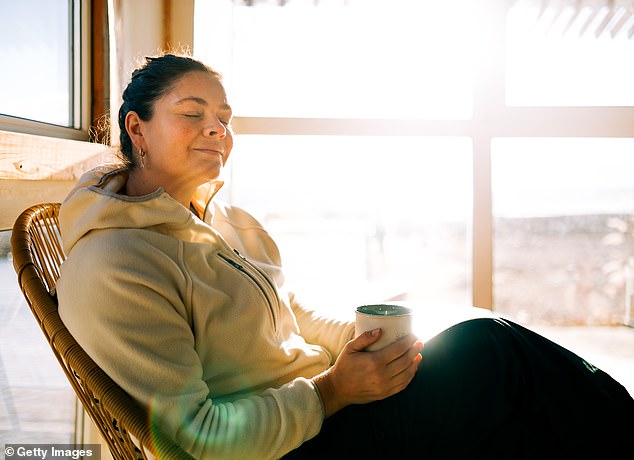
Not only are we spellbound by what-ifs based on past situations, we also project them into the future. This tendency can stop us from making decisions for fear of getting them wrong
This makes it hard to appreciate why we made the decision we did. For example, we forget that the reason we didn’t apply for that great job abroad was because we didn’t have the same self-confidence we do now.
Instead, we picture an idealised version of our past self, perhaps based on the person we have become, who wouldn’t be afraid to take a chance on applying.
But the ‘past you’ that did exist acted in the only way they felt they could at the time.
It’s a shame maybe, but it’s a waste of energy wishing things had been different. A more positive way of thinking is to channel such regret into future action.
Not only are we spellbound by what-ifs based on past situations, we also project them into the future.
This tendency can stop us from making decisions for fear of getting them wrong and then regretting our choices later.
The decision to go down one path means we miss out on another.
And what if we regret that?
The reason we react in this way is that we hate loss, which leads us to shrink from opportunities where we could lose out, even though we’d be just as likely to gain.
Loss aversion is a very well-established psychological effect, with studies showing we dislike a loss about twice as much as we enjoy a win.
A meta-analysis of all the best studies on regret also shows that regrets about education (often that the person didn’t study harder) come top.
But many of these studies were conducted in elite colleges, so perhaps we need to treat this conclusion with caution.
When more representative communities were polled, there was a spread of themes around regret, with romance and family coming near the top in addition to education.
Perhaps not surprisingly, people’s precise regrets depended on their situation in life, so people without formal education have more regrets over missed education, while single people have more regrets around romance.
The life we actually lead is necessarily more limited than all the potential lives we can imagine leading. But we can’t have it all: if we do one thing, we must give up many others.
When Victoria Medvec, an expert in negotiations and decision-making, and psychology professor Thomas Gilovich from Cornell University asked students, care home residents and retired professors about their regrets, it turned out, fascinatingly, there was one way of spending time which none of them regretted: working on a skill or hobby.
So, while it’s hard to juggle all the demands on our time, we should perhaps try to prioritise gardening, or piano playing, or carpentry, or quilt-making, or whatever we do that is fulfilling and gives us a sense of satisfaction.
More fundamentally, we should try whenever we can to be thankful for how life has turned out for us.
Things could have been different; they could have been better – but then they could have been worse.