What do mosques and nightclubs have in common? This isn’t the opening to a bad joke. They are but two of many new uses that have been found for redundant churches which, for lack of funding or attendant congregations, have been forced to close their doors.
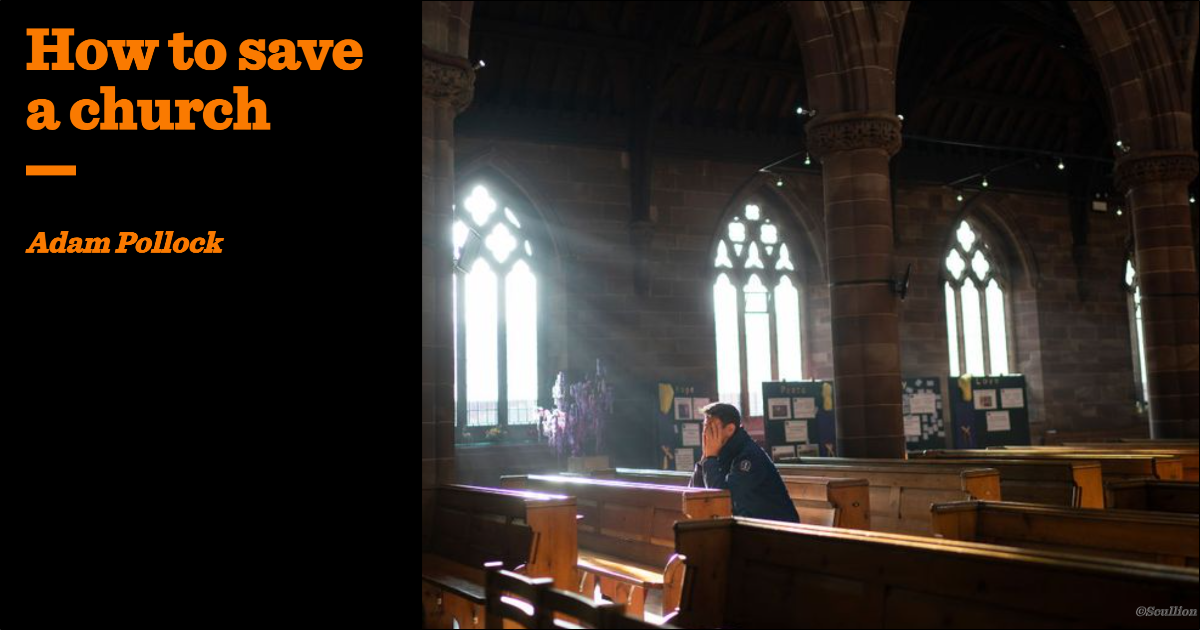
Across Britain, more than 3,500 churches have been closed down in the past decade due to the decreasing prevalence of Christianity in the country — a disheartening fact that no cries of a quiet revival can ameliorate. The simple truth is this: people are not attending church with the same frequency or devotion that they did in previous generations, while those who do choose to attend church appear to gravitate towards those with larger congregations, abandoning smaller, often rural churches.
What is to be done, then, to save these redundant places of worship, and prevent them from being turned into secular caricatures of their raison d’être?
In steps property developer Samuel Leeds, whose bold strategy to save these churches is to buy them himself and offer them “completely free of charge, zero rent, to a church that is prepared to worship Jesus here”.
I do not write to call Samuel Leeds’s own religious conviction into question, nor do I intend to accuse him of not having the right intentions at heart. But the intense media coverage surrounding one man’s aim of buying a church to let others use for free raises several issues.
Leeds has not only been a property developer but a social media influencer who has sold expensive online courses purporting to instruct individuals on how to achieve financial freedom through property development. These courses have their critics as well as their devotees, and unfortunately one former soldier committed suicide after getting in debt to the tune of £13,000 for property investing training courses delivered by Leeds’s company.
Perhaps Leeds can offer some financial advice to whoever leads his new church, as he once did to Pastor Clement Okusi, a church leader who claims on Leeds’s website that in addition to being a pastor, he now makes £10-12,000 per month from property investments.
Leeds’s pro-church campaign has brought him positive media coverage from which me may capitalise. This is not to say that it is his intention, but it could be a consequence. He might also be unaware that there can be substantial financial incentives to purchasing churches, even without plans to redevelop them or let them out for a fee.
Buildings that are classified as “places of public worship” are entirely exempt from business rates in England and Wales, regardless of whether congregations are in attendance or not. Additionally, following the introduction of VAT on church repairs by the Labour Government, the Government announced funding worth £92 million to allow certain churches to reclaim VAT on repairs made to their buildings.
These points could clearly make old, unused churches a valuable asset to have, before we even get to their tendency to have a very low cost to plot size ratio compared to neighbouring business or residential premises. Furthermore, there is nothing prohibiting the future redevelopment, or sale to developers, of church buildings that Leeds may acquire. This is particularly important as it is unreasonable to expect this free use of an asset by a church to continue ad infinitum.
Why not cut out the middleman (himself) entirely, and simply donate this generous sum of money to the church and allow them to manage their own affairs? As a charitable donation, this would also present a large financial incentive for Leeds as it could be offset against his taxable income.
Or, if sensitive and sympathetic restoration and reuse is the main aim, why not donate this sum to an organisation like the Friends of Friendless Churches? This charitable organisation exists to “save redundant (closed) historic places of worship in England and Wales from demolition, decay and unsympathetic conversion.” They are currently responsible for over 70 churches in England and Wales, from the medieval to the modern, spanning Christian denominations. They receive no Government funding in England, and very much are experts in the field in which Leeds would appear to want to play in.
Ultimately, as the Reverend Fergus Butler-Gallie recently put it, the only real way to save churches from dereliction is by going to them. Lest they become little more than a wayside shrine, these buildings will only be used for their intended purposes if people decide to start attending church services there.
It is certainly a nice gesture for Samuel Leeds to offer to buy a church and allow it to be used for worship free of charge. “But when you give to the needy, do not let your left hand know what your right hand is doing”, Christ told his Church gathered at the Mount of Beatitudes. It is something for philanthropic property developers to ponder, as it is for the rest of us.