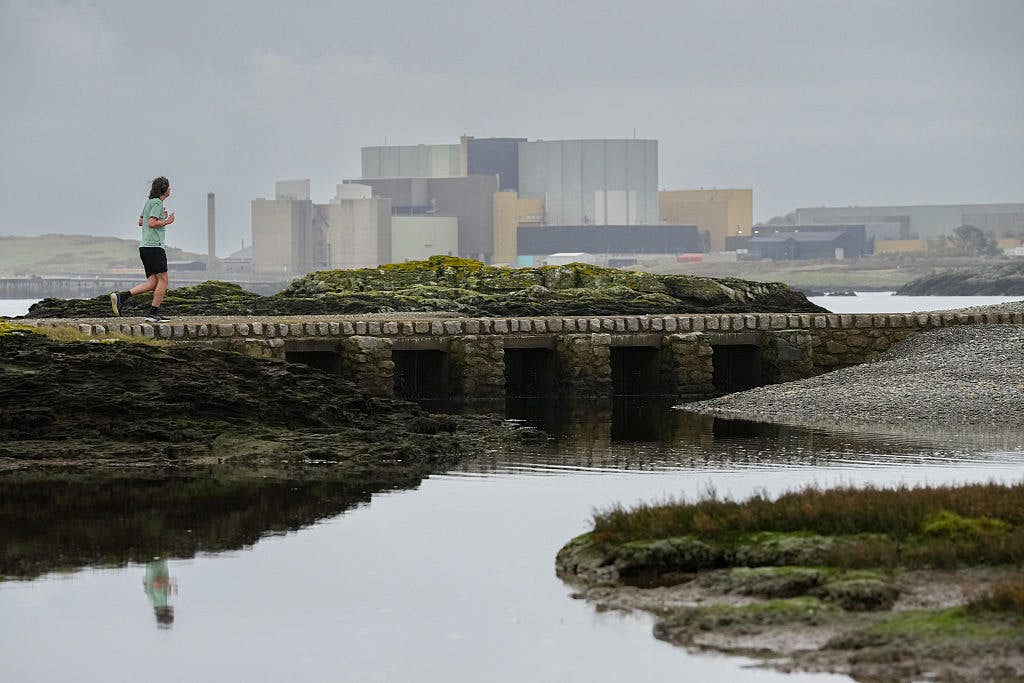
Last Friday, the Government published its long-awaited response to the Fingleton Review, proclaiming an “overhaul” of nuclear planning and regulation, promising a “golden age” for nuclear energy. The Chancellor, Defence Secretary and Energy Secretary all talked of the importance of commissioning and accepting the Fingleton Review, arguing it would finally help the country overcome energy insecurity, moribund growth and pollution. In one fell swoop, Britain’s long-running nuclear decline will be reversed (a decline that has seen its share of electricity fall from roughly 27 per cent in the 1990s to around 15 per cent today) as the British state swings into action. In reality, the proof will be in the pudding — if the Government really desires a nuclear renaissance, it cannot limit itself to regulatory reform. Legislation is going to be required and at pace, facilitating the critical reforms that are needed to the broader apparatus which risks holding the UK nuclear industry back.
The Government’s acceptance of the Review’s recommendations, alongside considerable fiscal commitments made in the Budget, is welcome. Britain’s nuclear regulatory system has indeed become fragmented, risk-averse and painfully slow. Planning processes invite endless legal challenges, overlapping regulators create delay and environmental assessments often prioritise procedural caution delivery. Reform is overdue.
As an upcoming report by Policy Exchange will demonstrate, regulatory reform alone is not sufficient to support nuclear rejuvenation. Resolving the nuclear crisis depends on a functioning national programme capable of translating ambition into infrastructure. This isn’t to diminish the importance of regulatory reform, but to recognise that reactors are built because governments align institutions, finance, industry and infrastructure around a coherent delivery strategy. On that critical broader task, the Government’s response is so far lacking in a clear timeline or roadmap.
One can applaud the Government’s willingness to sustain the pro-nuclear stance re-set from previous administrations and adoption of the Review’s recommendations, while acknowledging that this alone is insufficient.
The first blind spot is governance. Nuclear expansion cannot be managed through a constellation of departments, regulators and delivery bodies pursuing overlapping mandates. It requires a clear strategic framework determining where reactors should be built, when projects should proceed and how different technologies fit into the wider energy system. Without such direction, projects inevitably move forward in isolation. Investors face uncertainty about siting and sequencing, infrastructure planning becomes reactive and delays multiply elsewhere in the system. Regulatory reform may remove friction within the process, but it does not replace the need for a coordinated national programme and a firm timeline for delivery.
Second, the system of how nuclear technology is regulated, financed and invented is broken. The design approval process moves too slowly to genuinely drive competition between reactor technologies, leaving early-stage development costs to fall almost entirely on a handful of firms willing to take huge financial risks. Meanwhile, innovation policy is too detached from the practical challenge of building reactors quickly and cheaply. The result is a thin pipeline, higher costs and fewer viable projects — the opposite of what a successful nuclear eco-system requires.
Then there are the industrial foundations of the programme itself. Britain’s nuclear supply chains are as vulnerable to exogenous shocks as the hydrocarbons nuclear seeks to supplement, weakened by decades of inconsistent policy and sporadic demand. Critical components are manufactured by a small number of highly specialised suppliers worldwide, while domestic capacity has steadily eroded. Simultaneously, the nuclear workforce is ageing, and the entry pipeline remains narrow — the Government’s announcement of 500 new nuclear-related PhD places is welcome but not adequate. The celebration of 65,000 new defence nuclear and 17,000 civil nuclear jobs rings hollow if there’s no-one to fill them.
These problems are interconnected. Suppliers will not invest without predictable demand, and workers will not enter the sector without credible long-term employment. Successful nuclear programmes depend on repetition: standardised designs, fleet deployment, and stable industrial pipelines. Britain, by contrast, has pursued isolated, one-off projects. Government failure to plan strategically risks repeating mistakes that have long blighted British nuclear.
Perhaps the greatest absurdity of British nuclear policy is its apparent ignorance of the electricity system it depends on. Unlike other “green” energy sources, nuclear cannot sit in connection queues. Once built, it will provide continuous clean energy. Delays to grid connections, curtailment or poorly coordinated demand growth — from data centres or AI zones for example — pose not just planning headaches but existential risks to projects and investor confidence. Without anticipatory investment in the grid and easily delivered PPA capability, the Government will fall short of both its nuclear ambition of expanding nuclear capacity to 24 gigawatts by 2050 and its wider goal of AI-enabled growth. This Government needs to move from announcements to the hard yards of delivering the detailed work programme to enable delivery at speed.
The need for nuclear power is clear: energy markets are in crisis, the economy grew 0 per cent in January, our preparedness for war and strategic thought are increasingly being called into question. The irony is that the Government knows this, but now needs to take the tough political decisions needed on changing existing regulations which will involve standing up to interest groups, and creating new enabling legislation at pace. If ministers fail to set out and implement the full range of other enabling factors in the Fingleton Review, their clear commitment may prove a pyrrhic victory — a reform that fixes the paperwork while leaving Britain no closer to actually building the reactors it so urgently needs.