This article is taken from the December-January 2026 issue of The Critic. To get the full magazine why not subscribe? Get five issues for just £25.
The demise of Europe, and specifically of the European Union, has been predicted for as long as anyone can remember. It is more than 50 years since the legendary Hitler biographer Alan Bullock wrote that “if one thing seemed certain at the close of the Second World War, it was the end of Europe”.
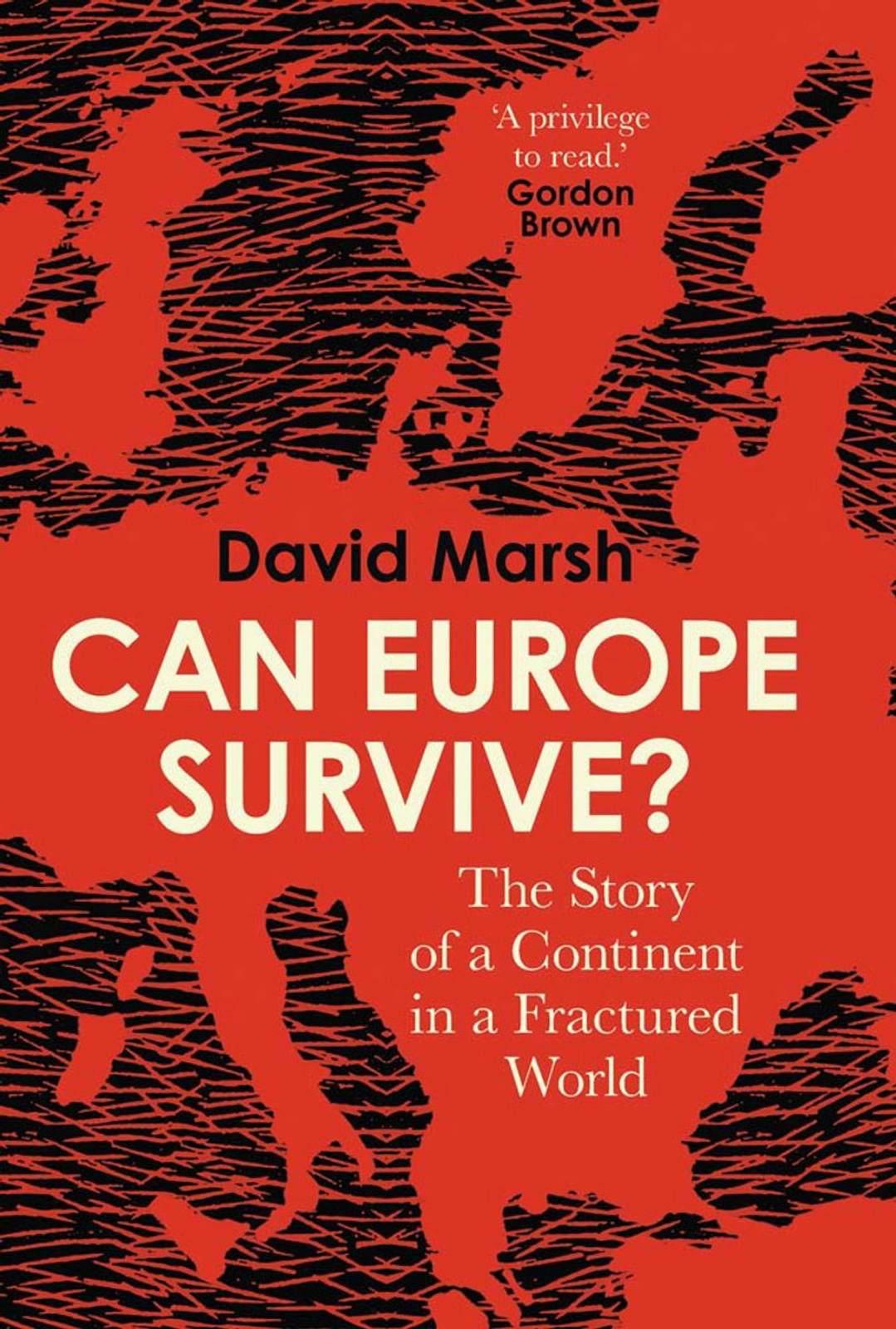
a Fractured World, David Marsh (Yale University Press, £25)
I joined the Cassandras a decade ago on publishing (with Benjamin Zeeb) Europe at the Abyss. In his somewhat despairing foreword to David Marsh’s excellent new book Can Europe Survive?, Joachim Nagel, the President of the German Bundesbank and member of the ECB Governing Council, warns that the continent is once again “at a critical juncture in its history”.
Few are better qualified than Marsh to write on this momentous subject. Fifteen years ago, he penned a superb account of the development of the European single currency which both respected the euro’s colossal political significance and warned of the dangers ahead.
His new book started as an update but became a much broader discussion of where “Europe” has come from over the past 30 years and where it is heading. It is based on immense research, including interviews with major protagonists; the references alone approach one hundred pages.
After WWII, as Marsh points out, there was widespread support for the European Project both on the continent and in the United States. In 1957, President Dwight Eisenhower, one of Europe’s liberators, even expressed the hope that he would “live long enough to see a United States of Europe coming into existence”. The establishment of the European Economic Community that same year, its steady widening and deepening over the following decades, suggested that the continent could achieve the unity so many craved.
There are several reasons why these visions failed, but amongst the most important is the failure of the common currency. As Marsh shows, the creation of the new currency was primarily driven by the political desire to contain Germany and unify Europe rather than by economic considerations.
It required a leap of faith because, as the first President of the European Central Bank, the Dutchman Wim Duisenberg, remarked, the euro symbolised the “mutual confidence at the heart of our community — the first currency that has not only severed its link to gold, but also its link to the nation state”.
At first all went well. Europe boomed as ever more countries were brought into the Single Market and the single currency. NATO grew too, despite Russian protests. Then things began to go wrong. As the trade and fiscal imbalances on the periphery mounted, the design features which Duisenberg had celebrated, and many critics had warned against at the time, came back to haunt the euro.
As Greece and other Eurozone countries were convulsed by the Sovereign Debt Crisis, richer European countries circled the wagons. The EU was forced to go cap in hand to the IMF and international bond markets. “We are asking the markets to trust us,” one European official memorably remarked, “but we have shown that we don’t trust each other.”
Meanwhile, the continent signally failed to contain the rise of revanchism under Vladimir Putin. It largely ignored his cyber attacks on Estonia and invasion of Georgia, and even in 2014, when Russia annexed Crimea, states such as Germany continued to increase their energy dependency on Moscow.
Europe responded more forcefully to the full-scale invasion of Ukraine in February 2022 but it remains painfully dependent on American support to this day. Every crisis elicits another surge in integration or coordination, but it is never enough. Europe, as Larry Summers once remarked, is always turning “a” corner but never “the” corner.
The problem, Marsh argues persuasively, is that the continent has a long history of “wrong turnings”. It failed to unite after the end of the Cold War, or in the face of Serb ethnic cleansing in Bosnia, or during the Global War on Terror, or during the Sovereign Debt Crisis, or in the face of the Sino-Russian challenge today — the list is endless.
Worse still, individual member states have pursued their own interests at the expense of the whole. Here Marsh singles out Germany, which long blocked measures necessary to stabilise the euro, and persisted with the pursuit of Russian gas long after it was obviously damaging the continent’s security.
Two sets of facts sum up the continent’s present predicament. The first is former Chancellor Merkel’s famous lament of 2012: “We Europeans represent 8 to 9 per cent of the world’s population, produce around 25 per cent of global gross domestic product and account for 50 per cent of global social spending. Without competitiveness we will not be able to maintain the prosperity of our country and Europe.”
About ten years later, the Polish prime minister Donald Tusk remarked in despair that 450 million Europeans were still expecting 350 million Americans to protect them against 140 million Russians.
One of the strengths of the book is that Marsh, a strong opponent of Brexit, provides a reasonably balanced view of the issue: “Brexit has not helped living standards,” he writes, “but neither has it had the unduly deleterious effect, relative to the country’s peers, often ascribed to it by Remainers.”
Sadly, the EU did not seize the chance of Brexit to push forward in areas of integration hitherto blocked by Britain — such as full political union — but elected instead to “punish” London before realising that, in the age of Putin, it was more dependent than ever on British military support.
If one were to criticise Marsh, it would be for his primary focus on Britain and Germany. This was already visible in his book on the euro. As a result, he somewhat underplays France’s central role in blocking moves towards full political union in the 1950s and 1960s, and Macron’s failure to live up to the hopes invested in him when elected as president in 2017.
The answer to mainland Europe’s problems is the same it has always been. As Joachim Nagel states in his foreword “the further political integration of euro-area countries” is necessary to maintain the euro, predicated on the assumption that the continent would “develop further in the direction of a federal state”.
Sir Paul Tucker, the former deputy governor of the Bank of England, points out that the EU’s political union is required for monetary, commercial, fiscal and geopolitical reasons. Today, though, that prospect seems farther away than ever.
Many readers of The Critic will be tempted to say “told you so”, feeling some schadenfreude at the travails of a project they never supported and still regard with suspicion. They may be justified in their scepticism about the prospects for European unity but they should be careful what they wish for. A weak mainland Europe is easier prey for Putin. Moreover, the more the EU stagnates and its bonds fray, the greater the danger that it might revert to being the kind of looser economic community which Britain might plausibly rejoin.