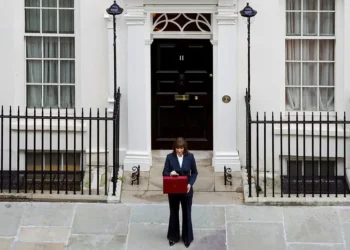
It has felt like an eternity, but Rachel Reeves will finally unveil her second Autumn Budget on Wednesday. In the meantime, the economy has stalled as growing uncertainty has weighed on spending, hiring and investment.
My own best guesstimate is that the Chancellor is facing a new financial hole of £30 billion. Also guessing, she could attempt to fill this with £10 billion of broad-based increases in taxes on income and another £20 billion from a dog’s breakfast of many smaller measures. The latter would include new or higher taxes on property, savings, non-employment income, and some forms of spending including “sin taxes” and pay-per-mile charges for EVs.
So, how is it that the Chancellor is having to come back with another huge package of tax increases just a year after last year’s £40 billion raid, which was supposed to be a “one-off”.
She might claim, with some justification, that she is still fixing the mess left by previous governments. There are two points here.
First, the largest part of the hole is likely to reflect a long overdue downgrade to the OBR’s forecasts for trend growth in productivity, which is a key driver of economic growth and hence tax revenues. The Chancellor might be forgiven for feeling aggrieved that this downgrade is happening on her watch when the OBR could have made this change at any point in the last few years.
Ultimately, though, taxes are going up because the Labour government has failed to control public expenditure
Second, the last government left only a tiny amount of “headroom” against the fiscal targets, meaning that only small changes in the public finances could require immediate action to keep borrowing and debt on track. Rachel Reeves is likely to raise this headroom to provide a bigger buffer against future shocks, perhaps from £10 billion to a still tight £15 billion. This would be a sensible move, but almost certain to mean that the tax increases are bigger too.
Ultimately, though, taxes are going up because the Labour government has failed to control public expenditure. In particular, the modest welfare reforms baked into the OBR’s last forecasts in March have since been abandoned.
Instead, the Chancellor looks set to spend the savings from any more favourable economic assumptions made by the OBR, rather than bank them to reduce borrowing. She also looks set to take some poorly targeted measures to lower household bills.
The upshot is that, based on some reasonable assumptions, the Chancellor could have to find another £30 billion from tax increases.
It is hard to see how this can be done without touching the big revenue raisers — namely income tax, National Insurance (again), and VAT. Indeed, earlier this month the Chancellor reportedly asked the OBR to assess a plan to raise the basic, higher and additional rates of income tax by 2p, partly offset by a 2p cut in employee National Insurance (the “two up, two down plan” originally proposed by the Resolution Foundation).
This could have raised about £6 billion, mainly from those with non-employment income and those above the state pension age. This figure could have risen to about £10 billion if the cut in employee NI had been limited to people earning below the Upper Earnings Limit (currently just over £50,000).
However, this plan now seems to have been dropped. The official explanation is that more favourable OBR forecasts mean that it is no longer necessary to raise income tax rates. But that explanation does not stack up. Any more favourable assumptions — including on borrowing costs and on the tax revenues from wage growth — would normally have been included already in the final pre-measures forecast on 31 October. The “two up, two down” tax plan reportedly came later.
It is more plausible that the decision to dump the plan to raise income tax rates was based on fears about the political fallout from such a clear breach of the Manifesto commitments.
Nonetheless, the Chancellor could still raise a similar amount of money (relative to existing plans) by extending the current freeze on personal tax thresholds beyond 2028, which would drag even more people into paying higher rates of tax.
Extending the freeze would still breach the spirit of the manifesto, even if not necessarily the letter. Rachel Reeves herself described this option as a tax on “working people” when ruling it out in her first Budget speech last October.
However, this alternative could also raise at least £8 billion and perhaps as much as £10 billion. Extending the freeze beyond 2028 would also at least delay the pain for taxpayers, compared to the alternative of raising tax rates now. But this could still leave about £20 billion that would have to be raised from other taxes.
The wider fallout is therefore still anyone’s guess. The immediate reaction will be seen in the financial markets, and here we already have some clues.
Bond investors reacted badly on14 November when the government appeared to U-turn on the plan to raise the rates of income tax. There was a widespread perception that the government was too weak to make tough choices on tax, as well as on spending.
The flipside is that if the Chancellor can somehow deliver a more credible plan on 26 November, borrowing costs could fall back again. It is possible too that the Bank of England will cut interest rates by more than previously anticipated, meaning the additional fiscal tightening from tax increases is at least partly offset by looser monetary policy.
The political fallout is also uncertain. Much could hinge on whether the freeze on personal tax thresholds is indeed extended, as most now expect. If the size of the financial hole can be capped at, say, £20 billion, it may still be possible to stick to both the letter and the spirit of Labour’s Manifesto commitments.
As for the reaction in the wider economy, the impact on confidence will be key. Most households and businesses surely now expect a painfully tight Budget. The actual measures may not then be as bad as feared, especially if many taxes do not go up for several years.
A significant increase in the planned “fiscal headroom” could also reassure some people that the latest round of tax increases really could be the last for a while, especially if combined with some tweaks to the fiscal framework that reduced the pressure for more frequent policy changes.
In any event, some of the uncertainty will have been lifted, which might allow spending, hiring and investment to resume.
Nonetheless, it would be unwise to bank on any of this. The Chancellor faces an unenviable balancing act — only partly of this government’s making — and the risks of a fall are high.
The Budget could backfire in many ways. The bond and currency markets could be unimpressed, triggering another meltdown similar to the one in September 2022 (though the fallout then was exacerbated by the ticking timebomb in the pensions industry and by the upswing in global interest rates).
The Budget measures themselves could quickly unravel, especially if they lean heavily on a large number of smaller and complicated measures where the wider impacts and the revenue raised are highly uncertain. This could make George Osborne’s “omnishambles” Budget of 2012 look like a masterstroke in comparison.
Labour MPs could rebel against the Budget, either in parliament or within the party. It is remarkable that this is even an issue, given the government’s large majority. But dissatisfaction with the leadership is clearly very high. The Opposition would obviously have a field day if the Chancellor does indeed break more of her promises on tax.
Finally, unlike the short-lived turbulence after the September 2022 mini-Budget, this one could really crash the economy.
So, what could — so should — the Chancellor do differently?
Obviously, no-one would want to start from here.
The root of the problem is that successive governments have spent far too much. However, the Chancellor might still be able to keep the size of the tax increases below £20 billion if she banked any savings from more favourable economic assumptions, rather than spent them, and found other savings from the welfare bill to replace those lost since the spring.
There is certainly plenty of scope to do so. As it stands, current (day-to-day) spending is forecast to rise from about £1,150 billion in 2024-25 to £1,350 billion in 2029-30 — an increase of £200 billion. Reducing the growth of this spending would save a large amount of money, without having to make outright cuts. Simply restoring productivity in public services to its pre-Covid level would be a good start and could allow the same services to be provided for 4 per cent less money.
But if spending cuts are off the table, there are still three other steps the government could take (though these may be forlorn hopes too).
One would be to revisit some of the policy choices that are likely to make the underlying problems worse, including in the housing market (rental reforms), the labour market (the Employment Rights Bill) and energy policy (the rush to “net zero”).
The second step would be to undertake a fundamental reform of the tax and benefit system, with the aim of simplifying everything and reducing some of the disincentives to work, save and invest created by high marginal tax rates. Some taxes should be scrapped altogether, starting with stamp duty.
This would also ram home the point that higher spending means higher taxes
Thirdly, if it is still necessary to raise a lot more in taxes (a big “if”), at least it could be done in the simplest possible way. Some combination of increases in income tax rates and in VAT, perhaps including an extension of the VAT base, would be the cleanest option in economic terms and received best in the markets.
A straightforward 3 per cent on all three income tax rates (basic, higher and additional) could raise £30 billion in a single stroke. This would also ram home the point that higher spending means higher taxes, and that voters need to be more aware of the trade-offs here. Politically, though, this may now be nigh on impossible.