Yet another great British tradition is disappearing beneath the waters of history
“Whose you for?”, asked the struggling mother with a swarm of children running around the front porch.
“Cambridge”, I replied.
“Tough luck chuck. I’m Oxford”.
The colours had a lot to do with it, I discovered and the fact that the Boat Race, like the Old Queen, had always been around.
The lady and her children watched it every year, as millions like her did across the country. We spoke for a bit longer before I carried on canvassing on Duke of York Avenue on Portobello Estate, Wakefield.
Spring was in the air and the 156th Boat Race would take place a few weeks hence, on 3 April 2010. Cambridge won that year.
A few weeks later came the general election. I had been the Conservative candidate for Wakefield since 2007. By the spring of 2010, I was really looking forward to election day. I loved the people, the humour and the beer and was nearly sure I would win a seat that hadn’t voted blue since 1932.
I found out later, unfortunately, that the feeling was not fully reciprocated.Wakefield is a Rugby League, not a rowing, kind of place. The city and its council estates are widely considered deprived. And yet she was “Oxford”.
It was obvious. The event was quintessentially British. Time and repetition had done their work. It seeped through the fabric of our country. From a Portobello Estate perspective and anywhere else in the land, you supported either one side or the other, while nevertheless being “one of us”.
The Race came and went like a tide, bringing with it new stories, every year —about Americans, the weather, rebellions, and so much more. The timeless template never altered. The Boat Race was there and there it ought to remain, unchanged and unchangeable.
But the organisers, the TV stations, the corporate sponsors tinkered. Some were motivated by attempting to keep the event alive on official platforms,others to see it belittled and removed over time.
So, they lengthened the proceedings, doubling the duration of the event, turning the Boat Race into the Boat Races in 2015. They succumbed to the progressive craze for letting male-bodied athletes compete in women’s sport:the winning Cambridge women’s boat in that first “blow for equality” on the Tideway in 2015 included a rower who was born male.
In the process, audiences dropped to 2.8 million for the men’s race from around 6 million ten years ago and the women’s race attracting a third fewer viewers then the men.
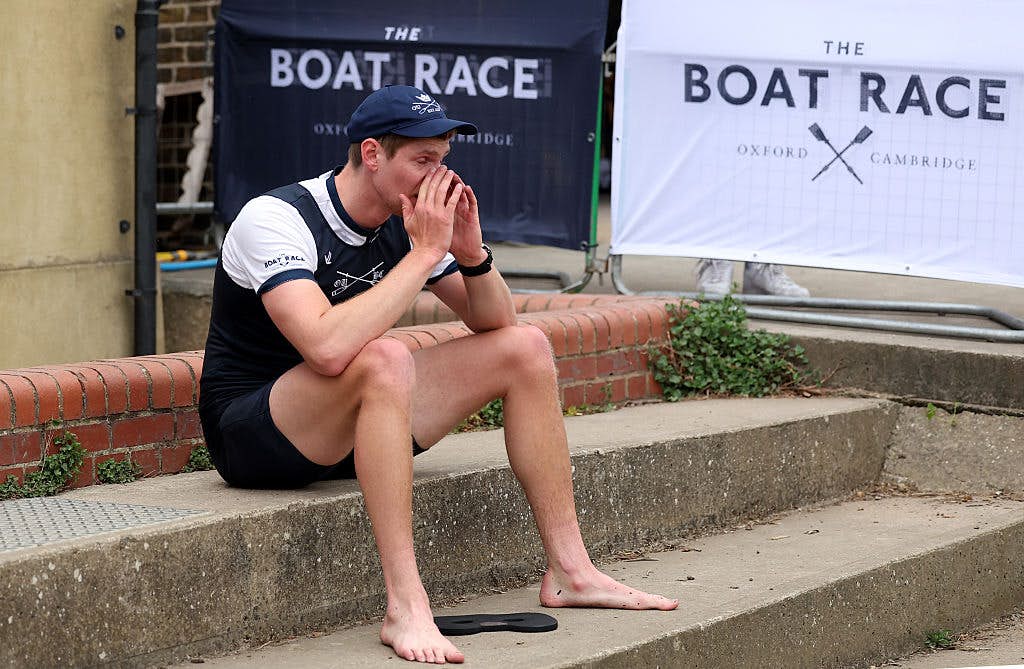
As night follows day, in 2026, the BBC decided to cease broadcasting the Boat Race. The Director of BBC Sports, Alex Kay-Jelski, allegedly thought it elitist.
Unlike the very far from privileged mother on the rundown Portobello Estate in Wakefield, for whom the Boat Race was an immovable part of our history, and therefore to be watched because “it is who we are”, Kay-Jelski, a publics choolboy (University College School, Hampstead) knew better. Cancelling BBC coverage, on both television and radio, of the race is a part of his wider virtue showboating: posting a Pride Flag and his preferred gender pronouns on his online profile. He is doing his bit of deconstruction.
To some, it’s only the Boat Race: another useless tradition being removed from our grasp as we contemplate an empty but progressive horizon. Broadening the lens, though, we notice that British officialdom is relentlessly rewriting our past. A few days ago, the Bank of England circulated a press release: Churchill would be removed from the £5 note. He would be replaced by the picture of an animal. To which, Nadeem Perera, a member of the Bank of England’s panel of wildlife, said the decision was “overdue”.
It follows last year’s removal of Lord Nelson inspired art on the parliamentary estate, after a “Black Lives Matter-inspired diversity review” to be replaced by portraits of Yvette Cooper to “boost gender and ethnic diversity”.
Diversity, not taste or importance, is the yardstick of value. Further, early in this tenure, Keir Starmer had portraits from Queen Elizabeth I and Sir Walter Raleigh taken off 10 Downing Street’s wall for something more modern.
Finally, the British Flag was described as a “tool of hate” in certain circumstances according to the Government’s social cohesion strategy paper, leaked to the press earlier in the month.
What used to be “us” is now politically loaded and to be enjoyed only when allowed. The top-down revolution keeps gathering pace as the British populous no longer quite knows which way to look or which flag to wave.
The removal of the Boat Race from the BBC is just another brick in the deconstruction of the British cultural wall.
It may be that the Boat Race will find a better home on Channel 4 or subsequently elsewhere as content flows away from terrestrial television. But the major national institutions are distancing themselves from such unifying traditions and that is an assault on what binds us together — you, me and the lady from Portobello Estate who was “Oxford”.