With its filthy cells, rampant drug use and a ‘pervasive sense of despair’, HMP Swaleside exemplifies many of the problems afflicting modern British prisons.
But the Kent jail is also typical of another trend: the growth of Muslim prison gangs, whose control over the Category B facility has been described as ‘unchecked’.
This phenomenon has been widely observed across the prison estate, with groups claiming loyalty to Islam exercising significant influence in some of the country’s most secure jails, including Frankland and Belmarsh.
The results are grim, with those who defy the gangs or refuse to join them facing the threat of brutal violence.
Among those to speak out about the issue is Jonathan Hall KC, the Government’s independent reviewer of terrorism legislation, who described it as ‘a deep-seated phenomenon’.
He was echoed by Steve Gillan, general secretary of the Prison Officers’ Association (POA), who has previously described the gangs as a ‘real problem’ that shows no signs of going away.
So where did these groups come from, and how were they able to become so powerful?
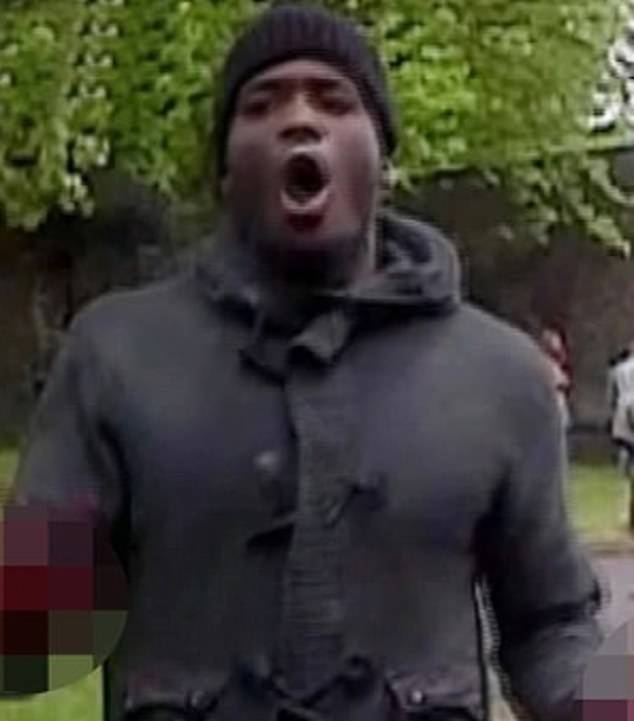
Lee Rigby’s killer Michael Adebolajo is one of the extremists housed at HMP Frankland in County Durham
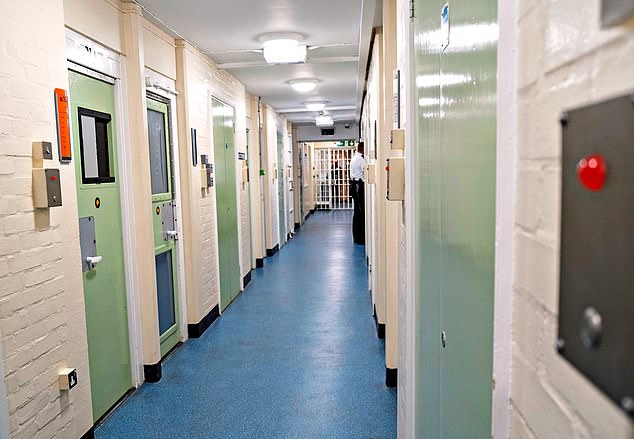
An isolation unit for dangerous Islamist prisoners at HMP Frankland in County Durham
While gangs have always been a feature of prison life, their nature has changed in recent years due to shifts in the nature of the jail population.
Most notable has been a steep rise in terrorist offenders since the early 2000s, particularly following the wave of radicalisation – and subsequent increase in police action – following attacks such as September 11 and the 7/7 London bombings.
Among the first to warn about the threat posed by these terrorist inmates was Ian Acheson, whose government-commissioned review in 2016 called for the creation of ‘separation centres’ in three jails to house the most charismatic and dangerous extremists.
But in a darkly ironic twist, one prison – Frankland in County Durham – is now said to be so overrun by Islamist gangs that inmates who refuse to join them are being housed in the prison’s separation centre for their own protection.
Tony Wyatt, a criminal defence barrister who regularly visits the jail, told earlier this year how some prisoners are being forced to serve their sentences in ‘total lockdown’ due to the breakdown in order.
‘There are so many who are members of Muslim gangs in prison, you just can’t contain the problem,’ he told The Times.
While many inmates are forced to join the gangs or do so out of a sense of religious affiliation, others of all faiths and none join for protection or perceived benefits, such as getting more time out of cells for meetings and prayers.
And with the groups now becoming so powerful in certain British prisons, there have been claims that governors avoid cracking down on them in the belief that their existence supports order.
In his 2022 report, Mr Hall said that prison authorities have a ‘tendency to view Islamist group behaviour’ as providing ‘a degree of calm and stability which means it is not necessarily perceived as a problem’.
He added that there was a ‘reluctance to focus on Islamist group behaviour’ and prison officers would sometimes appeal to the ‘wing emir’ to maintain order.
But the threat extremist groups pose to other inmates and staff is very real and seemingly growing.
Join the debate
How should prisons handle the rise of powerful gangs that intimidate both inmates and staff?
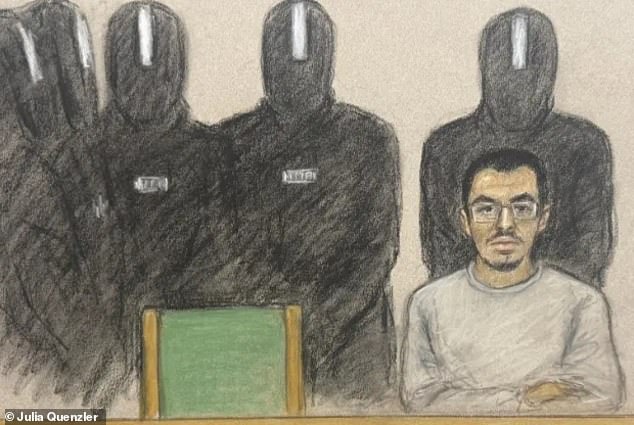
Manchester Arena plotter Hashem Abedi stands accused of attacking three prison officers. He is seen on a prison video link surrounded by five officers in protective gear
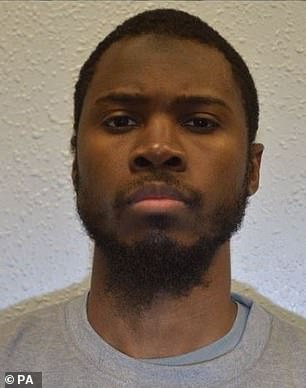
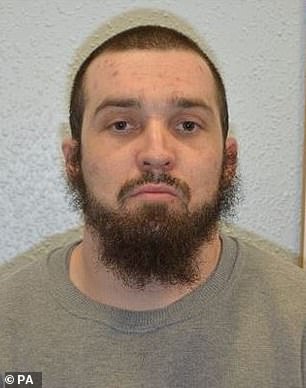
Brusthom Ziamani and Muslim convert Baz Hockton (right), who was radicalised in jail, screamed ‘Allahu Akbar’ and wore hoax bomb vests as they set upon Prison Officer Neil Trundle with a shank at HMP Whitemoor in 2020
During research for his report, Mr Acheson said officers at Frankland ‘spoke matter-of-factly about being taken hostage to be beheaded’.
Speaking to the Daily Mail, the former prison governor official failings for making this threat more potent than ever.
‘I know from my time in Northern Irish jails that terrorist prisoners who do not accept the authority of the state regard prison staff as legitimate targets on and off duty,’ he said.
‘Officers talked matter-of-factly about being taken hostage to be beheaded. There seemed no real attempt by authorities to understand let alone react to their risk.’
While they attract far less attention than outrages taking place on the streets, terror attacks have long been a problem behind bars.
Brusthom Ziamani and Baz Hockton screamed ‘Allahu Akbar’ and wore hoax suicide vests as they attacked Neil Trundle with makeshift blades after luring him into a cupboard at HMP Whitemoor, Cambridgeshire.
They were convicted of attempted murder in October 2020.
Meanwhile, Manchester Arena plotter Hashem Abedi stands accused of attacking three prison officers with homemade weapons and hot cooking oil, although he has denied attempted murder.
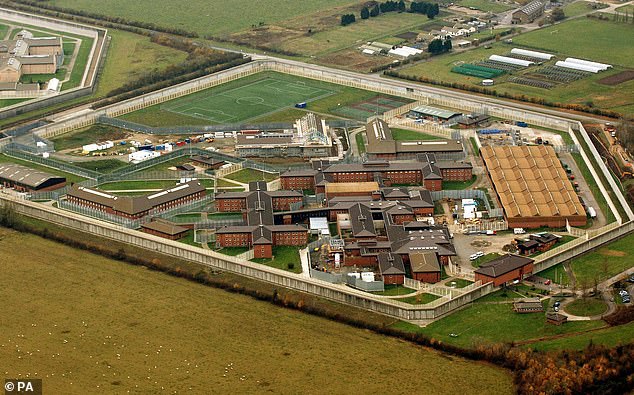
HMP Swaleside in Kent is said to have become overrun by Muslim gangs
At HMP Swaledale, prisoners and staff are said to feel ‘powerless’ in the face of Muslim gangs.
The concerning situation at the jail was revealed in two reports, one by Chief Inspector of Prisons Charlie Taylor, and the second by its Independent Monitoring Board (IMB).
Mr Taylor said the prison was ‘filthy’, rife with drugs and had a ‘pervasive sense of despair’, leading him to give it the ‘worst scores of any jail in my five years as chief inspector’.
Meanwhile, the IMB previously raised concerns about ‘religious gangs’ at the facility, where a third of inmates are Muslim.
‘A recurring theme is the perception of widespread violence, including bullying by both prisoners and staff, as well as unchecked gang control, particularly by religious gangs, which many prisoners report feeling powerless and unsafe against,’ it said.
The report noted that there was evidence of rival gangs fighting over drugs, racist comments and discrimination against Jewish prisoners.
Prisons minister Lord Timpson said of Mr Taylor’s inspection of Swaleside: ‘This is a deeply concerning report and I’m disappointed we have failed to achieve the required standard.
‘Work is underway to rapidly reduce violence, improve safety and drive up standards. We will publish an action plan in the coming weeks to support them in these efforts.’