It was only when waving off her eldest child to the University of Exeter in 2022 that it dawned on Fathima Faleel she needed to start planning for the later chapters of her own life.
After so many years preoccupied with raising her family, she started to worry about whether she and her husband would have enough money to retire.
Fathima, a 45-year-old mum of four who lives in Birmingham, admits she had never seriously thought about pensions until that moment and now she faces a desperate race to save enough for her future.
The civil servant says she refuses to be a financial burden on her children and would never expect them to look after her in her old age.
She says: ‘They are going to have their own lives and careers.
‘In previous generations, my parents looked after their parents, who looked after their parents. Pensions weren’t used at all. Now things are very different.’
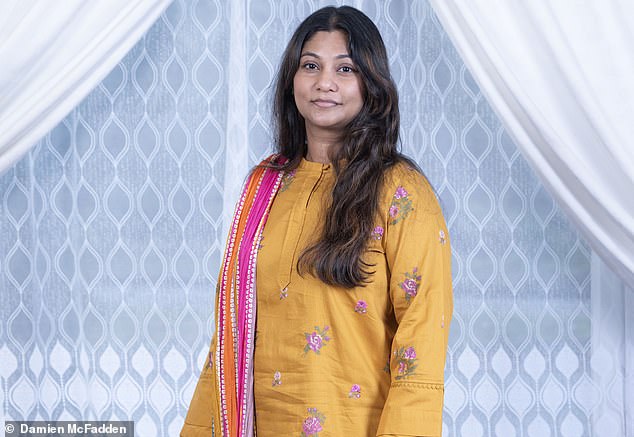
Catching up: Fathima Faleel came from a culture where pensions weren’t mentioned. Now she faces a desperate race to save enough for her future.
Fathima is far from alone in reaching mid-life with no more than a sketchy plan for retirement but a resolve to set that right.
She participated in a new industry report shared with Money Mail revealing how millions of women from Britain’s ethnic minority communities lag behind in the ‘pensions race’ and are hit by a generational shift that means they are going to have to be more financially independent than their parents and grandparents.
Men end up with almost four times as much as women in their pension pots by the age of 60, according to official figures. Men hold a median of £75,000 in defined contribution pension pots just ahead of reaching 60, compared to £19,000 by women, figures from the Department for Work and Pensions show.
This gap is even wider for women in ethnic minorities.
The average pensioner from an ethnic minority group had an income 24.4pc lower than their white counterpart in 2018, research published in 2023 found.
Research conducted in 2022 by pensions group LGIM, found that nearly seven in ten people from minority groups had no pension savings at all.
However, the relative disadvantage could be starting to fall with younger generations, the new research – which was carried out by pension consultant LCP, provider Smart Pension and trustee firm Independent Governance Group – found.
Younger generations typically have a higher level of education and qualifications, which means they are much more likely to be in paid work and aspire to more financial independence.
And although there was a low level of knowledge about pensions and some mistrust, there was considerable hunger for information about how to take advantage of pensions among those interviewed.
Fathima, who moved to the UK from Sri Lanka 25 years ago, says she was a stay-at-home mum for a very long time, but then got a job in the private sector for a short time before joining the civil service.
She signed up for the pension in both jobs and makes monthly contributions but still has little idea of the nitty gritty of how they work.
‘Will we have sufficient to survive?’ she wonders. ‘That is daunting. How are we going to manage? Are we going to save enough to enjoy ourselves?
‘My parents and grandparents relied on generational wealth. We had no information given to us. There is nothing called a pension in the background we come from. Pensions were never discussed or mentioned.’
By generational wealth, Fathima says in her family’s case this refers to properties rented out and businesses owned in Sri Lanka. ‘That doesn’t exist any more for the current generation. We are reliant on our own earnings and what we can save.
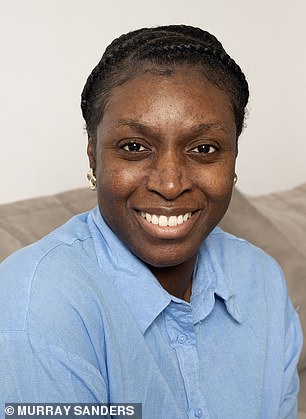
Saheeda Odum stopped saving into her scheme because she felt the contributions were high
‘We have been in panic mode. We don’t want to be a burden on our kids.’
Saheeda Odum, who is 31 and lives in Kent, will complete her training to be a nurse this summer. Her family came to the UK from Sierra Leone in the early 1990s.
She belonged to pension schemes for nearly a decade in two previous jobs at an estate agency and working as a property manager.
However, after initially joining the NHS pension scheme, she has stopped saving into it because she felt the contributions were high and there was not enough information about how it worked.
She says: ‘I wasn’t earning a lot, and I could see all this money going into my pension. I didn’t understand where it was all going. I thought I would wait until I earned more to opt back in.’
However, in doing so, Saheeda has opted out of one of Britain’s most generous pension schemes and will be foregoing thousands of pounds in benefits.
Saheeda adds of her own cultural background in regard to saving for the future: ‘Older people rely on family members and partners, especially older women. I don’t think my mum discussed pensions with me ever.’
Saheeda, who is married and has a three-year-old son, says: ‘I want more facts on pensions.
‘My concern is what savings will I have in 30 to 35 years? Will there be new laws and new taxes, new rules that perhaps make it harder to access, or might I be charged to take money out?’
Former pensions minister Steve Webb, now a partner at LCP and pensions agony uncle on our sister website This is Money, says: ‘We have become all too used to depressing reports about the pension gap faced by women and by people from ethnic minority communities.
‘But our new research offers a glimmer of hope that things could be changing.
‘We found growing levels of employment, qualifications and aspirations for financial independence amongst younger black and Asian women which are likely to lead to improved pension outcomes.’
Bahea Izmeqna, of Smart Pension, says: ‘Black and Asian women are making up a bigger proportion of the UK economy than ever before, and that trend is only set to continue.
‘There is a growing need to engage these communities even more closely to ensure their incredibly valuable contribution is properly rewarded in their participation in workplace pension schemes.’
Priti Ruparelia, head of defined contribution at IGG, says: ‘Despite a clear eagerness from women in ethnic minority backgrounds to learn, gaps in knowledge remain.
‘It’s clear our industry needs a nuanced approach that takes into account cultural and social differences so that we can build trust.’

Divide: Men end up with almost four times as much as women in their pension pots by the age of 60, according to official figures
How much you will need – and how to boost it
A single person needs £31,700 a year for a decent retirement, according to Pensions UK.
This ‘moderate’ lifestyle covers the essentials plus some splashing out on food, entertainment, trips abroad and running a car.
Couples need a joint income of £43,900 to meet this ‘moderate’ lifestyle, according to the annual Retirement Living Standards, and should bear in mind they will be able to afford retirement more easily with two state pensions and greater combined purchasing power.

The very minimum a single person needs to get by is £13,400 a year and £21,600 for a couple, while they need an income of £43,900 and £60,600, respectively, for an affluent lifestyle.
If you are concerned you won’t have enough money to see you through retirement, consider upping your contributions when you receive any pay rises or bonuses.
The older you are, the harder it is to catch up but it is still possible.
Find out if your employer will make higher contributions if you put more in. Even if you don’t have a generous employer, upping your own contributions will get you more tax relief.
Check how much you can expect from the state pension (see below). If you are on track to receive less than the maximum, take action.
Make sure you have claimed credits for any years where you cared for children or relatives.
Check your forecast by contacting the Government’s Future Pension Centre on 0800 731 0175 if you are below 66. You can also access your forecast online at gov.uk/check-state-pension.
It will tell you the date you can start claiming your pension and give you a forecast of what you are currently set to receive.
You can also click through to see your full National Insurance record. This last option will show you how many qualifying years you have. Consider paying voluntary contributions to fill any gaps.
SIPPS: INVEST TO BUILD YOUR PENSION

AJ Bell
AJ Bell
0.25% account fee. Full range of investments

Hargreaves Lansdown
Hargreaves Lansdown
Free fund dealing, 40% off account fees

Interactive Investor
Interactive Investor
From £5.99 per month, £100 of free trades

InvestEngine
InvestEngine
Fee-free ETF investing, £100 welcome bonus

Prosper
Prosper
No account fee and 30 ETF fees refunded
Affiliate links: If you take out a product This is Money may earn a commission. These deals are chosen by our editorial team, as we think they are worth highlighting. This does not affect our editorial independence.