With just hours to go until the biggest night in film, bookmakers are still scrambling to predict who will walk away with a coveted Academy Award.
This year’s Oscars race has proven to be one of the most chaotic to date, with frontrunners constantly switching after major upsets at previous awards shows, while clumsy comments from stars have also allegedly harmed their chances.
Yet while there’s sure to be surprises galore at Sunday’s ceremony, it will be hard to compete with the shock of the 2006 Best Picture winner, when Crash controversially triumphed over Brokeback Mountain.
The decision to award the race-relations drama over the pioneering LGBTQ neo-Western was so unexpected at the time that even Jack Nicholson, who announced the winner, mouthed ‘woah’ after reading out the card.
Brokeback Mountain had previously picked up Best Picture at the BAFTAs, Golden Globes, Critics’ Choice Awards, Independent Spirit Awards, Producers Guild of America, among others.
Now, on the 20 year anniversary of the controversial win, those involved with Crash have opened up about the scandal, admitting it was ‘one of the worst decision in Oscars history.’
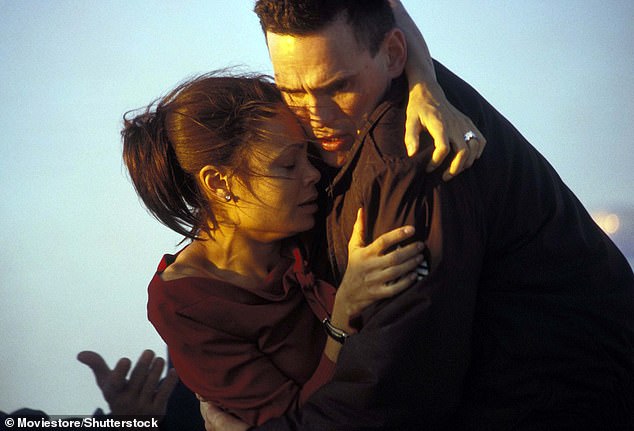
How Crash became the worst ‘Best Picture’ of all time after scooping the top prize at the 2006 ceremony (pictured: Thandiwe Newton and Matt Dillon in the race-relations drama)
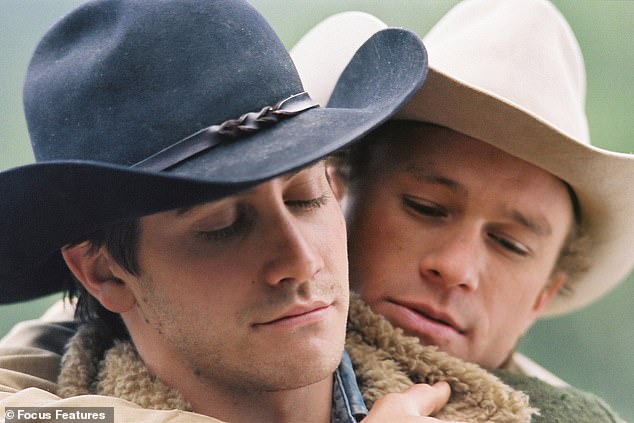
Brokeback Mountain had previously picked up Best Picture at the BAFTAs , Golden Globes , Critics’ Choice Awards , Independent Spirit Awards, Producers Guild of America, among others (pictured: Jake Gyllenhaal and Heath Ledger in the LGBTQ neo-Western film)
Crash co-writer and producer Bobby Moresco revealed there was a ‘rivalry’ between the Brokeback Mountain and Crash crew during awards season, recalling: ‘For whatever reason, we were never at the same table with those guys, but [Brokeback Mountain producer and co-writer] Diana Ossana was the loveliest person.’
Even he had assumed that Brokeback Mountain – Ang Lee’s independent film starring Jake Gyllenhaal and Heath Ledger as star-crossed cowboys – would take the win.
He told BBC: ‘Brokeback Mountain was a breakthrough film. Nobody had ever seen a relationship like that on film before, and God bless them, they made a heck of a movie.
‘But it wasn’t mine or [director Paul Haggis’] fault that people voted for us instead of them. Somehow, that was held against us.’
Brokeback Mountain was the most critically acclaimed film of the year, grossing over $178 million globally against a $14m budget.
In comparison, Crash grossed $98.4m million, and was the lowest-grossing film at the domestic box office to win Best Picture since The Last Emperor in 1987.
Crash, featuring an ensemble cast including Sandra Bullock, Matt Dillon, Thandiwe Newton and Michael Peña, received a surge in popularity when Oprah Winfrey promoted it on her talk show, asking viewers to send in their own experiences with racism aka their ‘Crash moment’ – which Bobby said brought Crash ‘into the culture’.
However, while creating a conversation, Crash was criticised for portraying a ‘simplistic’ version of race issues in America.
Hollywood awards strategist Lisa Taback told Vulture that she believes Crash was able to secure the win because the academy members were able to vote in private.
She explained: ‘If critics say something is great, we also like to say it’s great. That’s human nature. But in the privacy of your own home, you can really take in and vote on a film that resonates with you.
‘Also, voters like to support an underdog, and that’s what Crash was. It passed the “smell test” in terms of its being a contemporary awards film. It wasn’t a period piece; it didn’t take place in a far-off land. So while it may not have been a fine piece of art to some, it certainly resonated with people. And it still holds up.’
Despite this, there was still backlash over Crash’s win, with whispers in Hollywood that Brokeback Mountain had missed out because the Academy was homophobic.
Dismissing these claims, director Paul scoffed: ‘There were two films that year, Brokeback and Capote, that had gay protagonists. How could they even get nominated if voters hated gay people?’
President of Lionsgate’s theatrical films at the time, Tom Ortenberg, added: ‘I got about 90 percent support from my peers. And the backlash I felt I quickly and easily chalked up to sour grapes. The ones who make excuses aren’t the ones who win.’
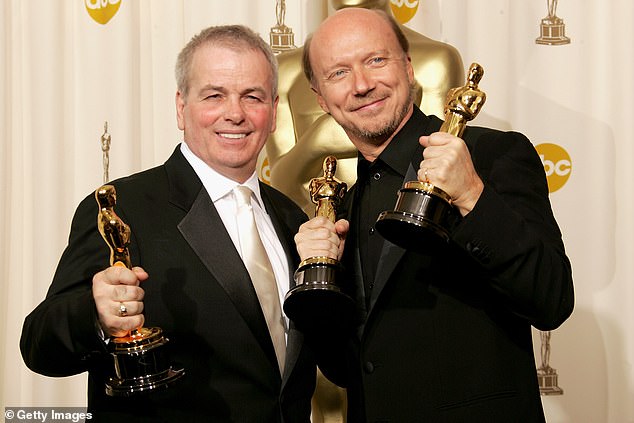
Crash co-writer and producer Bobby Moresco (left) and director Paul Haggis pose with their Oscar statuettes at the 2006 ceremony
Crash producer Cathy Schulman was also ‘proud’ of the win, saying: ‘I know people were angry about us winning. But I am one of only a few women to win Best Picture who wasn’t married to or related to the director.
‘Also, it was an outsider movie that didn’t have a frame of it touched by a studio. Also I think one of the only other Best Picture winners that was like that was and that’s very cool.’
She later said of the backlash: ‘This stuff is so ridiculous, to be honest. At the end of the day, there’s a bit of luck that’s thrown into the pot. I don’t know if there’s any deserving it or not deserving it.’
Despite their impassioned defence of the film Crash has often found itself on lists of the ‘worst Best Picture winners’.
While in 2015, a poll conducted by The Hollywood Reporter with hundreds of Academy members nine years on from the win found that they would have voted for Brokeback Mountain if they were given a second chance.
Even the director later admitted that his film shouldn’t have taken the top prize.
Paul told HitFix in 2015: ‘Was it the best film of the year? I don’t think so…
‘I’m very glad to have those Oscars. They’re lovely things. But you shouldn’t ask me what the best film of the year was because I wouldn’t be voting for Crash, only because I saw the artistry that was in the other films.
‘Now however, for some reason that’s the film that touched people the most that year. So I guess that’s what they voted for, something that really touched them. And I’m very proud of the fact that Crash does touch you.
‘People still come up to me more than any of my films and say, “That film just changed my life.” I’ve heard that dozens and dozens and dozens of times. So it did its job there. I mean I knew it was the social experiment that I wanted, so I think it’s a really good social experiment.
‘Is it a great film? I don’t know.’
Oscar 2026 nominations in full
Best Picture
Bugonia
F1
Frankenstein
Hamnet
Marty Supreme
One Battle After Another
The Secret Agent
Sentimental Value
Sinners
Train Dreams
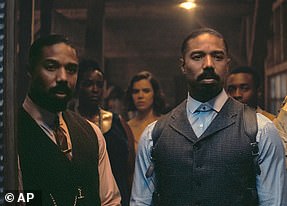
Sinners earned most Oscar nominations ever with 16 including Best Picture
Best Actor
Timothee Chalamet – Marty Supreme
Leonardo DiCaprio – One Battle After Another
Ethan Hawke – Blue Moon
Michael B. Jordan – Sinners
Wagner Moura – The Secret Agent
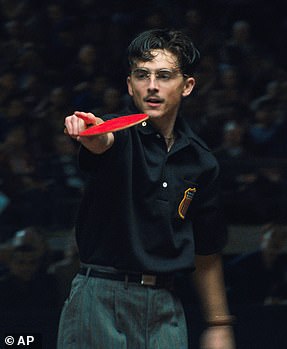
Timothee Chalamet was recognized for his work in Marty Supreme
Best Actress
Jessie Buckley – Hamnet
Rose Byrne – If I Had Legs I’d Kick You
Kate Hudson – Song Sung Blue
Renate Reinsve – Sentimental Value
Emma Stone – Bugonia
Best Supporting Actor
Benicio del Toro – One Battle After Another
Delroy Lindo – Sinners
Sean Penn – One Battle After Another
Stellan Skarsgard – Sentimental Value
Best Supporting Actress
Elle Fanning – Sentimental Value
Inga Ibsdotter Lilleaas – Sentimental Value
Amy Madigan – Weapons
Wunmi Mosaku – Sinners
Teyana Taylor – One Battle After Another
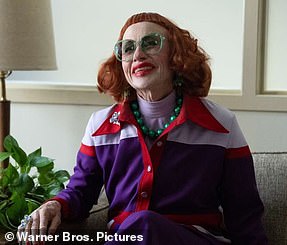
Amy Madigan was put forward in the Best Supporting Actress category for Weapons
Best Director
Chloe Zhao – Hamnet
Josh Safdie – Marty Supreme
Paul Thomas Anderson – One Battle After Another
Joachim Trier – Sentimental Value
Ryan Coogler – Sinners
Best Original Screenplay
Robert Kaplow – Blue Moon
Jafar Panahi – It Was Just an Accident
Ronald Bronstein and Josh Safdie – Marty Supreme
Eskil Vogt and Joachim Trier – Sentimental Value
Ryan Coogler – Sinners

Ryan Coogler was nominated in the Best Original Screenplay field for Sinners
Best Adapted Screenplay
Will Tracy – Bugonia
Guillermo Del Toro – Frankenstein
Chloe Zhao and Maggie O’Farrell – Hamnet
Paul Thomas Anderson – One Battle After Another
Clint Bentley and Greg Kwedar – Train Dreams
Best Animated Feature Film
Arco
Elio
KPop Demon Hunters
Little Amelie or the Character of Rain
Zootopia 2
Best International Feature Film
The Secret Agent (Brazil)
It Was Just an Accident (France)
Sentimental Value (Norway)
Sirat (Spain)
The Voice of Hind Rajab (Tunisia)
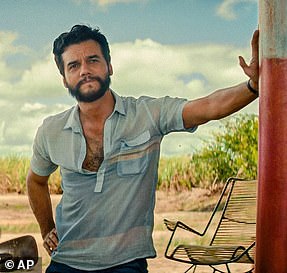
Brazilian film The Secret Agent starring Wagner Moura is nominated for Best International Feature Film
Best Casting
Nina Gold – Hamnet
Jennifer Venditti – Marty Supreme
Cassandra Kulukundis – One Battle After Another
Gabriel Domingues – The Secret Agent
Francine Maisler – Sinners
Best Cinematography
Dan Laustsen – Frankenstein
Darius Khondji – Marty Supreme
Michael Bauman – One Battle After Another
Autumn Durald Arkapaw – Sinners
Adolpho Veloso – Train Dreams
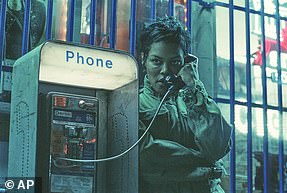
One Battle After Another is up for Best Cinematography
Best Production Design
Frankenstein
Hamnet
Marty Supreme
One Battle After Another
Sinners
Best Editing
F1
Marty Supreme
One Battle After Another
Sentimental Value
Sinners
Best Original Score
Bugonia
Frankenstein
Hamnet
One Battle After Another
Sinners
Best Original Song
Dear Me – Diane Warren: Relentless
Golden – KPop Demon Hunters
I Lied to You – Sinners
Sweet Dreams of Joy – Viva Verdi!
Train Dreams – Train Dreams
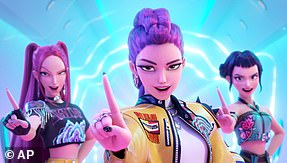
Global hit KPop Demon Hunters received a Best Original Song nod for Golden
Best Sound
F1
Frankenstein
One Battle After Another
Sinners
Sirat
Best Visual Effects
Avatar: Fire and Ash
F1
Jurassic World: Rebirth
The Lost Bus
Sinners
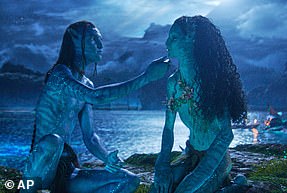
Avatar: Fire and Ash earned a Best Visual Effects nomination
Best Makeup and Hairstyling
Frankenstein
Kokuho
Sinners
The Smashing Machine
The Ugly Stepsister
Best Costume Design
Avatar: Fire and Ash
Frankenstein
Hamnet
Marty Supreme
Sinners
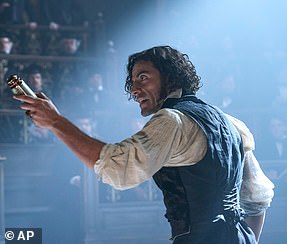
Frankenstein earned a Best Costume Design nod
Best Animated Short Film
Butterfly
Forevergreen
The Girl Who Cried Pearls
Retirement Plan
The Three Sisters
Best Live-Action Short Film
Butcher’s Stain
A Friend of Dorothy
Jane Austen’s Period Drama
The Singers
Two People Exchanging Saliva
Best Documentary Feature Film
The Alabama Solution
Come See Me in the Good Light
Cutting Through Rocks
Mr Nobody Against Putin
The Perfect Neighbor

Mr Nobody Against Putin is up for best Documentary Feature Film
Best Documentary Short
All the Empty Rooms
Armed Only with a Camera: The Life and Death of Brent Renaud
Children No More: Were and Are Gone
The Devil Is Busy