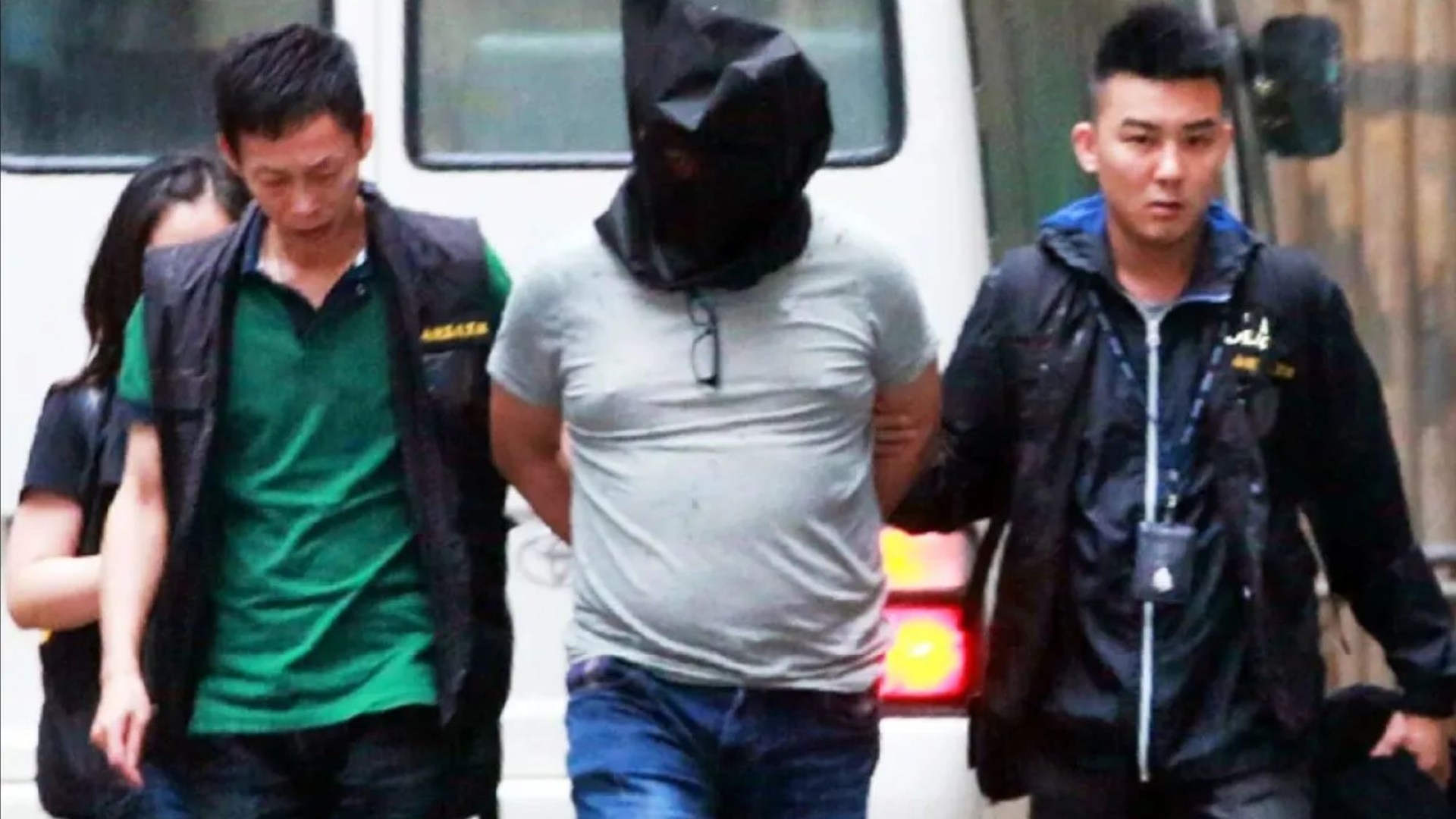
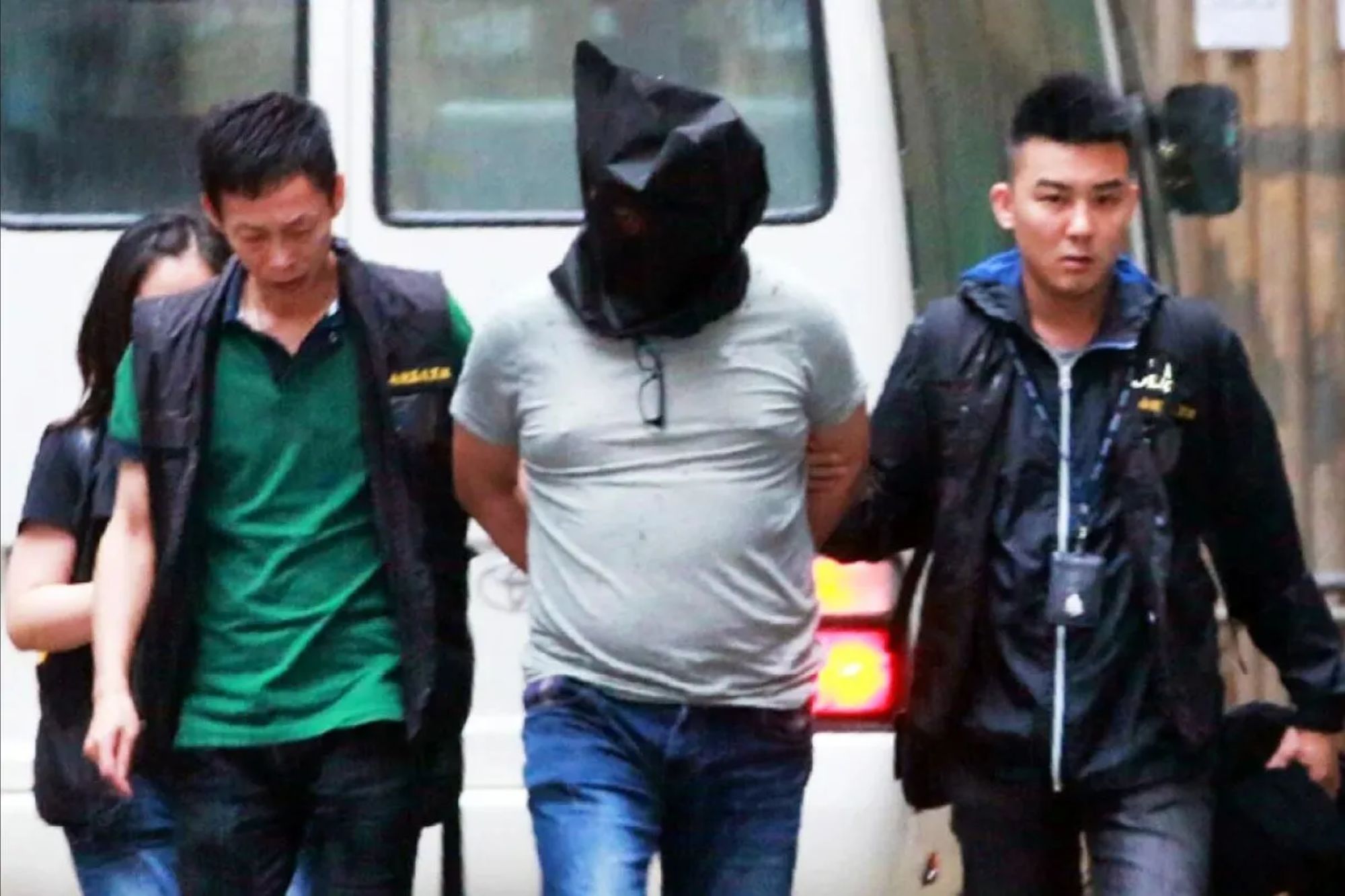
WITH illegal brothels, hard drugs, sex trafficking, people smugglers and multimillion-pound scams – China’s brutal triads are operating in Britain.
Ruthless underworld gangs with names like “Snakeheads”, “14k” and “Cloud 9” are believed to have been operating clandestinely in the UK for years. But as ministers announce the new “British FBI” to tackle organised crime, the triads could be in their sights.
Ex-cops told The Sun the gangs have been flying “under the radar” for years.
Triads are believed to have strongholds in cities such as London and Manchester, and their rivalries sometimes explode onto the streets, including a recent spate of warnings being daubed in red paint on gang-linked businesses.
The ancient, underworld triads generate billions for ruthless mobsters, David McKelvey, a former detective chief inspector in the Metropolitan Police, told The Sun.
Previously, the gangs have been linked to both kidnappings and murders in the UK, and he warned that alongside money laundering and flogging illegal goods, the brutal gangs are also behind people smuggling.
And he said “no one is doing anything about it” – as he challenged the UK to do more to crack down on China‘s criminal gangs.
He estimated that they bring up to 100 illegal Chinese workers into the UK every week.
Since leaving the force, McKelvey has spent years investigating the activities of Chinese gangs, with a focus on a bumper trade of counterfeit tobacco.
He warned that the clever gangsters often try to focus on as many low-key, but high-value crimes as possible – in a deliberate and targeted effort to ensure their sprawling criminal underbelly can hide in plain sight.
Meanwhile, Peter Bleksley, an ex-undercover cop, told The Sun that Chinese organised crime is “exactly” the sort of activity the new “British FBI” will be pursuing.
It comes as this week, Prime Minister Keir Starmer was in China to try to warm up relations between Westminster and Beijing, with the PM vowing that the UK and China will do more to tackle people smugglers, illegal drugs, and organised crime.
Professor Oliver Chan, an expert in Chinese gangs and criminology at the University of Birmingham, told The Sun the new “British FBI” will be on the sharp end of tackling these gangs.
He explained: “Such a body has the potential to be particularly useful in tackling Chinese organised crime operating in the UK.
“These criminal networks often function transnationally, engaging in activities such as money laundering, smuggling and human trafficking.”
Professor Chan explained that local police forces lack the “specialist skills” to tackle the organised crime groups.
But there have been busts – and high-profile crimes linked to Chinese gangs in recent years include “crypto queen” Zhimin Qian.
The 47-year-old was behind a record-breaking £5.5billion crypto scam – only being busted when she was arrested in bed at her luxury mansion.
She defrauded 128,000 victims.
Another was the “Cloud 9” gang, with the brothel queen Jie Zhang having her sentence doubled in 2025.
It was described as a “sophisticated prostitution ring” which victimised women and girls at seven parlours across London.
And over the last few years, there have been numerous reports of suspected brothels being vandalised – left coated with red paint.
That’s the level of criminality that’s going on under the radar, and nobody’s doing anything about it
David McKelvey
It has been speculated that this is evidence of a turf war raging between Chinese gangs, with attacks being described as a “hallmark of Chinese triad activity” by Professor Chan.
Witnesses have reported hearing Mandarin spoken – with attacks in Liverpool, Manchester, Bradford, Reading, Huddersfield and Clacton-on-Sea.
One family previously told The Sun how they were awoken in the middle of the night by a gang of men in their front garden – realising the flat above their suburban home had become a brothel.
The mum said men smashed the windows, threw red paint on their house and scrawled “brothel” with arrows pointing to her east London home on nearby walls.
Police told the family the attack was the result of a turf war between rival gangs.
An infamous brawl on the streets of Manchester’s Chinatown in 2010 was linked to a violent turf war between two rival triads, Wo Shing Wo and 14k.
While elsewhere, Chinese gangs known as “Snakeheads” are feared to be operating, crime groups that specialise in people smuggling.
The National Crime Agency last year named their list of priorities – including cracking down on money laundering linked to China.
Ex-cop McKelvey said the case of crypto queen Qian’s crimes being exposed came down to “sheer chance”.
He told The Sun: “A very experienced detective looked further into it than someone would ordinarily do and opened up this can of worms”.
“That’s the level of criminality that’s going on under the radar, and nobody’s doing anything about it,” he added.
Recent policing is “ad-hoc”, meaning Chinese organised crime can operate “under the surface” and only comes to light in major cases, the former top cop said.
McKelvey cited the counterfeit tobacco industry as one example, something his company, TM Eye, has spent seven years investigating. He has found the operation to be “massively organised, making billions and obviously costing billions, and putting health at real risk, but nobody’s interested.”
They’re bringing in anything from 20-100 Chinese nationals a week
David McKelvey
HMRC estimated that the illicit tobacco trade costs the UK £2.2billion in lost revenue a year.
Alongside tobacco, Chinese gangs have long been intertwined with UK cannabis manufacturing.
And he said they are now targeting harder drugs as well.
McKelvey warned: “They’ve more recently moved to fentanyl, which is unusual because they’ve steered clear of anything that would ordinarily bring police enforcement action.”
He added that the deadly synthetic opioid is cropping up in parcels of drugs, which criminals manoeuvre through Chinese university students in the UK from international dealers in places like Canada.
Alongside Canada, the “sophisticated” network extends to Dublin-based drug gangs, Albanian cartels, and even the Chinese government, he continued.
The gangs send drug deliveries to the university halls and then “they’ve got effectively Amazon vans going out collecting the goods from all the various students, and also Chinese shops, bizarrely they use, and bring them back to a storage facility,” said McKelvey.
In 2024, Jinsho Dong, 24, and Jingsho Wong, 28, were sentenced to three years after they recruited university students to accept parcels of cannabis at their accommodation in a £1million drug plot.
The pair paid students in Leeds to receive parcels from Canada, which they would then collect.
Their criminal associates will threaten impoverished families, who have nowhere to go
Peter Bleksley
Border Force intercepted 63 parcels which were linked to the duo, totalling 108kgs of cannabis with a street value of £1million. Det Ch Insp Michael Herbert said the two were “foot soldiers” in a “much larger criminal network”.
This comes as 143,200 students from China were enrolled in British higher education in 2024-25, according to data released on January 27 from the Higher Education Statistics Agency.
Chinese nationals studying in the UK have also been involved in several financial crime cases – such as the case of Southampton University student Huanyu Zhou, 27, who laundered £200,000 for a gang linked to child sex abuse images.
And in a major bust, seven people were jailed in August last year after they operated a £55million money-laundering ring which helped international students to bypass the £38,000 limit on personal transfers from China.
This case highlights “the central role that students play in Chinese money laundering in the UK” said Kathryn Westmore, senior associate fellow at the Royal United Services Institute (RUSI), in a report from November last year.
She added that the gangs employing students are often “state-linked”.
And one of the most high-profile pieces of Chinese gang-linked violence occurred in the UK – students Xi Zhou and Zhen Xing Yang were found bound with tape and beaten to death with a hammer in 2008.
Yang’s throat had been slashed, and his skull had been brutally smashed in, whilst his girlfriend was forcibly gagged and her skull was fractured. Guang Hui Cao was jailed for 33 years for killing the 25-year-olds.
Senior investigating officer, Steve Wade, said on the 10th anniversary he thought the double murder was linked to organised crime due to the pair’s connections to a betting scam which had netted them profits of £200,00.
And there was case of triad gang members Jian Chen, Um Y Tang and You Chen – who were jailed for 15 years in 1997 over the kidnap and torture of a chef, chaining him to a radiator for two weeks.
Peter Bleksley said Chinese overseas students can be naively lured into the world of organised crime – becoming victims and accessories.
He said: “[They] have absolutely no idea of the kind of trouble they could find themselves in.
He explained that “once they get people isolated, and over here, and either forced, coerced, or willingly involved, in organised crime, their loyalty is a very easy thing to guarantee, because at home, their criminal associates will threaten impoverished families, who have nowhere to go.”
Looking to the future, Bleksley explained the new challenge will be more digital crime – moving away from the traditional structure of the triads.
He said: “Increasingly digital crime means the typical criminal gang bosses of the 80s and 90s are giving way to a new type of fraud.”
“People can set themselves up as one-man bands almost. And facilitate crime or commit a crime using digital resources.
“So there’s not that doffing of the cap and the bowing down in front of organised crime bosses that there used to be.”
Peter said he sees promise in the policing reforms but is hesitant as: “talk’s cheap, but police is expensive.
“Let’s see how our ambitions are met when the invoice lands on Rachel Reeves‘s desk.”