It’s the bane of every Brit’s life – especially those trying to show off their house to possible buyers.
But prospective sellers no longer need to put up with the UK’s dreary weather, all thanks to the magic of AI.
A bizarre new property trend has seen engineered photos of blue skies and sparkling clean interiors appear on property listings, with househunters labelling the technique ‘misleading’.
It is not guaranteed to go to plan, however, with some pictures showing entire walls replaced by sky and parts of the house contorted into weird shapes.
One typical-looking semi-detached property in Dunfermline, Scotland has a huge chunk of the roof missing in the main photo of a Right Move listing.
The front-facing wall of the home appears normal as does half the roof, but the right-hand wall vanishes completely around halfway up, making way for idyllic blue skies.
A shadow present on the brick wall can also be seen floating in mid-air, while a random stretch of roof hovers above the missing portion of the house.
Parts of the home’s interior also appear slightly off, particularly several photos showing off the kitchen.
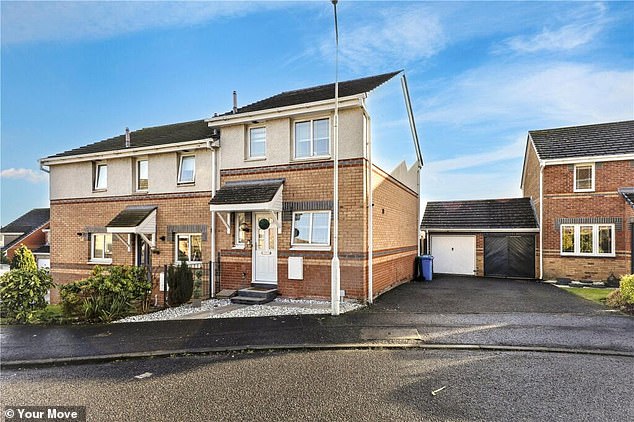
One typical-looking semi-detached property in Dunfermline, Scotland has a huge chunk of the roof missing in the main photo of a Right Move listing
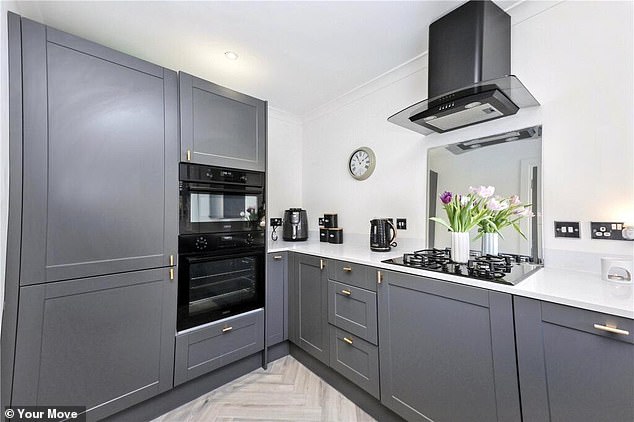
One picture of the kitchen appears to show the cupboards bulging and a vase placed in the middle of the hob
Dark grey cupboards across the room appear oddly-shaped and warped giving the impression they have been heavily bent.
Meanwhile, there is a vase filled with an pink and purple flowers placed in the oddest possible position – the hob.
Househunters quickly took to Reddit to ruthlessly mock the creative seller, accusing them of deploying AI to doctor the photos on the listing.
One user said: ‘When I see listings like this I wonder if these people really want to sell. Or if they even check the pictures before letting the estate agents post them.’
Another added: ‘Chrome plated gable wall reflecting the sky. Very fancy.’
A third remarked: ‘Do they not even check the photos. And surely its false advertising at this point.’
Another user drew attention to the odd display in the kitchen, posting: ‘I always place my vase of tulips in the middle of my hob.’
And one househunter added: ‘Isn’t that where everyone keeps their flowers?!?!’
The two-bedroom home – which boasts one bathroom – is on the market for £209,995.
The listing claims the property has been ‘completely renovated throughout’ although it remains to be seen whether that includes the unusual exterior shown in the photos.
The phenomenon of tweaking photos on housing listings with the help of AI seems to have been spiralling out of control of late with experts warning such practices risk misleading buyers and wasting their time.
While traditional virtual staging typically involves adding furniture to empty rooms, estate agents are increasing turning to using AI to remove years of accumulated belongings and make homes appear more presentable.
AI tools aimed squarely at estate agents, promise to brighten rooms, remove clutter, replace skies and ‘enhance’ interiors for as little as £1.20 per image.
Some services even boast they can digitally deep-clean a home in minutes.
One recent example involved a bestrewn property in Exeter – described as being ‘in need of modernisation’ – which was piled high with years of accumulated clutter, with rooms barely visible beneath mountains of belongings.
But rather than clearing the detritus before putting it on the market for £420,000, agents instead turned to AI to erase the chaos, replacing it with eerily empty interiors which exist only on screen.
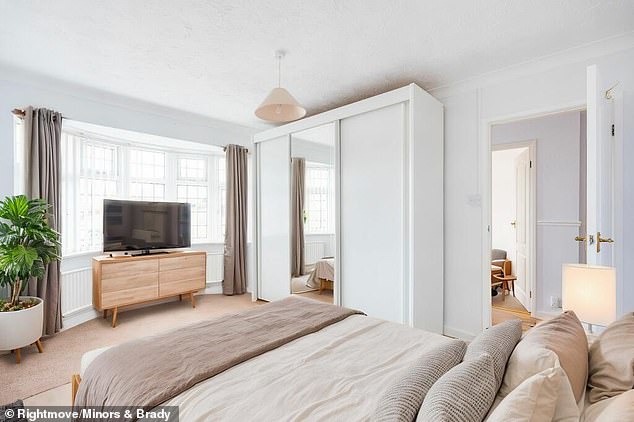
This bedroom from a different property has been enhanced with AI to brighten up the room and to add furniture – including a television that doesn’t appear in the mirror and curtains with no rail
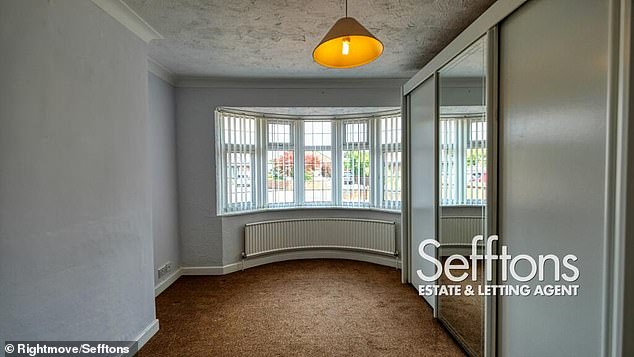
The room as it appeared in an older property listing – with rather more subdued lighting. It also appears smaller than the previous image suggested
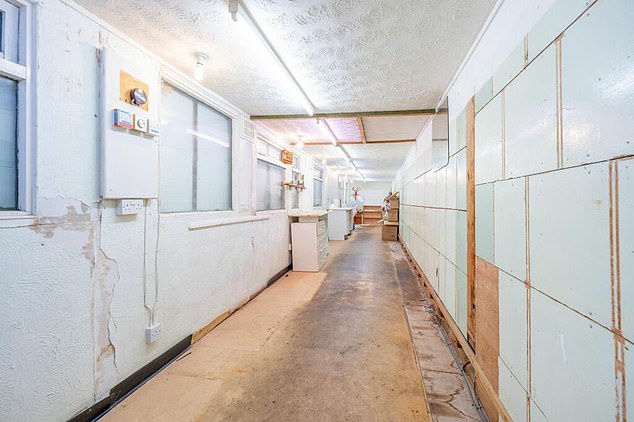
The Norfolk property comes with a workshop area that looked bright and airy in the enhanced photographs
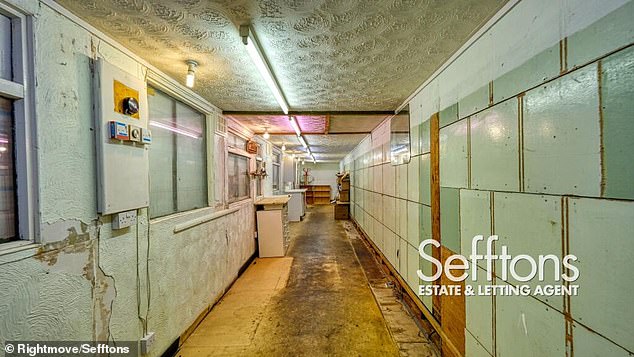
It looked somewhat different in an older listing, however – suggesting the other images may have been gently enlivened
This particular Rightmove listing openly acknowledges the digital makeover, stating: ‘We have included images that have been AI enhanced to show the property cleared of the owner’s belongings.’
The use of artificial intelligence in property marketing has already sparked concern overseas.
In Australia, the New South Wales state government recently introduced legislation requiring estate agents to declare if AI has been used to enhance listings, following reports of tools being deployed to disguise damage or make rooms appear larger than they really are.
There is currently no equivalent requirement in the UK.