US health officials slashed the number of vaccines routinely recommended for children on Monday, in a sweeping overhaul of the nation’s immunization policy.
In a release, the CDC said it had revised the childhood immunization schedule to bring the US more closely in line with 20 peer nations following a directive from President Donald Trump.
Under the new guidelines, vaccines including those protecting against measles, mumps and rubella (MMR), chickenpox, polio and HPV remain fully recommended.
But six commonly given shots have now been downgraded to ‘shared clinical decision-making’ or for ‘high-risk groups’, meaning doctors are now advised to discuss the risks and benefits of the shots with parents rather than simply recommending them.
The vaccines that have been downgraded are those for rotavirus, Covid, the flu, meningococcal disease, hepatitis A and hepatitis B.
Overall, the total number of shots formally recommended on the childhood immunization schedule, for those aged zero to 18 years, has been cut from 17 to 11.
Health officials stressed that none of the vaccines were being withdrawn, and said insurance companies would continue to cover all immunizations, regardless of whether they fall under routine recommendation, shared decision-making or high-risk only.
Robert F Kennedy Junior, the Health and Human Services Secretary, said in a statement that the move was meant to restore confidence in public health.
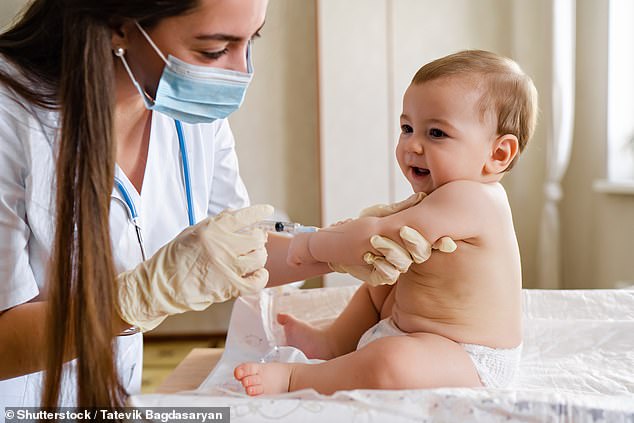
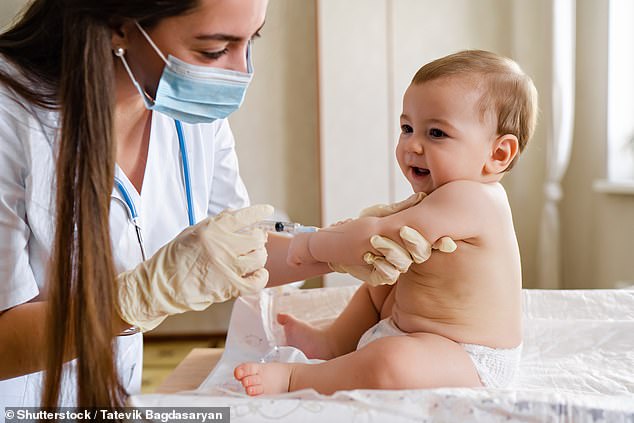
The US is preparing to drop vaccines from the childhood immunization schedule (stock image)
He said: ‘President Trump directed us to examine how other developed nations protect their children and to take action if they are doing better.
‘After an exhaustive review of the evidence, we are aligning the US childhood vaccine schedule with international consensus while strengthening transparency and informed consent.
‘This decision protects children, respects families and rebuilds trust in public health.’
Acting Centers for Disease Control and Prevention Director Jim O’Neill approved the updated guidelines Monday, the Department of Health and Human Services (HHS) said.
Under the new schedule, the CDC continues to organize the childhood immunization schedule into three distinct categories; Vaccines recommended for all children, vaccines recommended for high-risk groups and vaccines based on shared clinical decision-making.
In 2024, the Covid vaccine was the only shot that the CDC said should be based on shared clinical decision-making. The vaccines against RSV, the flu, meningococcal disease and Dengue were all recommended for high risk groups.
But now, the vaccines recommended for shared clinical decision-making are rotavirus, Covid, influenza, meningococcal disease, hepatitis A and hepatitis B.
The vaccines recommended for high-risk groups are the shots against RSV, hepatitis A, hepatitis B, dengue and meningococcal disease.
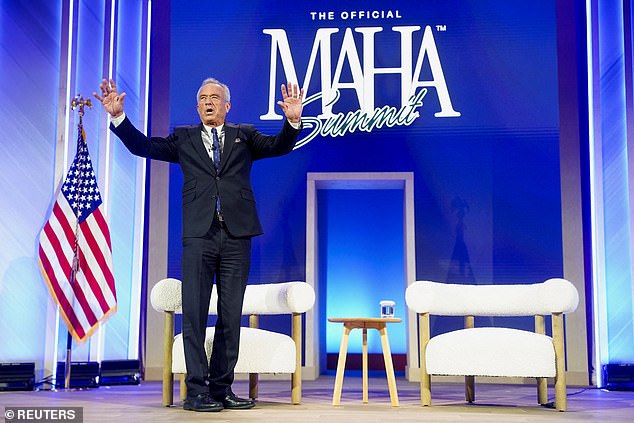
Health and Human Services Secretary Robert F Kennedy Junior is shown above at the official Make America Healthy Again summit in November last year
HHS said the new schedule was based on an assessment of the US vaccination schedule compared to that of 20 peer nations, including Denmark’s, carried out by Martin Kulldorf and Tracy Beth Hoeg.
It said its assesment showed the US was a ‘global outlier’ in vaccination policy among other developed nations. In 2024, it said that the US recommended more childhood vaccinations than any peer nation, and more than twice as many as some European nations.
Some experts in the US have cautioned against comparisons with European nations, saying they are many times smaller, less diverse and tend to have public healthcare.
O’Neill said: ‘After reviewing the evidence, I signed a decision memorandum accepting the assessment’s recommendations.
‘The data support a more focused schedule that protects children from the most serious infectious diseases while improving clarity, adherence and public confidence.’
The new schedule more closely matches European countries such as Denmark, which does not currently recommend childhood vaccinations against rotavirus, hepatitis A, meningococcal, flu, chickenpox or respiratory syncytial virus, or RSV.
It comes one month after President Trump ordered the health department to review the childhood vaccination schedule.
Trump wrote on Truth Social at the time, following his executive order: ‘It is ridiculous.
‘That is why I have just signed a Presidential memorandum directing the Department of Health and Human Services to “FAST TRACK” a comprehensive evaluation of Vaccine Schedules from other Countries around the World, and better align the U.S. Vaccine Schedule.’
It comes less than a month after the CDC formally dropped its recommendation that all newborns receive the hepatitis B vaccine within 24 hours of birth.
O’Neill approved ending the blanket recommendation on December 17, instead saying that children born to parents who do not have hepatitis B should be vaccinated based on ‘individual-based decision-making’.
Children born to parents who have hepatitis B were still recommended to receive the vaccination at birth.