They’ve long been viewed as a must-have interiors status symbol, up there with the Aga and the KitchenAid…but could the middle classes’ love affair with wood burners soon be extinguished?
Tougher environmental laws – including cigarette-style health warnings highlighting their impact have on air pollution – have seen sales slump in recent years.
However, there is a new object of desire catching the eye of those who still want that toasty glow via a statement fireplace without the guilt – the ceramic stove.
That said, it’s not new at all. The more eco-friendly home heater has been around for hundreds of years, with its origins in 13th century Europe.
While a ceramic stove still burns dry wood, it does so at very high temperatures and very quickly, which heats up the external surface and slowly radiates heat around a room over a longer period of time.
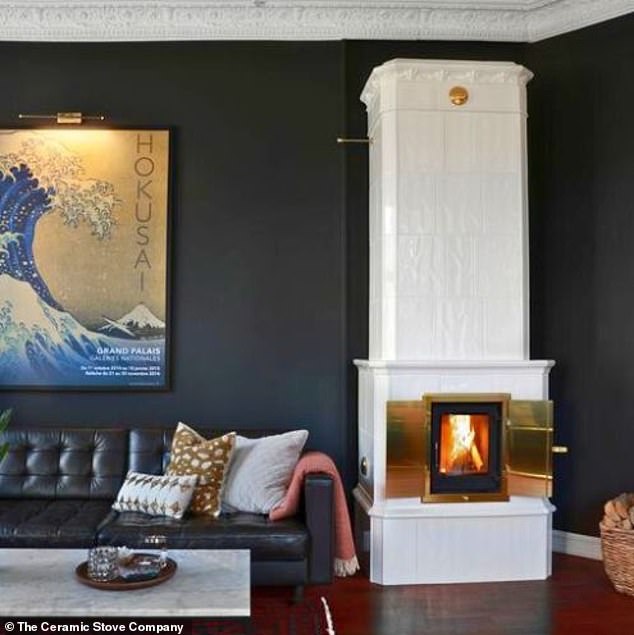
Ceramic stoves, which retail from around £5000, are enjoying a moment – because they’re considered much more eco-friendly than traditional wood stoves, which face increasingly tough DEFRA regulations
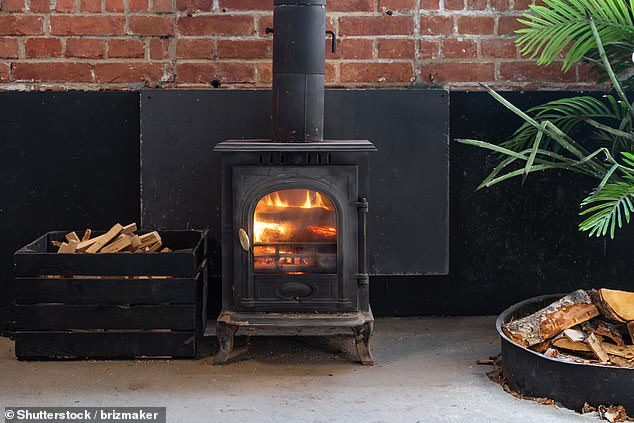
Up in smoke? New wood burners could carry cigarette-style health warnings highlighting the impact their emissions have on air pollution, under new Government plans
With just one burn a day and low emissions, it’s considered much more efficient than log burners or open fires, with soot and ash mostly burnt away before they reach the chimney.
And interior designers love them because the ceramic element can be as bold as clients like, with brightly coloured tiles incorporating modern or traditional designs.
Warm to the touch, fans of the stoves say they operate like a giant radiator – only they’re much prettier to look at, with some owners even using them to keep food warm.
How do they compare on price? They retail at around £5,000 rising to around £14,000 for top models – and require a similar installation fee, usually around £1,000.
Maintenance is still required but professional chimney sweeping isn’t needed as much with ceramic stoves, say experts, because there’s less soot.
Cornish Masonry Stoves is one such company selling stylish log burners crafted from porcelain ceramic and says its fires can ‘double the efficiency’ of most other burners, and cut heating bills by 60 per cent.
For those looking to future-proof against the Department for Environment, Food and Rural Affairs (DEFRA)’s ever increasing environmental restrictions, they’re considered a much safer bet than a traditional burner because they’re much more efficient.
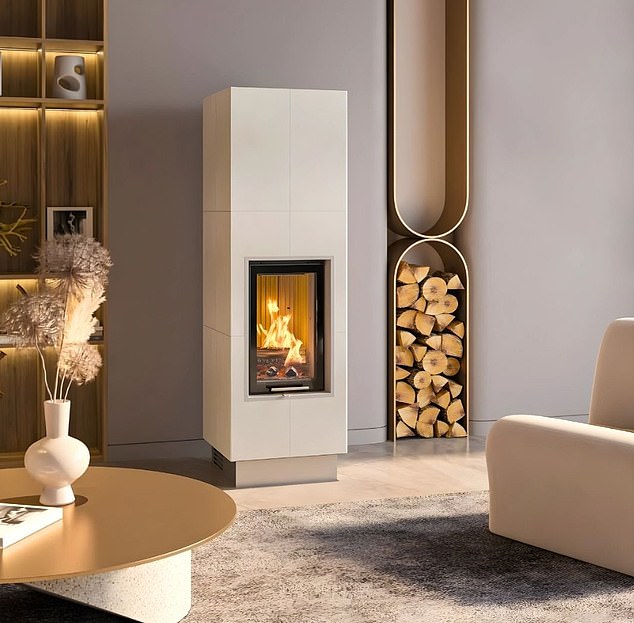
How much do they cost? Ceramic stoves start from around £5,000 plus a £1,000 installation fee
In January, it was announced that UK Government plans could see new wood burners carrying cigarette-style health warnings highlighting the impact of the air pollution they produce.
Proposals mandate that stoves, as well as firewood, will have to carry a label outlining the harms pollution can cause including asthma and lung cancer.
Ministers have also cited cutting the limit on the smoke emitted from wood burners by 80 per cent, to one gram per hour. But, the long-awaited measure would only apply to new woodburners, many of which already meet the stricter limits.
Emma Hardy, the air quality minister, said at the time: ‘Dirty air robs people of their health and costs our NHS millions each year to treat lung conditions and asthma.
‘We are determined to clean up our air. By limiting emission levels and introducing new labels as outlined in our consultation, families will be able to make better, healthier choices when heating their homes.’
The tighter restrictions are predicted to cut the annual toxic emissions from wood burning in the UK by just 10 per cent over the next decade, with campaigners saying these new measures ‘don’t go far enough.’
A suggested warning reads: ‘Please be aware that this appliance emits air pluton into and around your home which can harm your health.
‘Burning in the home leads to air pollution which has a negative impact on the health of you and your family.’