HALF of NHS hospitals are suffering from the worst flu outbreak ever recorded in the UK.
Brits have been warned to brace for the H3N2 superflu surge, which shows no sign of peaking ahead of Christmas.
Last week, an average of 2,660 patients were in hospital with the bug each day – the highest ever for this time of year and 55 per cent up on last week.
While the ‘flunami’ roars on, the number of norovirus patients in hospital has also risen by 35 per cent – though cases of the winter vomiting bug are “within expected levels”, according to UKHSA.
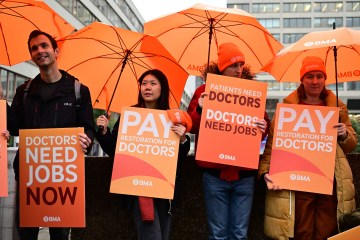
And the resident doctor strikes are due to begin on December 17 – which Health Secretary Wes Streeting said was like “dousing the NHS in petrol and lighting a match”.
Streeting begged doctors not to go ahead with the strike, warning the “double whammy” could “be the Jenga piece that collapses the tower”.

An analysis carried out by MailOnline revealed that flu levels are higher than ever for this time of year at 70 out of 141 trusts – the parent body of neighbouring hospitals.
University Hospitals Birmingham was hit hardest, with over 250 Brits admitted as of December 7.
A strain of flu, dubbed ‘subclade K’ or H3N2, is thought to be driving infections, which Sun columnist and GP Dr Zoe Williams warned is “more severe” than normal flu and “more infectious”.
And amid surging cases of flu, pharmacies have begun warning that their flu vaccine stock is running low due to high demand.
Professor Meghana Pandit, NHS national medical director, said: “With record demand for A&E and ambulances and an impending resident doctors strike, this unprecedented wave of super flu is leaving the NHS facing a worst-case scenario for this time of year – with staff being pushed to the limit to keep providing the best possible care for patients.
“The number of patients in hospital with flu is extremely high for this time of year.
“Even worse, it continues to rise and the peak is not in sight yet, so the NHS faces an extremely challenging few weeks ahead.’
The UK Health Security Agency (UKHSA) predicts that by the end of next week, some 8,000 patients in England could be in hospital with the virus. The highest ever recorded was 5,400.
While most people who have the flu will recover at home, at-risk groups such as young children and people over the age of 65 can become severely ill, meaning they end up in hospital.
Schools shutting
At least three schools have been forced to shut in the flu chaos, and others have brought back Covid-style measures as hundreds of staff and pupils are struck down, with headteachers saying it feels like “being back in Covid times”.
South Bank Primary School in Middlesbrough, North Yorkshire, said it “would not be safe” to go ahead with its Christmas lunch, plays and craft days.
Budehaven Community School, based in Cornwall, is the latest school to close its doors following an “unprecedented” and “increasing incidences” of flu and Group A Streptococcus infection.
St Martin’s secondary school in Caerphilly, South Wales, was temporarily closed after 242 pupils and 12 staff members fell sick, with norovirus symptoms.
Elsewhere, Congleton High School in Cheshire shut for three days a fortnight ago after high numbers of pupils suffered flu-like symptoms.
Health chiefs say children are far more likely to catch and spread flu, while older people are the ones most likely to end up in hospital if they get it.
‘Now or never’
It comes after a ‘now or never’ warning for people to get their flu jab.
Caroline Temmink, the NHS director of vaccinations, told The Telegraph: “As families gear up for festive celebrations together, it’s now or never to get protected against flu in time for Christmas.
“Children are super-spreaders and with flu infections rising fast in younger age groups, getting kids vaccinated is one of the best ways to prevent serious illness, especially for grandparents and loved ones who are vulnerable.”
Dr Leyla Hannbeck, the chief executive of the Independent Pharmacies Association, today told Sun Health that patients shouldn’t panic.
“If you are eligible, this is the last chance to get protected as we head into Christmas – so make an appointment with the NHS today.”
Children who still haven’t got their vaccine through school should still be able to get jabbed at a community clinic.
Children aged from two to 17 are eligible for free flu vaccination on the NHS, usually in the form of a nasal spray, with GPs offering them for those aged two and three.
This year’s flu strain, also now known as ‘subclade K’ or ‘super flu’, has mutated, which means it might be better at evading vaccines.
“Even worse, it [number of patients] continues to rise and the peak is not in sight yet, so the NHS faces an extremely challenging few weeks ahead.’
Professor Meghana Pandit,
“It is more infectious – meaning it spreads more – and poses greater risk for severe illness in at risk groups, such as older adults aged 65 and over, young children, pregnant women, those with chronic conditions like heart, lung, kidney disease, diabetes, and the immunocompromised,” Dr Zoe said.
People have not encountered H3 since 2022, which means there is less built up immunity against it in the community.
For these reasons, many are now calling it “super flu”, but it is not more severe or harder to treat.
Brits experiencing any flu or cold-like symptoms are now being told to wear a mask in all public places.
The Government is not changing its guidance on face masks but people should use “common sense”, Sir Keir Starmer said.
Asked whether the Government needed to advise people to wear face masks on public transport, the Prime Minister told broadcasters on a visit to Norfolk: “We do need to take precautions.
“There’s no difference in the guidance, so we’re not changing guidance on face masks.
“But the usual things about ventilation, washing hands and just being careful when you’re around people who are vulnerable is the guidance. It’s common sense, and I think most people would want to behave in that way.”