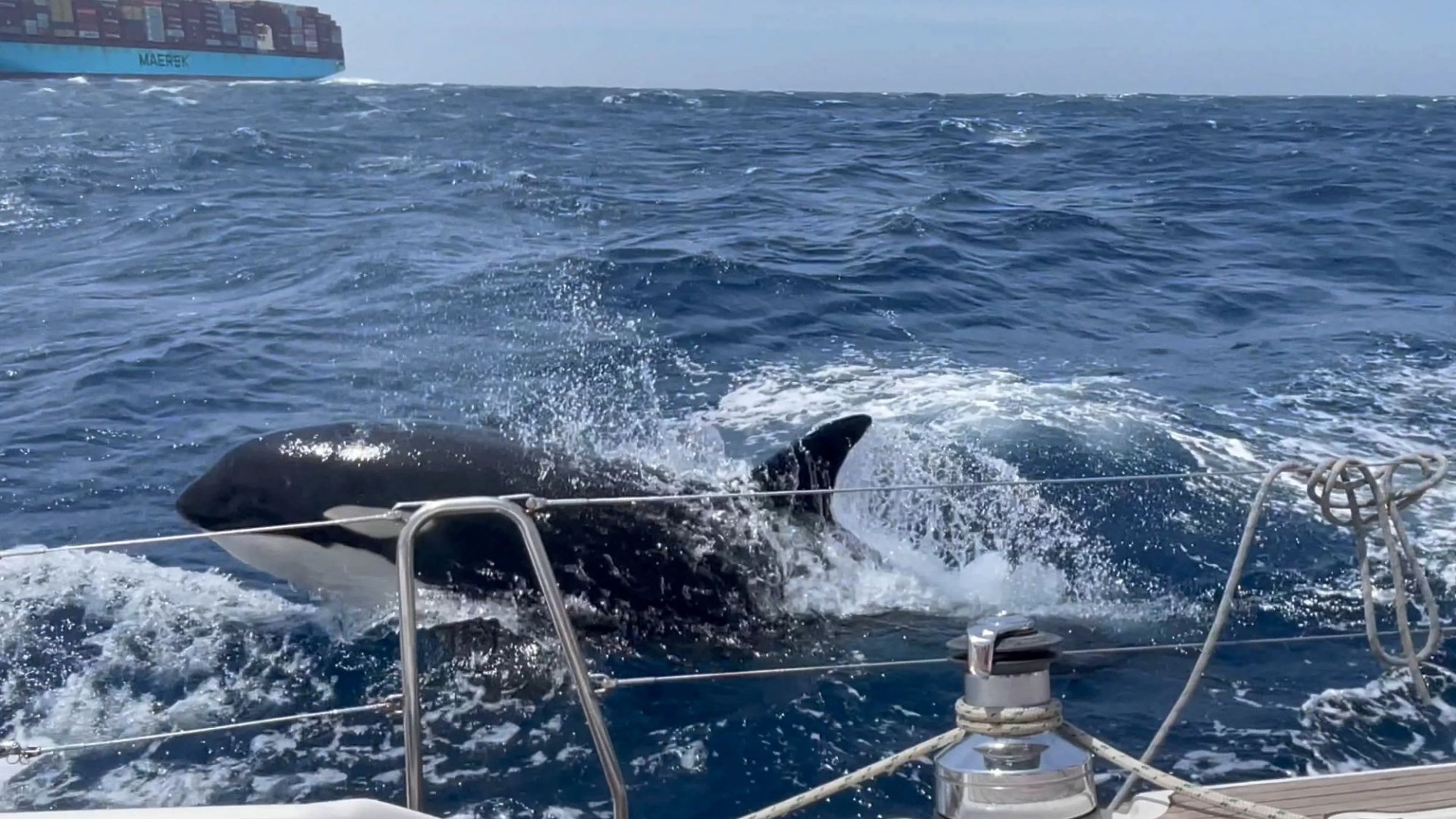
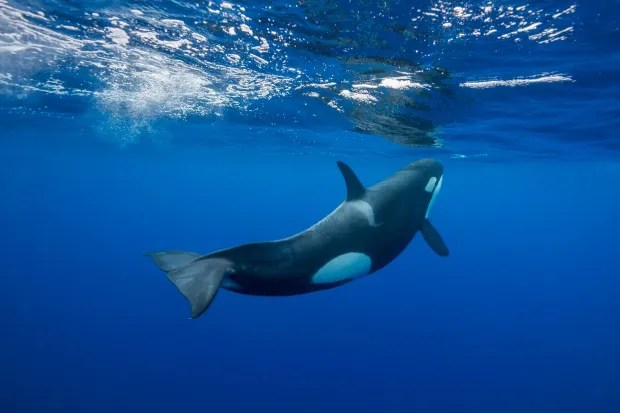
A GANG of killer whales terrorising boats off the coast of Spain have developed their own unique language, scientists claim.
The pod’s ferocious leader White Gladis has been captured communicating with her fellow orcas in a never before heard language which is baffling experts.
Gladis and her so-called “gladiator” students have been ramming vessels in the Strait of Gibraltar since 2020 leaving boats capsized and sailors trapped out at sea.
Ever since their campaign of chaos started, researchers have been desperately studying the orcas to try and figure out why they are attacking so frequently.
Scientists managed to record the pod as they travelled through the waters and have uncovered some unusual activity.
A unique set of noises have been caught between White Gladis and her followers where they appear to be communicating with each other.
This dialect features four varying sounds which appear to be like nothing ever previously recorded.
Dr Renaud de Stephanis, president of the Conservation, Information and Research on Cetaceans (CIRCE) in Spain, told The Times: “We’ve been studying these orcas for 30 years.
“Until now they were thought to be very silent.
“But now we’ve learnt that their calls are totally, totally different to any others.
“From a cultural conservation point of view, that’s just amazing. It’s like suddenly finding a new [human] language in the middle of Europe.”
Most killer whales remain silent as they hunt for their dinner so that the prey can’t swim away before being caught.
But orcas are a typically loud species of whale in general with humans often hearing them making clicking or whistling noises.
Scientists have studied countless orca calls in the past with many different variations being heard.
But De Stephanis says these are often seen as accents rather than brand new dialects altogether.
White Gladis’ crew instead speak a whole new language with it being comparative to the differences between Arabic and Latin.
These recordings have come from up to 40 different orcas who all live within the Strait of Gibraltar and the Atlantic Coast of Iberia.
At least 15 of the killer whales recorded are suspected of being involved in a boat ramming incident across the past four years.
The pod are believed to have been sighted over 700 times since 2020.
Are orcas violent?
MANY people see footage of the orcas ramming boats, the screams of those on board and the vessels slowly sinking and think the attacks have a sinister meaning.
But most scientists and marine biologists are in agreement that the orcas are not acting with any aggression when they crash into boats.
Instead, the reason behind these near fatal encounters is often attributed to the killer whales simply playing with the boat’s rudders.
Orca tracker Rui Alves told The Sun: “Scientists will always explain that if an orca is busy or if they’re hunting or something they will not care about the sailing boat
“But if there is no activity, the orca will see a sailing boat passing and will approach it and try to force the rudder from one side to the other side.
“They play with the rudder because it’s a moving part of the boat.
“They approach the boat to play with the rudder but they are very heavy – sometimes six tones – so they break it.”
Bernardo Queiroz, a dolphin tour guide who helps photograph orcas, added: “I’ve been with orcas on the water just 10cm away from their mouth, and they just come and watch you eye-to-eye.
“They are very curious and are not pretending to harm any person.
“Even if you fell on the water with them they will not touch you.”
And Thomas Le Coz, the captain of the Sea Shepherd France, explained killer whales are misunderstood and often aren’t aware of their sheer size.
“We have been working on the ground with scientists that have been studying orca for 30 plus years and the entire attitude of the orca during an interaction is a play attitude.
“The only difference with some orcas is that they push the game a bit too far and they are pushing to the point where they break the boat.
“They do it with our boat quite often but they are quite gentle. They come, they touch, and they blow bubbles.
“So it is definitely playing but obviously it’s causing all these all these problems with the sailboats.”
It comes after a string of boat targetings last year.
Footage captured the moment at least three killer whales launched an attack on a luxury sailboat near to Fonte da Telha beach in Spain.
After several blows, the vessel can be seen tilting dangerously from side to side before slowly submerging and sinking to the bottom.
All five onboard had to be rescued.
A second vessel was also immobilised in the same area a day earlier after it was struck in a similar fashion.
The boat was left with a broken rudder as the crew were evacuated back to shore.
A few days after the pair of strikes, a third boat was targeted by a pod of orcas off the coast of Portugal.
The coast guard was called into action again to rescue four people on a sailboat in Costa da Caparica after “successive collisions with the bow caused by orcas”.