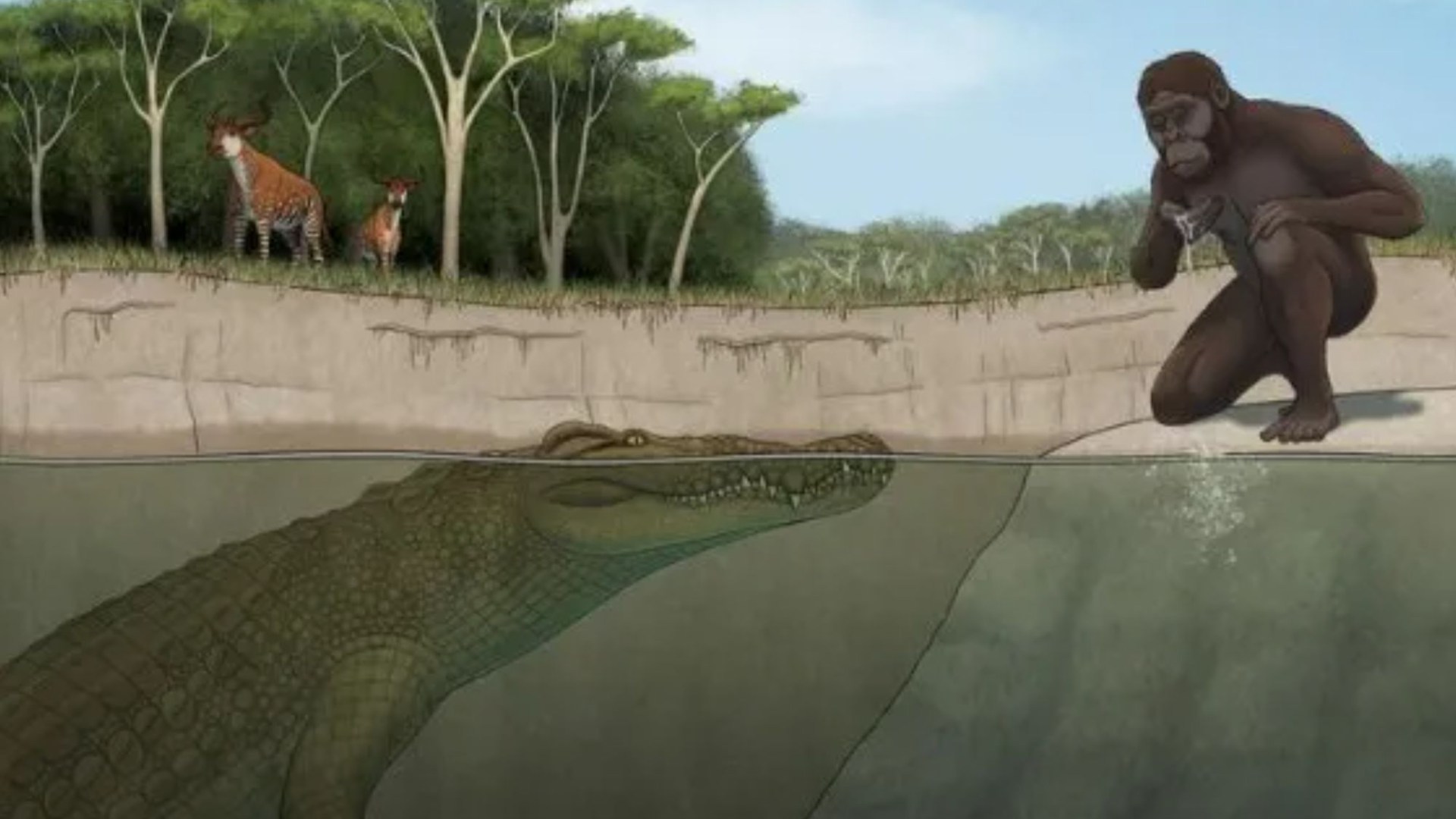
OUR early human ancestors faced a life-threatening monster lurking in rivers and lakes.
Scientists have uncovered evidence of a giant mega-croc beast that measured up to a whooping 15 feet in length.
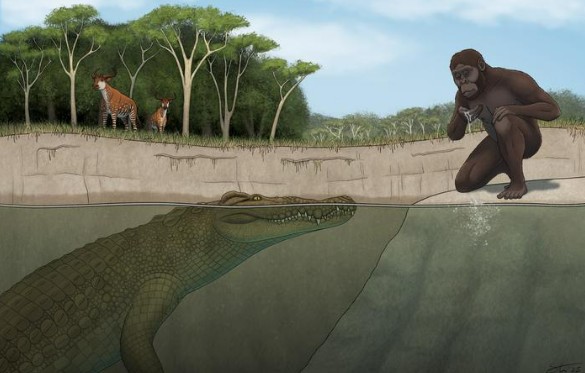
And full sized adults could easily pack 1,300 pounds in weight too.
This is a whole new species of colossal crocodile that’s been called Crocodylus lucivenator.
The name literally means “Lucy’s hunter” and there’s a reason for it.
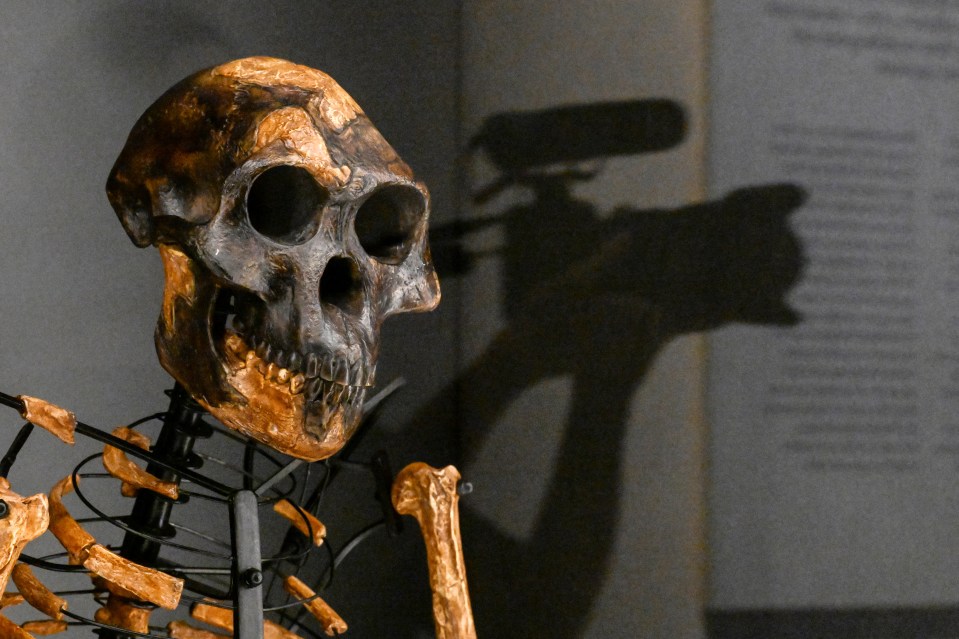
Way back 3million years ago our ancient ancestors embodied by the iconic Lucy roamed the world.
Read more about big creatures

And it’s Lucy that these mega crocs had a real hunger for.
“It was the largest predator in that ecosystem, more so than lions and hyenas, and the biggest threat to our ancestors who lived there during that time,” explained Professor Christopher Brochu from the University of Iowa.
“It’s a near certainty this crocodile would have hunted Lucy’s species.
“Whether a particular crocodile tried to grab Lucy, we’ll never know, but it would have seen Lucy’s kind and thought, ‘Dinner’.”
The mega-croc was a dominant big beast and the only crocodile on the shrubland and wetlands around what is now Africa.
It was a vicious ambush predator that hid in waters ready to pounce unsuspecting victims coming for a drink.
Sign up for The Sun Tech newsletter for gadgets, games & more

Hello! I’m Sean Keach, The Sun’s Head of Technology and Science
I’ve been writing about gadgets, games and the future of technology for more than a decade.
During that time I’ve penned thousands of articles, filmed hundreds of videos, talked tech on TV and radio, and travelled around the world to bring you the latest on Apple, Meta, Google, Amazon, Netflix and more.
And I’ve got a weekly newsletter called The Sun Tech that you can read for free every Thursday.
I bring you the latest from the world of tech, including behind-the-scenes action, exclusive content, expert analysis, and plenty of help advice – so please follow along!
The crocodylus lucivenator looked much like crocodiles today except it had one peculiar physical difference on its head.
They had a large hump in the middle of their snout.
This is similar American crocodiles but not seen with the Nile crocodile in Africa.
And the hump probably played an important purpose for males – to woo a mate.
“You see this in some modern crocodiles,” Professor Brochu continued.
“The male will lower his head down a little bit to a female to show it off.”
Researchers made their shock findings after analysing some 121 remains, ranging from skulls and teeth to parts of jaws.
The study was published in the Journal of Systematic Palaeontology.