In Germany, a national culture of remembrance – conscious of never repeating the horrors of Nazi militarism – is confronting the imperative of rearmament to support a reassertion of Europe’s core values. As Russia continues to wage war on Ukraine, Germans’ cultural shift offers guideposts to effectively defending Europe’s security – as well as its liberal, democratic traditions.
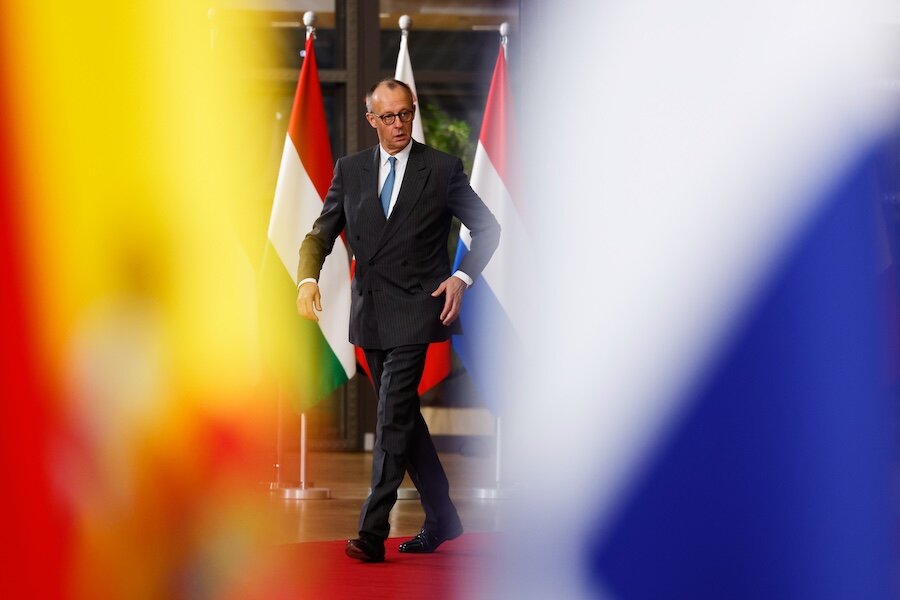
Earlier this month, the German Parliament voted to add more than 70,000 new troops to its army by 2035. This week, it passed the largest defense appropriation to date, at €50 billion (nearly $60 billion). At this writing, Chancellor Friedrich Merz is seeking to convince other European leaders to exercise a difficult option – using frozen Russian financial assets as collateral for loans to Ukraine’s beleaguered government.
Each of these moves carries risks. Domestically, as a Monitor news article recently reported, there is little appetite for military service among young Germans. Regionally, using the Russian assets – most of which are held by the Belgium-based Euroclear group – could carry monetary and reputational costs. (Russia has just filed a $230 billion lawsuit against Euroclear in Moscow.) And internationally, Europe as a whole is confronting a fraying relationship with the United States.
“Merz well understands the Russian threat to Europe, risks to the transatlantic alliance from Washington, and the economic opportunities [of becoming] a European defense hub,” noted an analyst with the Atlantic Council this summer. “And most importantly, he’s prepared to do something about it.”
This willingness to act underscores the German leader’s view that there is much at stake – and that Western Europe’s largest country (both by population and economic power) needs to step up to the demands. Timidity is not an option.
“Ukraine’s fate is the fate of all Europe,” he said this week, urging European Union members to show they are capable of “standing together and acting to defend our own political order.” (Germany’s military spending will help its neighbors, as more than 90% of it involves purchases from European industry.)
Mr. Merz has also spoken with conviction to German citizens about the rapid military and mindset transformation he believes is needed to counter Russia’s overt and covert threats to regional stability.
Even as American envoys shuttle between Russian, Ukrainian, and European leaders, Mr. Merz has urged the U.S. president to focus on elements for a lasting peace, which would include holding Russia accountable for the damage and loss from the nearly four-year war.
Germany’s newfound confidence and recognition of its potential for positive impact is reassuring to Ukraine and European allies. But it is also encouraging to its own people – signaling a readiness to move out of the shadow of the past, while still using its lessons to chart a future based on moral clarity and democratic values.