AN “invasive” outbreak of the disease has left two dead in Canterbury, Kent, as officials race to curb the “fast-acting” strain responsible.
An 18-year-old sixth form student and a university student have both been tragically confirmed as the victims.
Meanwhile, 11 others have been left “seriously” ill in hospital, including Keeleigh Goodwin, 21, who collapsed days after visiting Club Chemistry – a popular venue that’s been linked to the outbreak.
Her mum Khali fears she may have caught meningitis from vaping.
She told The Sun Keeleigh had shared a vape with a friend at Club Chemistry on the Thursday, March 12.
The mum said: “She did say that one of her friends also has sort of the same symptoms, obviously not as bad, but they’ve been sharing a vape.


“I think sharing vapes is a major way of it being passed.”
Two days later, Keeleigh collapsed at home after developing an “almighty bad headache” and telling her mum her body felt “stiff” – tell-tale symptoms of meningitis.
In hospital, she was diagnosed with meningitis B, the bacterial strain responsible for the current outbreak.
Meningitis is an infection of protective membranes around the brain and spinal cord, which can be very serious if not treated quickly.
It is usually caused by a viral or bacterial infection – though this is rarer.
The infection tends to be passed on as a cold would, through coughs, sneezes, kisses and other forms of close or lengthy contact.
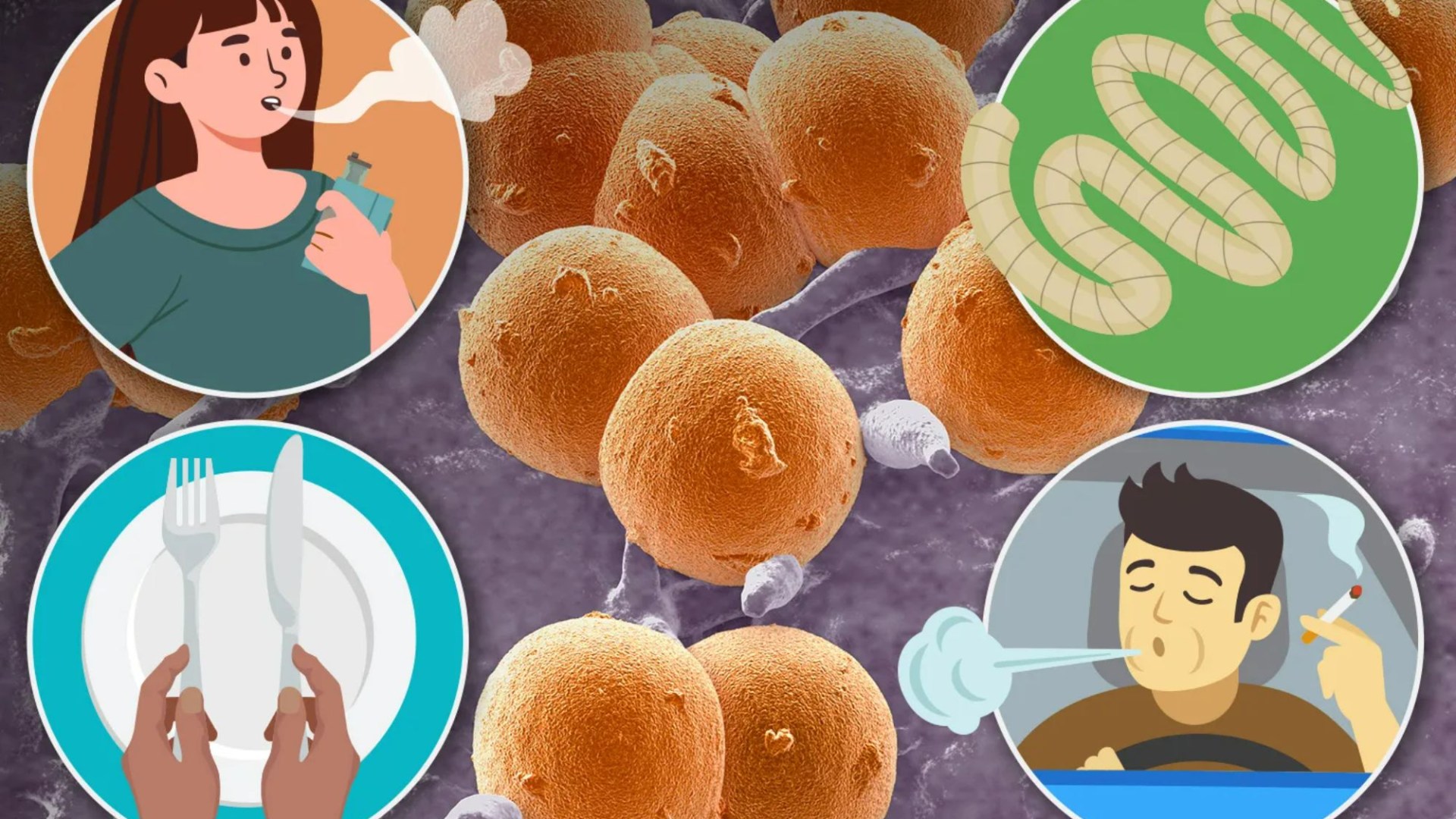
Here, we reveal obscure ways people may catch meningitis – from vaping, to sharing cutlery, breathing in second-hand smoke or contracting parasitic worms.
1. Vaping
One of the bacteria which causes meningitis is called meningococcus.
It can live harmlessly in people’s throats without people showing symptoms, but it can cause serious illness if it gets into the blood or spinal fluid.
But Prof Andrew Preston, Professor of Microbial Pathogenicity at the University of Bath, told Sun Health it could be possible for someone to pass germs to another person through vaping.
“If you share a contaminated vape, it’s going to go into the back of throat,” he said.
“But to cause the disease, it then has to cross from within the nasal pharynx over that quite strong barrier.”
So it’s “not just about picking up the bug,” he explained.
Discussing Keeleigh’s case, he said: “I wonder if the vaping itself has caused weakening of the barrier, and the bugs are then able to move across when normally they can’t.
What is MenB, the strain behind the Kent outbreak?
One of the bacteria which causes meningitis is called meningococcus, which can live harmlessly in people’s throats but can cause serious illness if it gets into the blood or spinal fluid.
There are different types of this bacteria and the most common is known as type B – what is often referred to as meningitis B, or MenB.
According to Meningitis Now, MenB is one of the most common causes of meningitis in the UK.
How can I protect myself?
There are multiple meningitis vaccines available in the UK.
But the majority of young people born before 2015 are not protected against meningitis B unless they have bought the jab privately for £110 per dose (a minimum of two doses are needed)
It was introduced on the NHS for babies in 2015.
The MenB jab offers protection against meningococcal group B bacteria and is recommended for babies aged eight weeks, followed by a second dose at 12 weeks and a booster at one year.
Other routine childhood jabs, including the 6-in-1 and pneumococcal vaccines, can protect against meningitis.
Elsewhere, the MenACWY vaccine is a single dose jab that protects against four strains of meningococcal bacteria. It was also introduced in 2015.
It is offered to teenagers in school and is also available to those entering university, up to the age of 25.
“That’s pure speculation.
“I wondered also whether there was some kind of dry ice used in the nightclub that weakened the barrier – but it would be impossible to generate the data to show that could be a contributing factor.”
“But that number of cases, if they’ve all come from a nightclub, then something has happened.”
2. Sharing cutlery
Meningitis is transmitted from person to person through close contact, so it makes sense that sharing items like cutlery might pass on viruses or bacteria.
NHS Inform says meningitis can be spread by “sharing utensils, cutlery and toothbrushes”.
3. Unwashed hands
Enteroviruses are one of the most common causes of viral meningitis.
Like meningococcal bacteria, they’re carried harmlessly in the guts of children and adults, according to Meningitis Now.
Spread of these viruses is common and they can be passed from person to person by coughing, sneezing.
But unwashed hands are also a common culprit, as particles from faeces can linger on the hands and could cause illness.
“Practicing good hygiene, such as washing hands after going to the toilet, will help to prevent the spread of viruses that are passed in faeces,” the cha
4. Second-hand smoke
Studies show that exposure to second-hand smoke could increase children’s risk of developing invasive meningococcal disease – a serious meningitis infection caused by bacteria.
Researchers from the University of Nottingham found that breathing in smoke from other people’s cigarettes made children more vulnerable to infection.
They were more likely to have bacteria causing meningitis in their nose and throat, researchers found – thus increasing the risk of infection.
“Environmental factors such as exposure to cigarette smoke or living in poorly ventilated, crowded conditions can increase the risk of meningitis,” Meningitis Now notes.
5. Fungal spores
Aside from viruses and bacteria, fungi can also cause meningitis.
Breathing in fungal spores found in soil, decaying wood and bird droppings can be the cause, according to the Mayo Clinic.
It doesn’t spread from person to person and it develops slowly, in contrast to other forms.
It causes vague symptoms such as tiredness and a persistent headache, which can last for some time before the more specific symptoms of meningitis appear.
Fungal meningitis is rare in the UK.
It usually strikes people whose immune systems are weakened through diseases like HIV or cancer treatment,
6. Tuberculosis
In rare cases, tuberculosis – dubbed one of the world’s most infectious diseases – can also lead to meningitis.
This is very unlikely but it can be serious.
Like fungal meningitis, its symptoms can start slowly and build up over days to weeks.
Tuberculosis is a bacterial infection that usually affects the lungs and it passes easily from person to person.
7. Worms
Parasites can also cause a rare type of meningitis called eosinophilic meningitis.
A tapeworm infection in the brain or cerebral malaria also can cause parasitic meningitis.
Amoebic meningitis is a rare type that sometimes comes from swimming in fresh water.
It can quickly become life-threatening.
The main parasites that cause meningitis most often infect animals.
People can get infected by eating foods that have these parasites.
Parasitic meningitis isn’t spread from person to person.