Fiction
Amity, by Nathan Harris
Book-loving, risk-averse Coleman journeys from New Orleans to Mexico in 1866 to find his sister, June, and the greedy patriarch who once enslaved them. Vivid, evocative, and thoughtful, Nathan Harris’ story of courage and character is an absolute winner.
Why We Wrote This
So many books, so little time. We’ve taken some of the guesswork out of picking new books by culling through the last 12 months of the Monitor’s 10 best books. We hope you’ll find opportunities, whether traveling, waiting in line, or sitting in a quiet spot, to savor the joys of reading.
Isola, by Allegra Goodman
Allegra Goodman’s novel follows the story of real-life French noblewoman Marguerite de la Rocque de Roberval in 1542. Orphaned at 3 years old and robbed of her fortune, she’s dragged aboard a ship sailing for New France by her guardian, only to be abandoned on a desolate island. Her transformation – and ignited faith – is astonishing.
Good Dirt, by Charmaine Wilkerson
Charmaine Wilkerson tells the story of Ebby Freeman, her grief-encumbered family, and a treasured clay jar crafted by their enslaved ancestor. Yanked into the spotlight as a child by tragedy, Ebby finds herself again in its glare after a wedding day humiliation. Wilkerson’s winning novel shifts between Ebby’s mental health escape to France and the family’s resilient, 19th-century predecessors. Fortitude and forgiveness abound.
Vera Wong’s Guide to Snooping (on a Dead Man), by Jesse Q. Sutanto
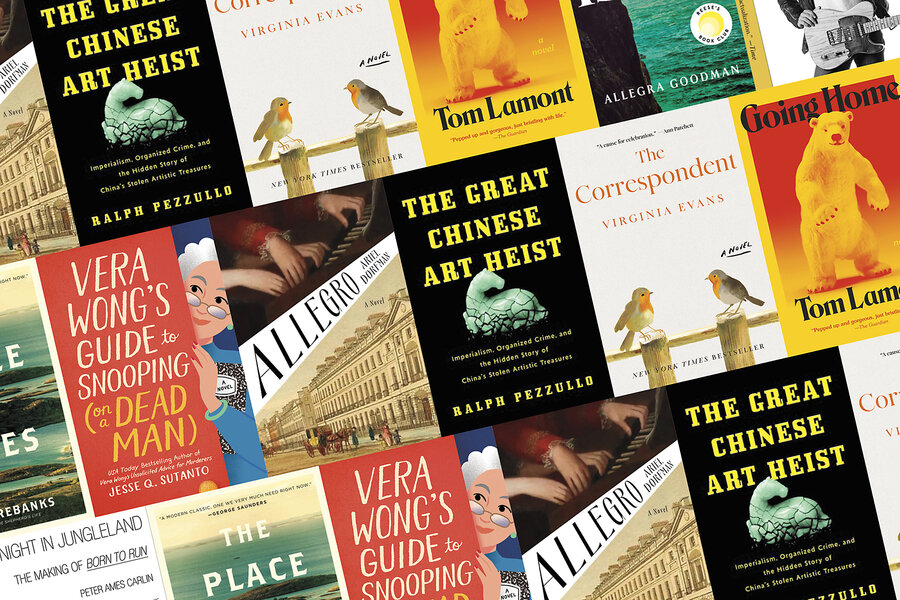
This charming sequel has everything that made the first book such a treat – found family, generosity, outstanding food – and ups the stakes with a mystery that adds an unexpected gravitas. Jesse Q. Sutanto writes about her own mother being scammed, and the poignancy and compassion she brings to her characters make “Vera Wong” an antidote for our all-too-selfish times.
The Emperor of Gladness, by Ocean Vuong
At the heart of Ocean Vuong’s achingly beautiful novel “The Emperor of Gladness” is a despairing, bookish 19-year-old Vietnamese American man who forges unexpected bonds with strangers. These include an 82-year-old World War II refugee from Lithuania and co-workers at a fast-food restaurant. Vuong, a prizewinning poet, evokes the beauty of a depressed, postindustrial Connecticut river town in language that shimmers.
Maya & Natasha, by Elyse Durham
Two Soviet-era dancers – twin sisters – vie for a single slot at the famed Kirov Ballet. The lengths to which either sister will go to derail the other’s career testifies to the desperation of artists hemmed in by a repressive government. Ambition, love, cruelty, and the longing for forgiveness circle one another warily in Elyse Durham’s darkly atmospheric debut novel.
The Correspondent, by Virginia Evans
In Virginia Evans’ debut novel, protagonist Sybil Van Antwerp believes “reaching out in correspondence is really one of the original forms of civility in the world.” She and her correspondents navigate life’s troubles while searching for forgiveness, love, and second chances. Have your tissues handy.
Allegro, by Ariel Dorfman
“Allegro” features Wolfgang Amadeus Mozart trying to track down the truth about the last days of Johann Sebastian Bach. And as if that’s not enough composers to fill a symphony hall, a letter delivered to George Frideric Handel might hold an important clue. Ariel Dorfman clearly has a reverence for both classical music and its history. As for the solution? “I think the answer is always music,” Mozart says.
The Dream Hotel, by Laila Lalami
In Laila Lalami’s unnerving speculative novel, archivist Sara Hussein is detained for having a problematic “risk score” due to violent dreams. Baffled, desperate, and increasingly enraged, Sara builds alliances, battles hopelessness, and strains to demonstrate her innocence in the face of institutional suspicion and weaponized data. Privacy never sounded so good.
The Impossible Fortune, by Richard Osman
The Thursday Murder Club is back, and the younger generation is in need of an assist from the Coopers Chase Retirement Village gang. Richard Osman knows why readers love his quartet, and this outing features narrative asides from Joyce, conniving from Elizabeth, and the unexpected delight of Ibrahim on the dance floor.
The Wayfinder, by Adam Johnson
Adam Johnson plunges readers into the South Seas. Faced with dwindling resources on a remote island, young Kōrero and her family yearn to set sail for their ancestral home. But warmongering kings, dynastic turmoil, and uncharted oceans await. Mighty and mythic, the novel is a captivating saga about endurance and purpose.
Going Home, by Tom Lamont
A trio of unlikely British men are tasked with unexpected fatherhood duties in the care of a delightfully inquisitive 4-year-old named Joel. The novel’s unforgettable characters and emphasis on caregiving and friendship spread a poignant and joyful message.
A Case of Mice and Murder, by Sally Smith
Shy barrister Gabriel Ward loves his quiet life in the Inner Temple, surrounded by his books and routines. Then the lord chief justice of England ends up dead – and barefoot – on Gabriel’s doorstep. The mouse in question is a literary one: Gabriel is defending the publisher of a children’s book. The setting is ingenious, and Sally Smith carries off the interlinking plots with aplomb.
Nonfiction
We the People, by Jill Lepore
Jill Lepore’s sweeping history of the U.S. Constitution focuses on the amendment process, arguing that the Founders intended the document to be revised. Polarization has made the ratification of new amendments nearly impossible, and Lepore warns that authoritarianism and political violence are more likely when the Constitution cannot be adapted to the times.
Buckley, by Sam Tanenhaus
William F. Buckley Jr., editor of the conservative National Review, shaped the conservative wing of the Republican Party. Joe McCarthy, Barry Goldwater, and Ronald Reagan were all indebted to Buckley’s intellectual leadership. Sam Tanenhaus brings the iconic figure to life in this evenhanded, insightful, and well-written biography.
The Place of Tides, by James Rebanks
James Rebanks, an English farmer, writes about how he found renewal during a stay on the Norwegian island of Fjærøy assisting one of the last “duck women.” Anna Måsøy not only provides a haven for nesting eider ducks, but also imparts life lessons.
I Am Nobody’s Slave, by Lee Hawkins
Lee Hawkins’ devastating memoir details the harsh realities of growing up in a middle-class Black family with deep, unacknowledged ancestral wounds linked to the family’s enslaved past. Hawkins manages to escape his troubled home life, and comes to realizations about slavery’s ongoing legacy.
The Containment, by Michelle Adams
Legal scholar Michelle Adams traces school desegregation efforts in her native Detroit and their reverberations throughout the North. She focuses her compelling narrative on the 1974 Supreme Court decision in Milliken v. Bradley, which ruled that majority-white suburban school districts could not be forced to desegregate.
Mark Twain, by Ron Chernow
Mark Twain was America’s first modern celebrity, using multiple platforms – books, newspapers, the lecture circuit – to advance his presence as a brand. In this detailed portrait, Ron Chernow tells the story of an author whose gifts as a media influencer seem to anticipate our own cultural moment.
Aflame, by Pico Iyer
Travel writer and spiritual thinker Pico Iyer has spent time at a Benedictine hermitage in California, a seemingly idyllic setting. “Aflame” takes a closer look at his longtime retreat. By reminding us that no place is perfect, Iyer points readers to the restful silence they might find in their own hurried lives.
Storyteller, by Leo Damrosch
Although Robert Louis Stevenson is known mostly as a writer of books for children, the 19th-century literary titan should be celebrated for the wider body of his work. That’s the premise of “Storyteller,” Leo Damrosch’s new Stevenson biography, which promises to attract new readers to Stevenson.
The Great Chinese Art Heist, by Ralph Pezzullo
In the last 15 years, several European art museums have fallen prey to carefully planned raids of Chinese antiquities. Almost none of the stolen pieces have been recovered. Ralph Pezzullo traces these robberies to the end of the Second Opium War in 1860 and the destructive looting of the Old Summer Palace in Beijing by British and French troops. But who is stealing these treasures, and where are they going?
Tonight in Jungleland, by Peter Ames Carlin
It’s hard to believe that Bruce Springsteen’s “Born To Run” – one of the most acclaimed albums in rock history – was almost buried by Columbia Records. After the young musician’s disappointing initial sales, executives had planned to drop him from the label. Peter Ames Carlin tells of the album’s creation, and how it eventually secured Springsteen’s stardom.
Dark Renaissance, by Stephen Greenblatt
Stephen Greenblatt’s skills as a scholar, storyteller, and literary critic are all on display in “Dark Renaissance.” This gripping book about the short, daring life of the Elizabethan dramatist Christopher Marlowe makes an eloquent case for his work’s beauty and sly unorthodoxy. Its chilling portrayal of Elizabeth I’s repressive reign also reminds us of the damage wrought by unchecked power.
Hostage, by Eli Sharabi
Eli Sharabi, kidnapped from his home on an Israeli kibbutz on Oct. 7, 2023, and held by Hamas for 491 days, has written a searing account of his captivity and his will to survive. He experiences deprivation and loss, but his unshakable love of life inspires.