
HE is on a mission to help our pets . . . and is here to answer YOUR questions. Sean, who is the head vet at tailored pet food firm tails.com, has helped with owners’ queries for ten years.
He says: “If your pet is acting funny or is under the weather, or you want to know about nutrition or exercise, just ask. I can help keep pets happy and healthy.”
Q) MY Malamute and Siberian Husky cross Cara has started shedding so much hair.
Is there a product that can manage the mess? I take her for a professional groom when it starts, but the hair is unbelievable. Any suggestions?
JEANETTE HARMAN, Birmingham
Sean says: Double-coated breeds like Cara are champions of shedding.
A professional groom is a great start, but at home, tools like an undercoat rake or de-shedding brush can make a huge difference when used a few times a week.
Avoid over-bathing, which can worsen shedding. A good-quality diet with omega fatty acids supports coat health. Sadly, there’s no miracle cure, but regular grooming will keep the fluff manageable.
Q) WHAT’S the best way to keep rats entertained?
Mine seem to always love new things in their cage. How often should I swap the toys around to keep them happy?
PETER THOMAS, Sevenoaks, Kent
Sean says: Novelty value is one of the best ways to keep them active, exploring and entertained.
Daily novelty is best, and doesn’t need to be expensive. You can use all manner of items from the home and outdoors to encourage play.
Providing supervised time out of their cage is also vital, as is human interaction.
Rats are the dogs of the pet rodent world, they are super intelligent and interactive. You can teach them tricks using reward-based training.
The sky’s the limit on ideas to keep them happy, and YouTube can give you lots of inspiration.
Q) MY dog Marley has been skiing on his bottom along grass and even the carpet.
He has been wormed and flea treated. What could be the cause?
EVE ROGERS, Newcastle-upon-Tyne
Sean says: It’s a misconception that scooting (dogs dragging their bottom on the ground) is due to worms.
While worms can sometimes contribute to the issues, it’s almost always due to a problem with their anal sacs or glands.
The anal sacs are two pouches inside your dog’s bottom that help with scent marking. The glands lining the sacs produce a liquid secretion with their own unique scent.
It’s why you see dogs sniffing each other’s rear end. It’s almost like who’s who, doggy social media.
If the anal sacs get blocked, are too full, aren’t emptying properly or are irritated or infected, dogs will scoot to try to empty them.
WHY does my four-year-old cat, Barnie, bring home mice? What can I do to deter it?
SAM JOHNSON, Manchester
Sean says: Barnie isn’t being naughty, he’s following instinct.
Cats hunt regardless of how well fed they are, and bringing prey home is often a sign of bonding or teaching behaviour.
You can reduce it by fitting a bell to his collar. Preferably two bells, side by side, make hunting harder. Many cats learn to stalk silently with a single bell.
A new development is colourful ornate collars that show birds there’s a cat about. Keeping him indoors at dawn and dusk — both peak hunting times — also helps.
Extra playtime at home can reduce his need to hunt. It’s very normal feline behaviour.
But it does worry me how many free-roaming cats we have decimating our struggling native wildlife.
Many owners are choosing to keep their cats indoors or in their own gardens with special fences to reduce this impact on local ecosystems. It keeps cats safer too.
Star of the week
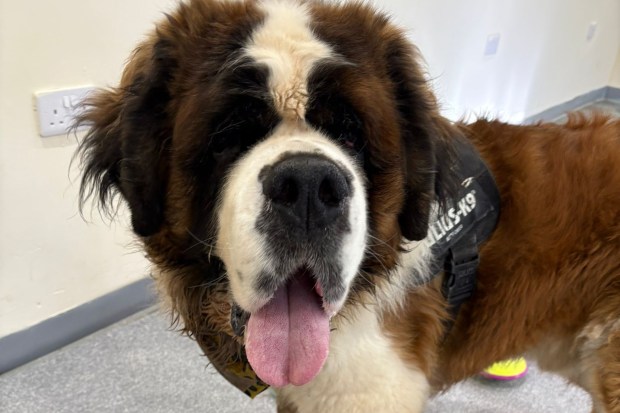
ST BERNARDS are known for their fearless rescues but now big-hearted Barry needs saving.
The blind, super-sized pooch is searching for a forever home after suffering abuse.
Barry was rescued by Saving Saints, a small, volunteer-led rescue network operating across the UK, and is currently being cared for at their Cambridgeshire shelter.
Spokeswoman Rachel Wesley, 53, said Barry needs a female owner, adding: “He may be blind, but emotionally he is very tuned in.
“St Bernards slobber, they shed everywhere, and yes, your carpets will never be the same.
“But what you get in return is a dog with an enormous heart.”
WIN: Illustrated animal book
LEARN about the amazing ways animals communicate, travel and survive thanks to new book Nature’s Dance.
Produced by Prestel Publishing, it is filled with vibrant illustrations.
We are giving away 17 copies. For a chance to win one, send an email headed NATURE, with contact details, to sundaypets@the-sun.co.uk by March 29.
Mother’s Day poses a peril to pusses
EXPERTS have issued a warning to cat owners this Mother’s Day that lilies can be deadly, as latest figures reveal 50 per cent of owners are unaware of the risk.
Charity Cats Protection said even brushing against the plant and then grooming, which can lead to them then licking the pollen, can lead to acute kidney failure.
Louis, a two-year-old cat from Wilmslow, Cheshire, had a lucky escape after coming into contact with a lily plant as a kitten.
His owner Jill Millen, 68, said: “Louis lives with my daughter and I had bought her a bouquet which contained lilies. One day Louis came trotting up with yellow pollen all over his chest.
“Our vet said that if we didn’t react quickly Louis’s kidneys could be damaged. Louis was placed on a drip to support his kidneys.
“My message is: Do not keep lilies at all, not only to protect your cat but also to avoid any invasive treatment which could be costly.”
Sarah Merrett of Cats Protection said: “A survey shows that, of cats that had eaten something poisonous, one in ten had ingested a lily.”
Symptoms include drooling, lethargy, diarrhoea or vomiting, tremors and loss of appetite. See cats.org.uk/dangerous-plants.