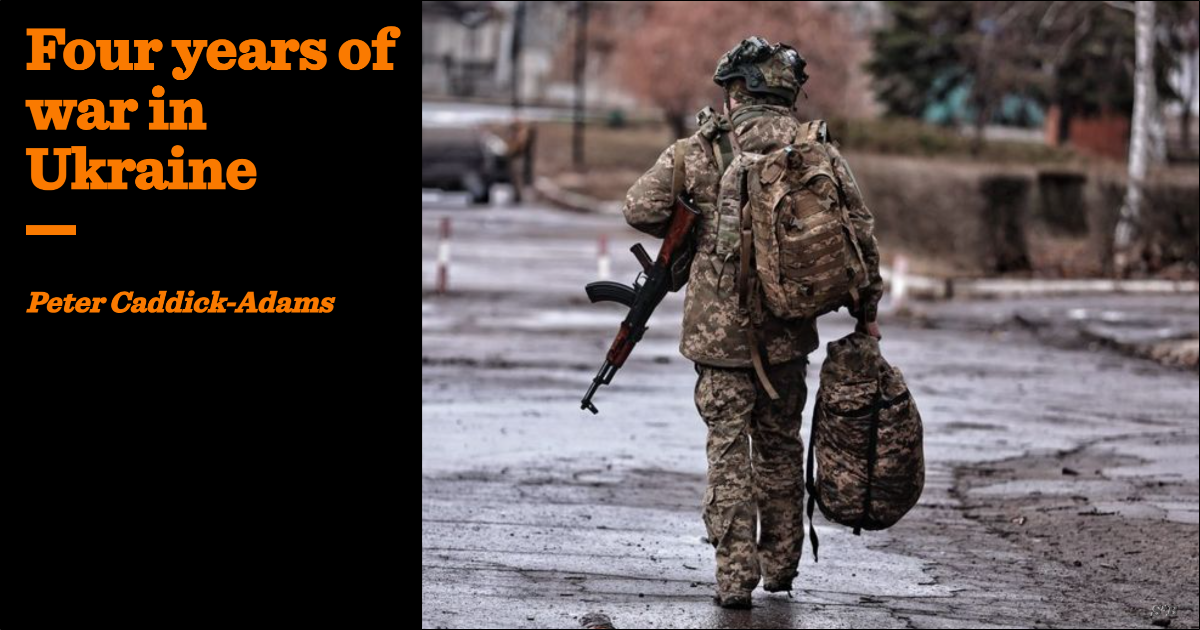
Today marks the fourth anniversary of Mr Putin’s “Special Military Operation” into Ukraine. It was expected to take ten days. The nation was fortunate in having elected a young actor, Volodymyr Zenensky (born 25 January 1978), as its President in 2019. He stepped up to the microphone in unflinching Churchillian fashion to defy his critics, and keep Ukraine in the war whilst marshalling international support.
Some 1,460 days later, the full-on Russian invasion, which has cost the Kremlin an estimated 1.2 million casualties — including 325,000 deaths — continues. This is more than double the 500,000 losses of Ukraine, according to the Center for Strategic and International Studies (CSIS), which gathers its data from information from military personnel, intelligence agencies and various governments. UN figures suggest that 5.7 million Ukrainians have fled abroad, 90 percent of whom are women and children, with 1.5 million resident in Poland and most of the remainder scattered across Central and Eastern Europe. Border regulations meant pets and zoo animals were left behind, causing widespread international stress. Menfolk between 18 and 60 were not allowed to leave the country, with up to 2 million still on the run, avoiding military service, as of January 2026. Round-ups of the unwilling are proving increasingly controversial.
NATO assesses Moscow’s losses are running at 30,000 personnel per month, up to 80 percent of them inflicted by unmanned systems. This means the combat drain on Russia’s army is now higher than its recruitment levels, including foreign levies and convicts. The newly appointed Ukrainian Defence Minister, Mykhailo Fedorov, stated recently his goal was to kill or wound 50,000 Russian troops per month, pushing Putin towards a price he cannot sustain. However, Ukraine’s losses have also been high, with the Wall Street Journal reporting an estimated 80,000 dead and 400,000 wounded. Many units are exhausted, operating with smaller numbers than they should, and short of ammunition. Against them, Russia just about retains a superiority in munitions and personnel, but it is worth noting that its population is four times Ukraine’s, with 18.9 million military-age males aged 20-39, compared to Ukraine’s 5 million. In essence, Kyiv’s losses are higher, measured by the percentage of its population lost.
Ukraine alleges Kremlin casualties of kit at 37,000 towed and self-propelled artillery pieces, 24,000 armoured combat vehicles, 1,300 air defence radars and rocket systems, 430 aircraft, and nearly 350 helicopters. Many of these were obsolete, based on the Russian/Soviet policy of never scrapping, but storing old military kit. The lion’s share of its 11,000 tank losses have been mid-Cold War-era T-72 machines dating from 1973, or T-62s, first introduced in 1961. If these reports are accurate, Putin’s military gamble has cost his army one in seven of the world’s entire stock of main battle tanks.
The destruction of an astonishing 136,000 military drones has been exacerbated by sanctions denying critical components to Russian companies, and which has seen the Putin state stripping microprocessors out of cars, television sets, washing machines and other domestic goods, to insert into their unmanned airborne fleet. The war had been remote for Russia’s elite, but their inability to buy luxury goods brings their leader’s dubious foreign policy choices to their doorsteps. Mass production of unmanned aircraft had been arranged with allies Iran and Venezuela, but domestic circumstances in both those nations have halted this. Ukraine has suffered no such disadvantages, with its agile generation of computer whizzkids devising new and better drones, using 3D printers.
None of these challenges to the Kremlin’s war machine seemed possible four years ago, with the Russians in overwhelming numbers seemingly at the gates of Kyiv. Some Russian setbacks have been self-inflicted, with corruption absorbing vehicle spares, tools, even reactive armour packages, as well as rations and payments made to “ghost soldiers”. Kyiv has suffered extensive equipment losses too, but every warehouse soon became a miniature garage for repairing combat-damaged Ukrainian kit, and repurposing captured Russian items. This was in addition to the donation or purchase of western Leopard, Challenger 2 and US-manufactured M1 Abrams tanks. However, for war-weary Ukraine, this is the twelfth year of strife with Russia, which first snaked its way into the Crimea on 26 February 2014. Much of the industrial Donbass region in the east was swiftly devoured the following month by Kremlin-backed forces, which then shot down an innocent airliner flying over eastern Ukraine, killing all 283 passengers and 15 crew aboard. Russia has never apologised.
Ukraine has changed our understanding of the modern battlespace. Clearly defined front lines are a thing of the past, with a wider, shifting “grey zone”, hundreds of miles wide, where civilians as much as soldiers are the targets. Widespread looting and torture, even genocidal massacres of the kind not seen since the 1940s, have returned to the very bloodlands of the east which witnessed the same under Stalin and Hitler. Men and women into their 50s, and even the disabled since fitted with artificial limbs, have proved they have as much of a role to play in military uniform as those in their 20s. Being a combat medic, communications expert, sniper, or drone operator is an age- and gender-neutral skill. Early on, hackers from across the world, including the Anonymous collectives, decided Ukraine needed their help and began disrupting Russian cyber operations. Enterprising members of Generation-Z have demonstrated their ability to crowd-fund from the world-wide-web the purchase of 4×4 trucks, ambulances, personal combat gear, computer terminals and satphones.
Much of the destruction has been caused by unmanned air, land, sea and sub-sea machines, which evolve in technological terms, on a daily basis. In the Black Sea, so many Russian naval vessels have been sunk or disabled that they are afraid to leave port. Both sides have learned that using Elon Musk’s Starlink network of satellites, strategic drones can fly many hundreds of miles to bomb remote targets with an accuracy of inches. Moscow has long been within range. AI will only fine-tune this terrifying capability. Yet, their low speeds make drones vulnerable to unmanned interceptors, which literally ram their opponents out of the skies. Short-range tactical First Person View (FPV) drones, flown by an operator using live-feed goggles or a monitor, now use gossamer-thin fibre optic cables which insulate them against jamming. Such unmanned devices can settle and rest, like an insect, to conserve their battery power, and wait in ambush for targets of opportunity.
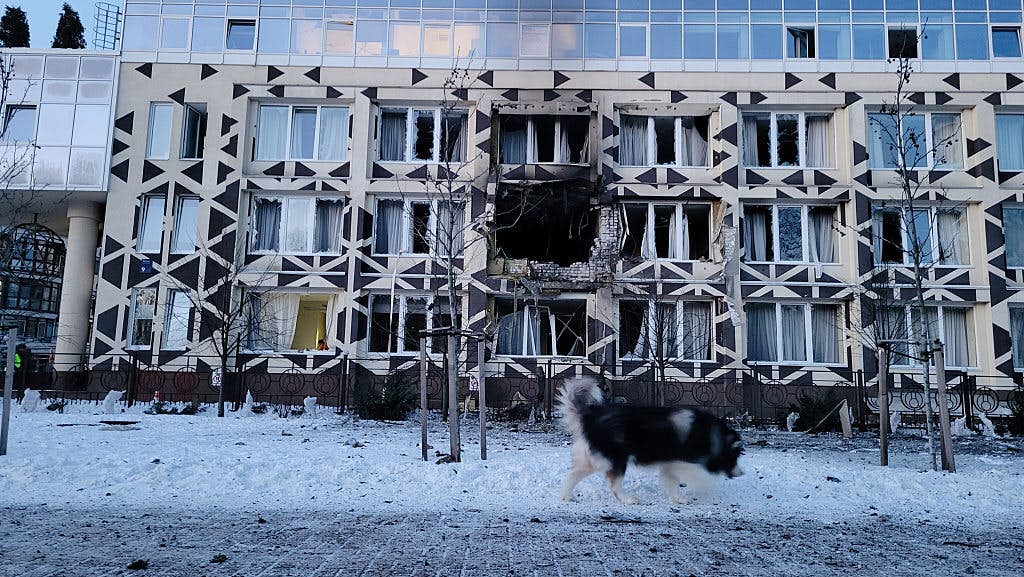
Reminiscent of the V-1 and V-2 blitz of 1944-45, long range, high-speed rockets and missiles are still difficult to interdict, with the result that both Moscow and Kyiv rely on the formula that if you launch enough, some will get through. Ukraine is experiencing great success in hitting Russia’s ammunition warehouses, oil terminals and power stations. Attempting to undermine morale, the Kremlin is conducting terror attacks on schools, hospitals, and residential housing. In the mid-winter cold, the climate itself is being weaponised. The Washington DC-based CSIS think tank in January 2026 assessed that Russian forces were advancing so slowly that they were taking less territory than the British during the 1916 Battle of the Somme. At the current monthly rate of advance in Ukraine, CSIS argued, it would take Russian forces over 150 years to capture the remaining 80 percent of Ukraine, if it could absorb the massive personnel losses indefinitely. Thus, Russian victory is not inevitable.
As a result, major offensives featuring even the armored and massed infantry units of four years ago, coordinated with aircraft and helicopter gunships, are now rare and difficult to conduct. Tanks and other vehicles have gained anti-drone “shells”, initially made of chicken wire, latterly from shipping containers, and finally from spindly pieces of wire resembling dandelions or miniature pine trees. All are designed to trigger warheads in advance of the vehicle itself. Drones have been equipped to carry cameras, thermal imaging, machine-guns, grenades and flame-throwers, whilst lasers are being trialled. Other unmanned drones haul logistics about combat terrain. The first battle casualties have been retrieved from behind enemy lines by unmanned land vehicle. Ukraine currently deploys about 9,000 of all types daily, with both antagonists producing around four million each a year, though China can build more than double that number. All troops have to be trained in their use, but the slower-procurement western military forces have yet to react to the scale of these lightning-speed technological developments. The collective drone output of all the NATO nations is tiny by comparison, a gap which should terrify western planners.
Each side has refined its tactics, shifting away from human wave assaults towards small infiltration groups to probe minefields, conduct reconnaissance and take prisoners. While drones give combat a very modern look, huge swathes of the 600-mile front line are guarded by sandbagged trenches, minefields and concrete anti-tank ‘“dragon’s teeth”, familiar to students of World War Two. The mainstay Ukrainian heavy machine-gun remains the water-cooled, belt-fed 7.62mm Maxim, first issued on little wheels to the soldiers of Tsar Nicholas II in 1910. Mounted singly, in double, triple or quadruple configurations, with modern optics it is still highly regarded as the preferred slayer of infantry — and drones. Sometimes there is no point in reinventing the wheel.
However, Putin is impatient for results. With several senior officers perishing at the front and prominent officials suffering a series of fatal encounters with faulty windows, aggressive stairs or swimming pools — not to mention Ukrainian hit squads — Putin’s compliant generals are afraid to stand up to him. The fate of his former friend, Wagner boss Yevgeny Prigozhin, who led a mutiny and whose executive jet unexpectedly plummeted from the skies in 2023, illustrated what happens to those who defy him. This is why Russian combat losses, often of prison convicts, poorly-trained conscripts or third country nationals from Africa, Cuba or 15,000 North Koreans, have been so high. Centuries of bloody autocracy have left the Kremlin unwilling to decentralise decision making, hence its lack of an effective NCO corps, and its glacial top-down command-and-control system that rarely provides timely direction to frontline forces. It is designed to tell its masters, including Putin, what they want to hear, rather than provide accurate strategic information, resulting in poor and wasteful choices.
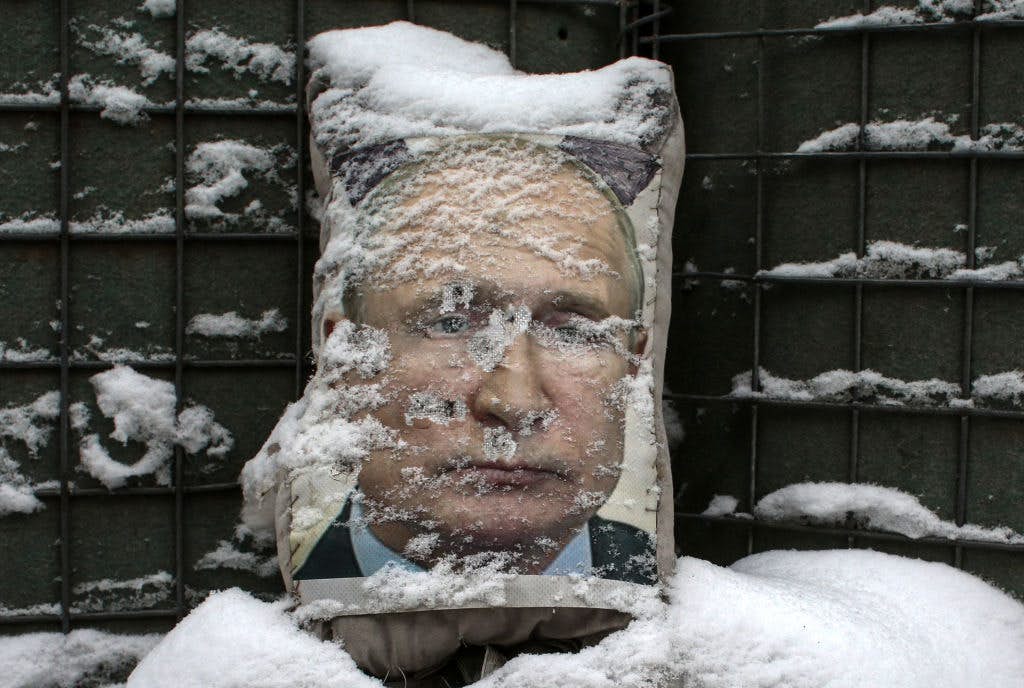
Putin sees this clash as his version of the Great Patriotic War, where the USSR defeated Nazi Germany in 1941-45 at huge cost. He has spoon fed Russia stories of his family’s involvement in that war and the death of his elder sibling, Viktor, in Leningrad in 1942. He was born into the USSR’s repressive machinery, with his grandfather, Spiridon, a personal cook to Lenin and Stalin, while his father, Vladimir, served in the NKVD. Domestic television is awash with documentaries and feature films on that struggle, many of excellent quality and highly informative, but the most recent have shifted into portraying Stalin, once seen as the cruel dictator who presided over a regime of terror, as a hero in Russian folk history. Putin is desperate to be seen in the same light, which explains why he has locked himself into a forever-war in Ukraine. Isolated from his people, he worships the idea of being a warlord. With sanctions against his oil companies, and capture of his shadow fleet tankers, his central bank has been forced to liquidate its reservoir of foreign currency and 71 percent of state bullion reserves to pay for his Ukraine adventure.
Though at present he may not be able to win the war, he equally fears peace. Bloody conflict has become an end in itself for the man in the Kremlin. Any American-negotiated peace plan is unlikely to satisfy him. Most negotiations over the last four years have been sabotaged by Putin and his henchmen refusing to concede one iota on their basic territorial and political ambitions of destroying, or at least neutering Ukraine as a viable state. A Russia not at war would reveal the grieving relatives, angry veterans, declining living standards, shortages of luxury goods, tanking economy and questions about Putin’s leadership. For the man who could stop the conflict in an instant, peace would be more dreadful than war.
Although the combat is limited to two countries, this confrontation has spread beyond the original battlefield, as external nations have chosen sides. Other countries have supported Russia with personnel, tanks, drones, technology and money. The Western “Coalition of the Willing” is helping Ukraine with training, war-fighting doctrine, intelligence and weapons. NATO countries are learning at least as much from battle-hardened Ukrainian soldiers as they can teach them. For Ukrainian infantry recruits, the UK Ministry of Defence provides each with a 51-day Basic General Military Training course. Other week-long courses are run in Poland by NATO and the EU Military Assistance Mission (EUMAM) Ukraine (which coordinates training missions) to “train the NCO trainer”, and for squads, platoons, and companies, plus 21-day exercises for brigade staff officers.
Operations have identified Ukraine’s dearth of staff-trained officers, vital for managing offensives at higher level, and to integrate the many combat processes and assets on offer, including wargaming, force regeneration, surprise and intelligence, reconnaissance, training and future plans, maintenance and battlefield repair, integration of reserves and replacements, information and cyber initiatives, deception and psychological warfare, long- and short-range artillery, fixed-wing and rotary air, communications management and interception, electronic protection, medical aid, engineers, unmanned systems, infantry and armour. Other NATO-standard methods of doing battle damage assessment, civil-military relations, electronic warfare and individual emergency medical training are also eagerly received by Zelensky’s lions. This is before the quartermaster’s nightmare of managing the bewildering array of spare parts needed for the many vehicle, weapon and system types donated by the west. The EU and NATO understand that the strife in Ukraine is what they trained for throughout the Cold War, and that the “left flanking with bags of smoke” days of battle have grown enormously in complexity.
Is there a chance the conflict might spread? As after the treaty of Versailles in 1919, a poorly-drafted peace for Ukraine might encourage Mr Putin to stray in the direction of other territorial ambitions. Mr Trump cares little for the political consequences, only the commercial opportunities this might open in Kyiv and Moscow. However, there is a crucial disconnect in American foreign policy. While stepping back from military leadership in NATO, the US still wishes to discourage European armaments manufacture, and must learn they can’t have it both ways. Last month, the leading TV propagandist Vladimir Solovyov called for Russia to conduct more “special military operations” in Central Asia and the Caucasus, meaning independent countries like Armenia, Georgia, oil-rich Azerbaijan and Kazakhstan. At the same time, Kremlin-linked ideologue Alexander Dugin stated that “no post-Soviet state should possess sovereignty”, arguing that his master “had no choice but to restore the Russian Empire”. Closer to home, this might indicate a swift land grab in Estonia if NATO attention was adequately distracted or the USA was sufficiently disinterested.
Distractions might include assassinations, espionage, arson and cyberattacks of the kind already seen across Europe. Drone swarms launched from Russia’s shadow tanker fleet, of the kind suffered last year in Denmark and Germany, and which nearly ambushed President Zelensky off Dublin, are another danger. Mr Putin has already proved he is no respecter of international borders with the 2006 poisoning in London of Alexander Litvinenko and the 2018 attempted poisoning of Sergei and Yulia Skripal in Salisbury. The threat, therefore, is very real.
The ramifications are several. While the UK has become the self-appointed cheerleader for Ukraine, none of the conflict’s warfighting lessons have been incorporated into the current defence budget. The current allocation of 2.4 per cent of GDP is inadequate. Equally, 3 per cent by 2029-30 will not do. Only a figure approaching 5 per cent might reverse the UK’s military decline, whose present arsenal allows a mere eight days of the kind of intense warfare seen in Ukraine, before ammunition stocks hit empty. There is no network of national factories to quickly replenish the shells and missiles, tanks, guns, ships and drones that would be expended. Too much is bought abroad, with long lead times. The much delayed (from 2017 to 2029) £5.5 billion Ajax family of six armoured vehicle types, illustrates the tensions between buying cheaply off-the-shelf from elsewhere, and managing a cutting-edge solution that is home-grown but far more expensive and time-consuming. And this is before any attempt to increase personnel numbers. The Ministry of Defence has got used to promising “jam, but only tomorrow”. British generals and admirals, increasingly vocal, despair.
With the United States appearing to step back from international organisations like the UN and NATO, the UK remains robust about facing off future aggressors like China and Russia. However, it has to recognise that frictions with allies and coalition partners, particularly over issues of risk and escalation, are inevitable. Perhaps Brexit and strained relations with Washington DC are part of this bigger wheel of history. In the short-term, Britain does not have the personnel numbers or budget to step up to the responsibilities beginning to the vacated by Washington DC, or even match those of principal European military colleagues in France, Germany and Poland.
This is important, because only a credible defence budget, backed by an adequate manufacturing infrastructure and strong personnel numbers can reinforce the UK’s stature on the international stage. These will make its security guarantees more credible, and should deterrence falter, its escalation management will be more effective. This leads back to the fourth anniversary of the Russo-Ukraine war. Countries like Britain need to find the money to support Ukraine as well as expand their own conventional national defences. It has been too easy to rely on the nuclear umbrella of last resort, but Ukraine proves, even under the nuclear shadow, that protracted and highly destructive conventional war remains possible.
Countries like China and India have watched how Russia, despite underperforming to a humiliating degree, has nevertheless regenerated its forces, improved its tactics, and sustained its economy to confound even the closest of observers. To its many allies and well-wishers, Ukraine has demonstrated an ability to defend its territory, innovate militarily, and rally a wide-ranging coalition to its cause that has far exceeded any projections. However, the world’s spy agencies must also note how senior intelligence officials need to make their voices heard in today’s era of geopolitical uncertainty. Apparently, there is evidence that the US and Britain uncovered Putin’s plans to invade Ukraine beforehand, but were ignored.
Kyiv is fighting for its very survival and cannot give in. Mr Putin has too much of his personal machismo at stake to stop. Trump-led peace initiatives are tending to favour Russian gains without acknowledging Kyiv’s plight. The darker cloud is that failure to learn from the military and political experience of Ukraine will find the West dangerously ill-equipped to manage a greater war, just when the likelihood of such a conflict is growing. In beleaguered Ukraine, whose tenacity we celebrate, the eventual result will indicate the path of wider European security, including that of the UK, for the next fifty years.