Former RAF pilot John Peters who was captured during the Gulf War in 1991 after his plane was shot down says it is ‘a game of cat and mouse’ as the Iranians hunt for the missing US airman after downing a US jet.
Speaking about his own ordeal in detail as the US bid to find their airman before Iran do, Mr Peters, who was held alongside fellow airman John Nichol for seven weeks during the first Gulf War during which time both men were tortured and paraded on Iraqi television, said ‘the transition was shocking’ when they were forced to eject from their plane ‘and a position of power in the air’.
‘You land in enemy territory. You have just gone through an extreme event where you’ve been shot out of the sky and you have just ejected.
‘I had ejected at 320 feet so I was only on my parachute for ten seconds. You are then on the ground. We had gone from a position of power in the air – involved in this huge air power – like this poor American crew would have done – to literally just John and I being two little pink bodies in the desert.
‘The transition is just shocking. The first thing we did was to giggle which was really pathetic actually thinking ‘what the hell do we do now?’.’
Describing the dramatic moment their plane was hit and they were engulfed in ‘an orange doughnut of flames’ and his thoughts in the cockpit as they prepared to eject, he said: ‘It is defined by the moment – when we got hit by the missile, the aircraft rotated a couple of times and we were only 50-60 feet above the ground doing about 500 or 600 knots at the time and then you have to deal with the anti-aircraft guns.
‘Basically, it is a trained response and you are trying to solve problems but I couldn’t see the back of the aircraft.
‘It was completely orange flame and was about a 15 feet doughnut around my plane – I couldn’t see the aircraft’s right hand wing – then you click into a trained response and I know this sounds boring but this is why we are trained so much so you realise that you now have to eject because this aircraft is going to disintegrate around us so you then go through the checks to eject and that is when you eject.
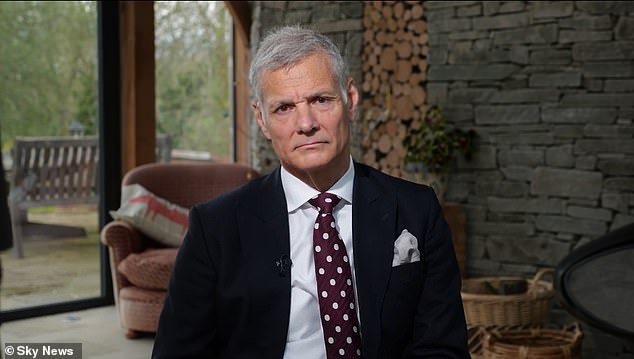
Former RAF pilot John Peters (pictured) was captured during the Gulf War in 1991 after his plane was shot down
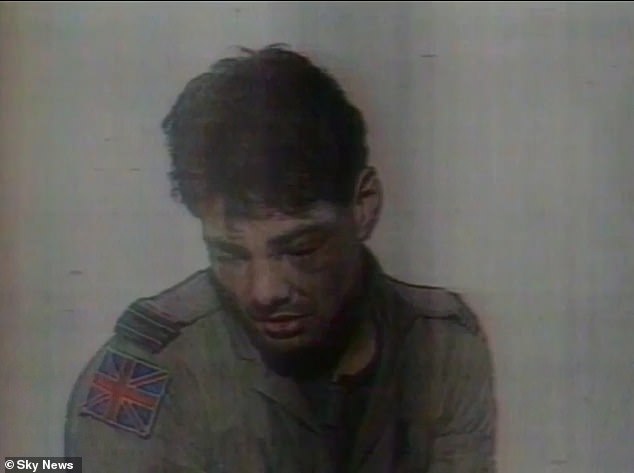
Peters (pictured) recalled today how he and his airman John Nichol were held for seven weeks, during which time both men were tortured and paraded on Iraqi TV
‘That is the first time you will have done it because you never eject in practice but you have complete faith that you pull that handle and you will be out of the aircraft and that is how it is.’
Recalling the ‘initial shock on the ground’ they experienced and what the US crew would have gone through when their plane was shot down, he said: ‘You then literally because of your training put the next cassette in as it were and think we now need to evade and that is exactly what that American crew will be doing now.’
Speaking on Sky News, Mr Peters suggested what would now be going through the minds of the remaining US airman still in Iran following the safe retrieval of his or her colleague.
‘Much of it will the training and I won’t go into what we were taught by the sophistication will have increased but it will have increased on both sides so the stakes are the same really and it is a game of cat and mouse.
‘The US has got to find their colleague and they will have combat search and rescue squadrons who will do that and plan how to get that person out as – as you can imagine – the Iranians will be saturating the area as best they can because this is now a political game because that gives them huge leverage.’
Describing his subsequent dramatic capture in 1991 when he narrowly avoided being shot in a hail of gunfire, Mr Peters said: ‘I was on the ground and a bit dazed and John landed about 100 metres away and wandered across, picked up the parachute and said “this will be the Iraqi desert then”.
‘That’s why we giggled. It was beyond pathetic actually but that’s when you click in and we started to make our plans of what we going to do.
‘We were on the ground for about two hours when about 20 Iraqi soldiers found us and they are just spread out in front of you with about 20 Kalashnikov machine guns and we have two little pistols.’
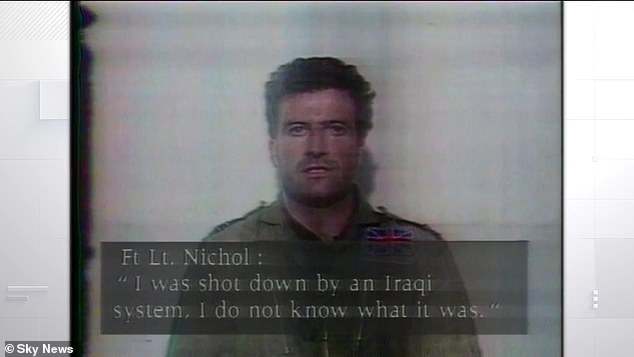
Pictured: former RAF pilot John Nichols, who shot down alongside Peters in 1991
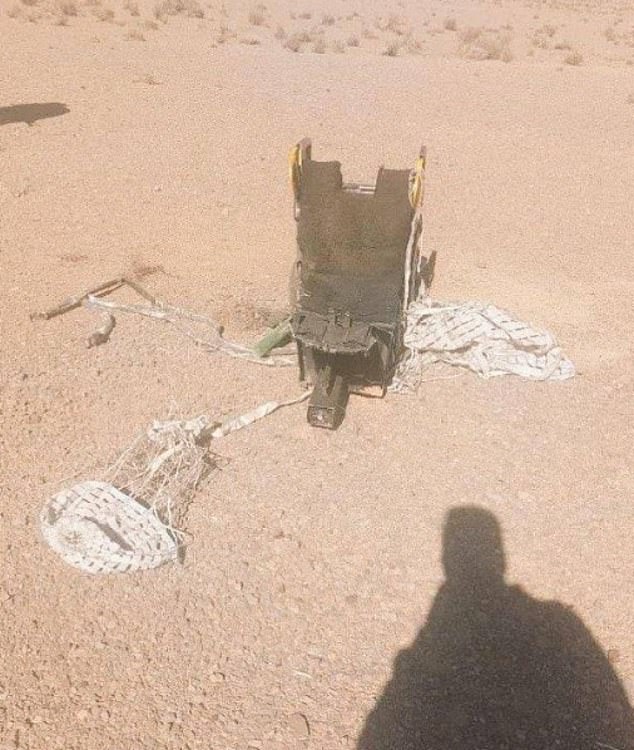
Pictured: a photo which emerged on Friday of an ejection seat following the downing of a US fighter jet. The whereabouts or status of the crew currently remains unknown
Detailing how they then opened fire, he said: ‘We were lying in the sand with nothing to hide behind and the very first bullet landed just inches from my head and then that was followed up by hundreds of bullets as we were then basically buried in the sand by machine gun fire and eventually they got to us and we were trying to give ourselves up but they were scared of us as well – and they beat us up.’
Asked about the chances of the US finding their downed airman, the former RAF pilot said it was now ‘a game of probability and cat and mouse’ and all the pressure was now on the individual, and if he was captured it was ‘playing with fate for any prisoner of war.’
But praising the US’s capabilities at potentially finding the missing airman, he said: ‘The Americans are unbelievably good at combat search and rescue and have huge resources behind it because a downed air crew member gives political leverage but for the Iranians – it’s their land and they know their land – that is a very contained moment in a very constricted place however big the country is.
‘You are going from a world event down to an individual event and that is a pressure that that individual has now.’
Talking about how he became a household name when he was released and returned to the UK, he gave a stark warning about the impact of war and even called himself a ‘moral obscenity’.
He explained: ‘I reinforce every worst stereotype of war. I came back and was feted and I had friends who died in war and from my perspective no one ever talks about the minimum 100,000 Iraqis who died in war.
‘War is not to be entered lightly and individuals suffer for it and countries suffer for it.’
He added: ‘I am very aware because back in the day we didn’t have social media so it was the first live televised war so I can’t really escape this image, and here I am talking 35 years later about an event in my life and I am still asked to go on television.’
Surprisingly, Mr Peters said he had not suffered long-lasting effects from his traumatic ordeal, revealing: ‘I have not lost one wink of sleep from my prisoner of war experience.’
And he added: ‘My only thought at the moment is for that current aircrew member because they will be very aware of what they need to do and will put their training to good use and hopefully will be extracted and I am also thinking about their family.’
Recalling his own family’s experience when he was captured, he said: ‘For me, I had Helen, my wife, and our two children – at the time two and my daughter was six weeks old when I went to war because you are that age when you are aircrew.
‘My thoughts are now with the individual and the squadron members because it certainly affects your friends within the air force and their families. As a prisoner of war you are then just playing with fate.’