A former police chief who apologised for her force’s ‘unacceptable’ failures in the inquiry into the Nottingam attacker is to take up a new job reviewing serious cases.
The victims’ families have said the appointment of Kate Meynell to the head of a regional review unit raises ‘fundamental questions about judgment, accountability’.
Ms Meynell was chief constable at Nottinghamshire police when paranoid schizophrenic Valdo Calocane killed students Barnaby Webber and Grace O’Malley-Kumar, both 19, as they made their way back to their student accommodation in the city in the early hours of June 13, 2023.
More than an hour later, Calocane stabbed school caretaker Ian Coates, 65, to death, before stealing his van and using it to run over three pedestrians.
Meynell has been heavily criticised for her force’s response to Calocane’s crimes.
She admitted at the ongoing Nottingham Inquiry the failure to apprehend Calocane before his killing was ‘unacceptable’ .
She also described the complaint to the press regulator over the Nottingham Post’s coverage of a ‘non-reportable’ briefing – and the fact that no one told the families about it – as a mistake.
The families of the victims have also told of their devastation after learning prosecutors intended to accept his pleas of guilty to manslaughter – rather than murder.
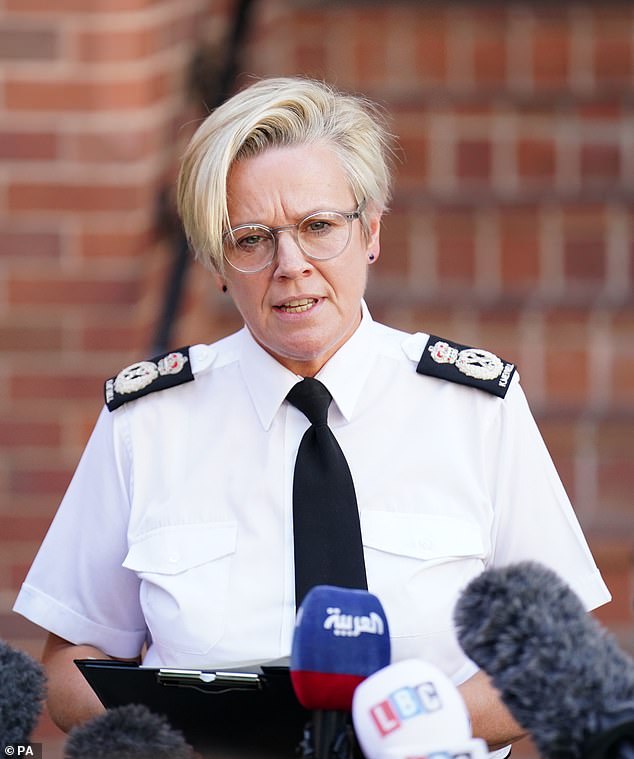
Former Nottinghamshire Police Chief Constable Kate Meynell pictured speaking to the media outside Central Police Station in Nottingham shortly after the triple killings
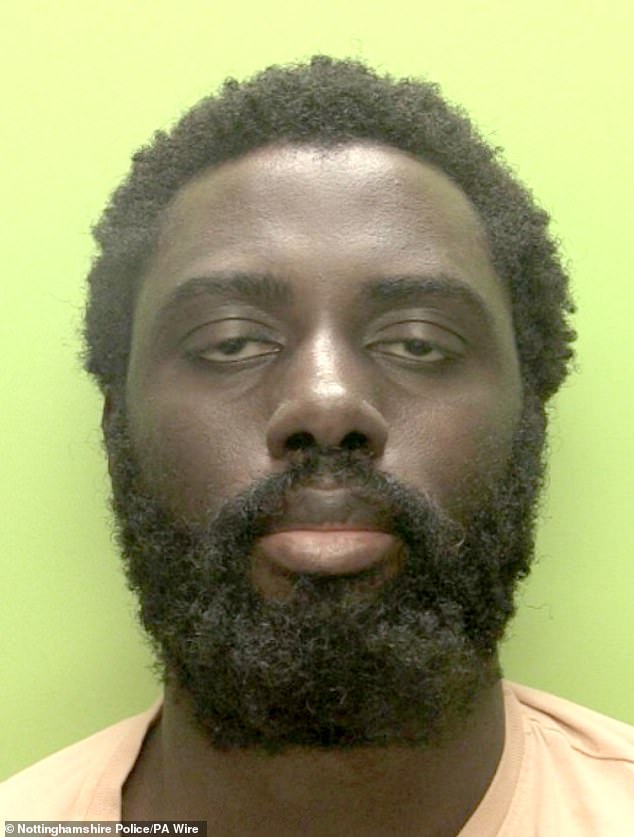
Valdo Calocane, who killed University of Nottingham undergraduates Barnaby Webber and Grace O’Malley-Kumar, both 19 and grandfather Ian Coates, 65, in June 2023
Meynell had earlier hugged the parents with tears in her eyes and told them: ‘We’ve got him and he’ll go down’ during a meeting at a hotel after the stabbings.
Calocane, who admitted manslaughter and attempted murder, was detained indefinitely in a high-security hospital instead of prison after prosecutors accepted his not guilty pleas to murder on the grounds of diminished responsibility in January 2024.
Meynell, in charge of the force since December 2022, announced last year she would be retiring from the role at Nottinghamshire police due to a cancer diagnosis.
It has since emerged, in her witness statement to the inquiry, that she will take up a new role as head of the East Midlands Special Operations Unit’s regional review unit on April 6.
EMSOU is a specialist unit staffed by officers and staff from the East Midlands’ five police forces tasked with tackling the most serious, organised and violent crime across the region.
Its regional review unit team conducts reviews of major inquiries, critical incidents and other identified investigations or themes.
The unit had been asked to review Nottinghamshire Police’s investigation into Calocane.
Former chief constable Meynell had told the inquiry that EMSOU’s review findings contained ‘nothing that raises any concerns for me regarding the overall quality of the investigation’.
But Meynell apologised for ‘unacceptable’ failures which left Calocane free to kill. She admitted he should have been arrested after assaulting a police officer months beforehand.
A warrant for paranoid schizophrenic Calocane’s arrest was outstanding at the time.
Ms Meynell told the inquiry: ‘Our processes around warrants weren’t adequate. I have apologised. It was unacceptable.’
The force has also been criticsed after it emerged police officers and staff accessed material on the murders without a legitimate purpose.
Emma Webber, mother of murdered Barnaby, said she was ‘appalled’ by the decision to appoint Kate Meynell to oversee reviews of serious cases.
‘The Nottingham attacks and the murders of our loved ones exposed serious failings, including within the force for which she held senior responsibility until just a few days ago,’ she said.
‘Those matters are still the subject of ongoing scrutiny in the Nottingham Inquiry. She has only just left the witness box.
‘To make this appointment now, in the middle of that process, is not just inappropriate, it is offensive and deeply insulting to families like ours who are still fighting for answers.
‘This is not to mention the very appointment itself which given her conduct appears to be totally inappropriate to us.
She added: ‘It raises fundamental questions about judgment, accountability, and whether those in positions of power truly understand the impact of these decisions on bereaved families.
‘This appears to be a very important role to which she appears to be wholly unsuitable for given her force’s and her own personal failings.
‘You cannot credibly ask the public to have confidence in a system of independent review while placing someone so closely connected to a case under active examination into a role that requires exactly that independence but which has already exposed so many failings.
‘This risks undermining trust not just in this appointment, but in the wider process of learning lessons from serious failures.
‘Families like ours are not interested in warm words or procedural exercises. We want honesty, accountability, and change. Announcements like this suggest we are a long way from that.’