QUE SERA, SERA whatever will be will be, we’re going to Wembley..
A chant adopted by thousands of fans up and down the country over the years when club football descends on the national stadium.
Whether it be the FA Cup Final, Championship play-offs, the EFL Trophy or the England national team, the stadium holds a special place in the heart.
It means so much to players, managers, fans and beyond.
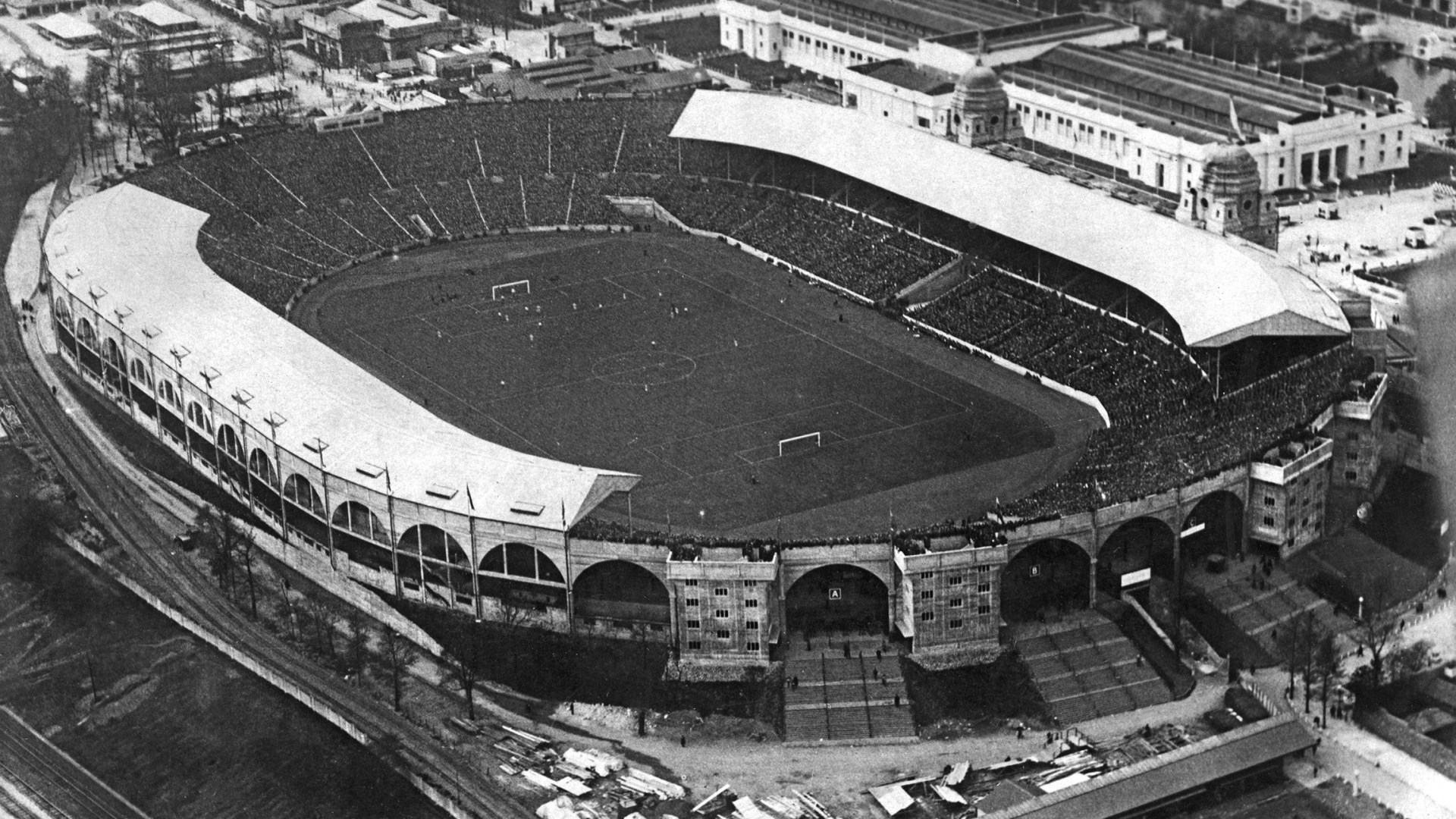
But before this current Wembley, and the memories it holds, there was the OLD stadium and fans are now only just realising what happened to it.
The Home of Football closed it doors nearly 26 years ago.


October 7, 2000, to be exact after a rain-sodden 1-0 defeat for England against Germany that ended with a Didi Hamann goal for the visitors.
The bulldozers moved in and seven years later the stadium was back, unrecognisable and with a giant arch!
But a feature of that famous old ground, the iconic concrete Twin Towers, not to be seen again..
The rubble from the old stadium is now part of artificial mounds and also in a cage and forms part of a wall at Northala fields.
Cheltenham Festival: CLAIM £100s IN FREE BETS
One piece of footballing history is still residing in Brent River Park.
Sitting peacefully not far away from the new Wembley, sits the flagpole holder that once adorned the top of the East Tower.
Standing 1.5 metres tall, weighing four tonnes and bearing a striking resemblance to the actual FA Cup, this unassuming lump of concrete witnessed the White Horse Final in 1923 and the World Cup glory of ‘66.
A place fans can get up close and personal with actual history.
While, the flagpoles themselves are housed on Sir William McAlpine’s Fawley Hill estate, complete with the famous crowns on top.
But what about those iconic old red gates you ask?
Would you believe it if I told you they reside in CHILE.
The gates date back to 1923, when Wembley was built, and formed the entrance in front of the Twin Towers where royalty such as King George V and Queen Elizabeth II passed through to witness showpiece matches, including the White Horse Final and 1966 World Cup finals.
They were just TWO days from destruction before the Brooking Trust – an architectural charity – stepped in and rescued them.
Unbeatable horse racing breaks

RACING fans are in for a bumper year.
And we’ve teamed up with travel experts Racing Breaks to smash the price of your sporting calendar.
Don’t miss out on these unbeatable deals.
🏆 GRAND NATIONAL — Race ticket, 4* hotel and transfers — — from £229pp
🏇 EPSOM DERBY — Amazing 4* hotel, ticket to course plus transfers — — from £179pp
👑 ROYAL ASCOT — Ticket for day of your choice, hotel and transfers — — from £169pp
*If you click on a link in this article, we will earn affiliate revenue.
However, the sheer size and weight of the structures caused an issue with the trust running out of room and eventually putting them up for auction.
Step up Chilean businessman Jorge Yarur Bascunan and the Fundacion Museo de la Moda, Santigao de Chile, where he serves as president, founder and director.
It’s quite the story for football fans and realising what really came of the iconic old venue.
What is guaranteed though is memories of the old and new venues will live on forever.
Everyone has their own story they love to share.
And it will be no different in years and decades to come.
As the famous song goes, Que Sera, Sera.