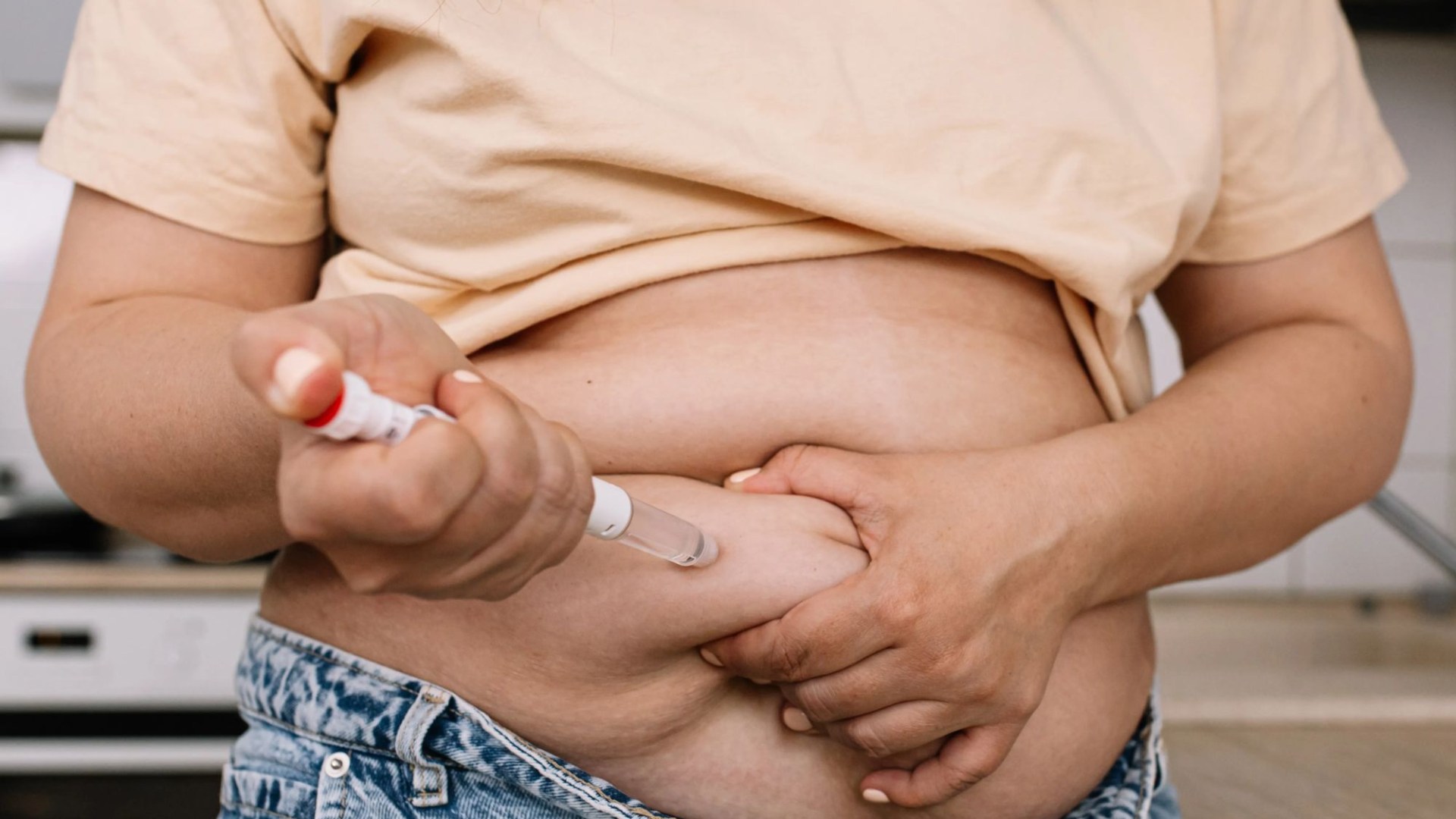
Fat jabs could be triggering a surge in Brits needing their gallbladders removed, a shock investigation revealed today.
Leading doctors said they were doing “more and more” of such operations on patients who were on the injections.
Gallstones are listed as a common side effect of the jabs and the UK’s medicines regulator, the Medicines and Healthcare products Regulatory Agency, said they were kept under “continual review“.
Latest NHS England figures show that the number of gallbladder surgeries in 2024-25 hit a decade high.
It comes as the regulator yesterday also officially recognised that the jabs, known medically as GLP-1 injections, could pose a risk of acute pancreatitis, which is often linked to gallstones.
The condition occurs when the pancreas – a small organ, located behind the stomach that aids digestion – becomes inflamed over a short period of time.
Ahmed Ahmed, president of the British Obesity and Metabolic Specialist Society, told the BBC, which carried out the probe: “We don’t know whether it’s the injections that are causing the gallstones, or is it because the injections are causing rapid weight loss, which then in turn causes the gallstones?
“Clearly this area needs further research to find out if it’s causative or not.”
James Hewes, a Bristol-based consultant surgeon who also specialises in obesity and bariatric surgery, added: “Anecdotally, we are seeing more patients presenting with gallstones.
“Often, it’s difficult to know if that’s related to the injection, or whether they had them originally but weren’t assessed properly beforehand.”
Figures show that in 2024-25, there were 80,196 gallbladder operations carried out by the NHS in England, up 15 per cent on the 69,745 in 2023-24.
Patient information leaflets, tucked inside weight loss jab packaging already states that gallstones are a “common” side effect.
Medical trials have also found the jabs have occasionally led to inflammation of the gallbladder.
In Mounjaro, it has been reported this may affect up to 1 in 100 people.
Experts have known for years that rapid weight loss of any kind, such as via severe diets, can lead to gallstones.
The likelihood of developing gallstones is also higher among women and over-40s, as well as among those living with obesity, according to the NHS.
Fat jab patients have now been urged to report any side effects, including gallstones or gallbladder removals to health professionals and the MHRA’s Yellow Card scheme.
Eli Lilly, the makers of Mounjaro, as well as Novo Nordisk, the makers of Wegovy and Saxenda, said that anyone who experiences side effects should talk to a doctor or healthcare professional.
The yellow card scheme, set up in the 1960s, allows doctors, pharmacists and patients themselves to report adverse reactions believed to be caused by prescription and over-the-counter drugs, implants and alternative medicines.
This can lead to them being reviewed, having warnings added to the label or even being taken off the market.
You can report suspected side effects here or search the Google Play or Apple App stores for MHRA Yellow Card.
Research by University College London estimates that 1.6 million adults in England, Wales and Scotland used GLP-1s, between early 2024 and early 2025, to lose weight.
And it’s now been estimated that demand for the jabs will double in 2026.
GLP-1s are generally considered safe and effective, but they can cause mild side effects like nausea, constipation or diarrhoea.
But like all medications, they are not without risk.
It comes as the MHRA yesterday acknowledged that the jabs could pose a “small risk of severe acute pancreatitis“.
Most people with acute pancreatitis start to feel better within about a week, but some may go on to develop severe acute pancreatitis, which leads to serious complications.
The watchdog last year warned that the jabs were linked to more that 560 cases of pancreatitis.
At least ten of these cases were fatal, although it’s not clear the drugs were directly to blame.
In 2024, however, it was revealed that Susan McGowan died from multiple organ failure, septic shock and pancreatitis after taking two low-dose injections of tirzepatide.
The death certificate for the 58-year-old nurse from North Lanarkshire, who died in September 2024, listed acute pancreatitis as one of the immediate causes of death.
Her use of Mounjaro was recorded as ‘a contributing factor’.
It was the first death officially linked to the drug in the UK.
The 7 fat jab mistakes stopping you losing weight
WHILE weight loss jabs have been hailed as a breakthrough in helping tackle Britain’s obesity crisis, some users say they’re missing out on their waist-shrinking powers – and it could be down to some simple mistakes…
POOR PENMANSHIP
Many people don’t correctly use the injection pen, according to Ana Carolina Goncalves, a pharmacist at Pharmica in Holborn, London.
Make sure to prime your weight loss pen correctly, as per the instructions. If nothing comes out, try again, and if it still doesn’t work, switch the needle or ask a pharmacist for help.
It’s also recommended to rotate injection sites between the abdomen, thigh and upper arm to avoid small lumps of fat under the skin.
TIME IS OF THE ESSENCE
Make sure you’re using the jabs on the most effective day of your schedule.
For example, taking the jab right before a takeaway or party won’t stop you from indulging, says Jason Murphy, head of pharmacy and weight loss expert at Chemist4U.
Weight loss injections need time to build up in your system, so if you’re planning for a heavier weekend, inject your dose mid-week.
MAKING A MEAL OF IT
You may not feel the urge to overeat at mealtimes due to the jabs. But skipping meals altogether can backfire, says Dr David Huang, director of clinical innovation at weight loss service Voy.
If a person is extremely malnourished, their body goes into emergency conservation mode, where their metabolism slows down.
FOOD FOR THOUGHT
A key mistake using weight loss jabs is not eating the right foods.
As well as cutting out sugary drinks and alcohol, Dr Vishal Aggarwal, Healthium Clinics recommends focusing on your protein intake.
DE-HYDRATION STATIONS
Dehydration is a common side effect of weight loss injections. But it’s important to stay hydrated in order for your body to function properly.
Dr Crystal Wyllie, GP at Asda Online Doctor, says hydration supports metabolism, digestion, and can reduce side effects like headaches, nausea and constipation.
MOVE IT, MOVE IT
It can be easy to see the jabs as a quick fix, but stopping exercising altogether is a mistake, says Mital Thakrar, a pharmacist from Well Pharmacy.
Exercise helps maintain muscle mass and help shape the body as you lose weight, which may be crucial if you’re experiencing excess skin.
QUIT IT
While there’s the tendency to ditch the jabs as soon as you reach your desired weight, stopping them too soon can cause rapid regain.
Mr Thakrar recommends building habits like healthier eating during treatment for sustaining results.