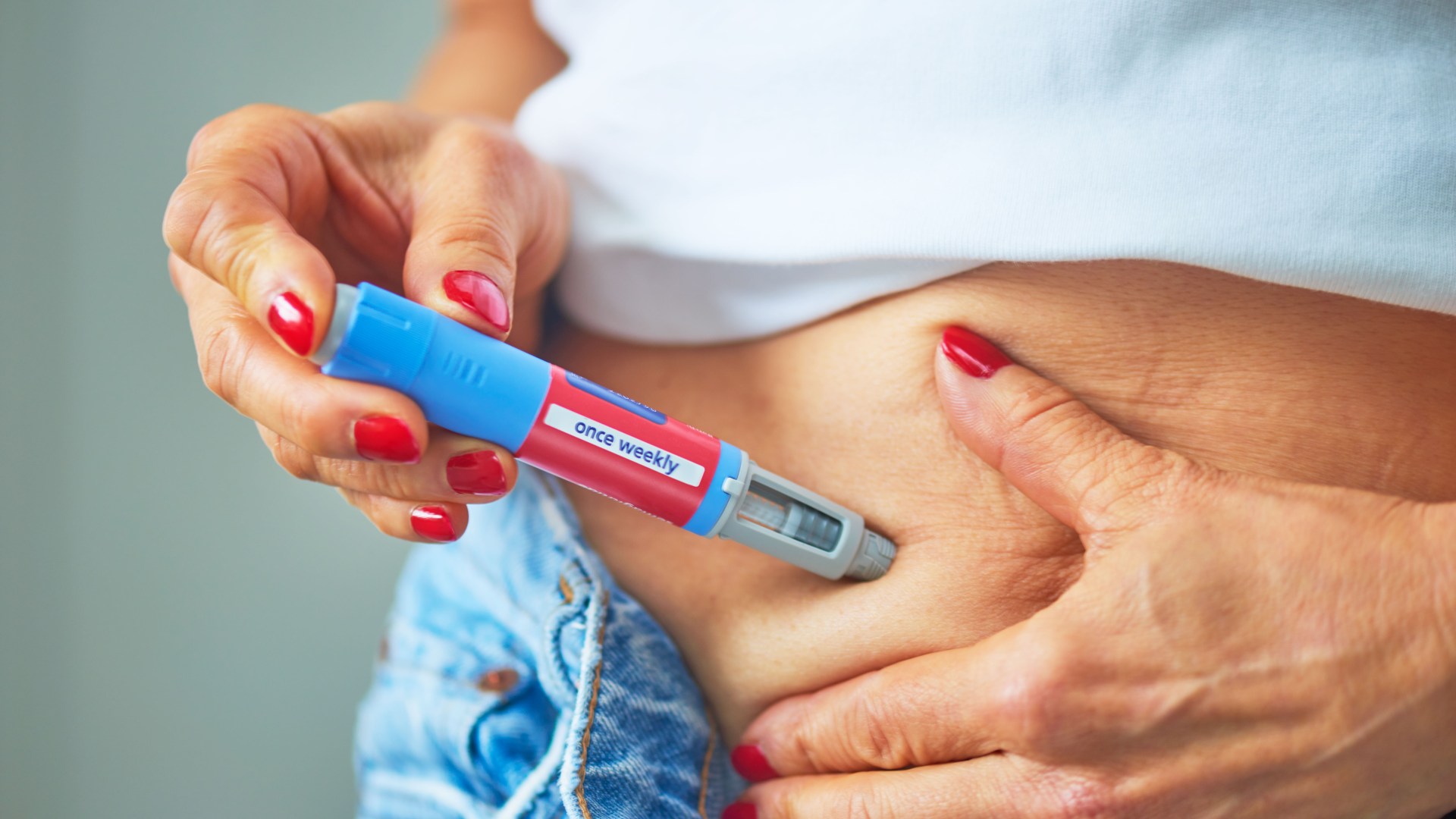
FAT jabs could leave you worse off in retirement, pension experts have warned.
Millions are now using weight-loss injections like Wegovy and Mounjaro to help shed stubborn pounds.
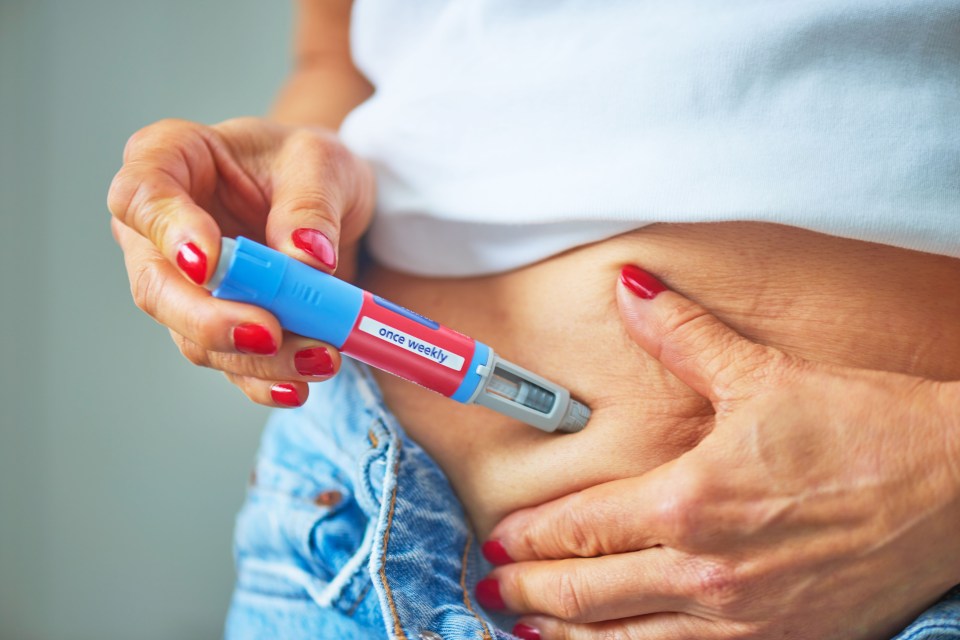
But for those looking to take out a pension annuity, losing weight before you buy one may leave you worse off in the long run.
An annuity is a type of retirement product you purchase with the money from your pension pot. It pays you a guaranteed income for life.
Exactly how much income you will get depends on several factors including the value of your pension pot, health, life expectancy and circumstances.
Factors such as a higher body mass index (BMI) or smoking mean you can receive higher annual sums. This is often known as an “enhanced annuity”.


The reasoning is that if the provider expects to pay out the income for a shorter period due to poor health, they can offer a larger annual amount.
Your policy is set at the time of application and once it is locked in it usually cannot be changed.
Pense, a pensions advice platform, told The Times that people who are overweight could get an annuity that is 17% higher.
With that in mind, experts have said it may be better to secure a deal before you tackle your waistline with jabs.
Most read in Uncategorized
Alan Lakey from Highclere Financial Services, a financial planning company, told The Times: “Someone with a BMI classed as obese will be receiving more than someone who is within the normal boundaries — it’s the impact on longevity.”
On locking in before you take the jabs, he said: “It would make sense for anyone doing that to take that viewpoint, it’s playing the system I guess but that’s how the system is designed.”
Adam Cole, retirement specialist at Quilter told The Sun: “It’s true that annuity rates take health and lifestyle into account, and factors such as a higher BMI can lead to a higher income because insurers expect to pay out for a shorter period.
“Once an annuity is set up, those terms are fixed and usually not reassessed, even if someone’s health later improves.”
“However, this doesn’t mean people should rush into locking in an annuity based on their current weight or attempt to time decisions around medical treatments.”
“An annuity is a permanent and irreversible choice, and making it for the wrong reasons can leave people worse off in the long run.”
How do annuities work?
Annuities give you a guaranteed income when you retire that will be paid for the rest of your life.
Usually people buy one with money from their pension pot.
When you use cash from your pension pot to buy an annuity, you can take up to a quarter of its total value as tax-free cash.
You can then use the rest to buy the annuity and any income you get is taxed as earnings.
How fat jabs work – and how to get maximum results safely
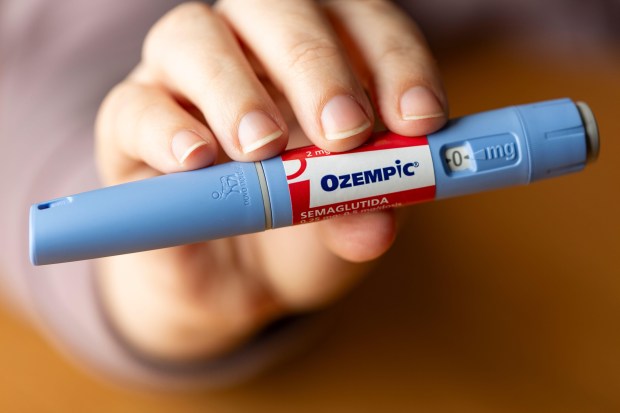
WEIGHT loss jabs were originally developed to treat type 2 diabetes – and Ozempic is still prescribed for that.
Wegovy and Mounjaro, which are now available on the NHS, along with Saxenda, are licensed for weight management in obese adults (BMI over 30) or those who are overweight (BMI over 27) with related conditions such as high blood pressure or high cholesterol.
They work by mimicking hormones like GLP-1, which help regulate appetite, slow digestion and make you feel fuller for longer – often leading to dramatic weight loss.
The health benefits can be huge, since obesity is a major risk factor for type 2 diabetes, heart disease and certain cancers.
But not everyone sees the same results. One common mistake is expecting it to work instantly.
For example, taking it right before a takeaway, special occasion, or big night out in the hope it will stop you from overindulging.
Jason Murphy, head of pharmacy and weight loss expert at Chemist4U, says: “Taking the jab right before a takeaway or party won’t automatically stop you from indulging.
“Weight loss injections need time to build up in your system. They don’t blunt your appetite immediately after injection.
“It usually takes a few days to start feeling a difference, and several weeks for the full effects to settle in.”
Inject your dose mid-week if you plan for a heavier weekend.
Another common error is injecting in the same spot each time.
“People often default to injecting in the same spot over and over, but this can cause local irritation or even small lumps of fat under the skin (lipohypertrophy), Dr Crystal Wyllie, GP at Asda Online Doctor, explains.
“This can affect how well the medication is absorbed and make it less effective.”
She recommends rotating injection sites between the abdomen, thigh, and upper arm, and even picking different spots within those zones.
And never stop using them suddenly as this can lead to rapid weight gain, Mital Thakrar, a pharmacist from Well Pharmacy, warns.
“There’s a tendency to ditch weight-loss treatments as soon as you reach your desired weight,” he says. “But that’s not our advice.”
A recent University of Oxford study found people typically return to their original weight within 10 months of stopping treatment, especially if lifestyle changes weren’t firmly established.
“Without the appetite suppression, hunger and cravings return quickly,” Mr Thakrar explains.
This includes healthier eating, which means cutting out junk food and alcohol while increasing protein and fibre, as well as exercising regularly.
“Building habits like these during treatment is key for sustaining results,” he says.
“Many patients see improvements in blood sugar, cholesterol, and blood pressure.”
But stopping too soon can reverse these gains if weight creeps back.
Finally, if you’re not seeing results, you might be missing the oldest rule in the book – drinking enough water.
“Dehydration is a common, yet indirect, side effect of weight loss injections,” Dr Wyllie says.
The drugs dull appetite, and in doing so, they can also blunt thirst signals. Yet hydration is crucial for the body to function properly.
“Aim for two to three litres per day, sipping regularly, not just when thirsty,” Dr Wyllie explains.
“Hydration supports metabolism, digestion, and can reduce side effects like headaches, nausea and constipation.”
To purchase an annuity you must be aged 55 or older but this threshold will rise to 57 from April 2028.
After you have set up an annuity you cannot make any changes to it.
Once it is up and running you will start to get regular guaranteed payments, which you agree to when you set up your annuity.
Annuities can be a good option for people who want the guarantee of an income for life.
They will pay you the same amount irrespective of what happens to interest rates and in the wider world.
As you approach retirement your pension provider should send you information about the value of your pot and your options to take money from it.
Some providers can offer you an annuity directly.
But you do not have to buy an annuity from your existing provider.
For annuity advice contact Pension Wise, a free government service that can help you to understand the options for your pension pot.
You can also compare annuities on the Money Helper website.
If you need help choosing an annuity deal then speak to a broker.
Make sure they are registered and do not accept a quote without taking advice first.
What are the different types of pensions?
WE round-up the main types of pension and how they differ:
- Personal pension or self-invested personal pension (SIPP) – This is probably the most flexible type of pension as you can choose your own provider and how much you invest.
- Workplace pension – The Government has made it compulsory for employers to automatically enrol you in your workplace pension unless you opt out.
These so-called defined contribution (DC) pensions are usually chosen by your employer and you won’t be able to change it. Minimum contributions are 8%, with employees paying 5% (1% in tax relief) and employers contributing 3%. - Final salary pension – This is also a workplace pension but here, what you get in retirement is decided based on your salary, and you’ll be paid a set amount each year upon retiring. It’s often referred to as a gold-plated pension or a defined benefit (DB) pension. But they’re not typically offered by employers anymore.
- New state pension – This is what the state pays to those who reach state pension age after April 6 2016. The maximum payout is £230.25 a week and you’ll need 35 years of National Insurance contributions to get this. You also need at least ten years’ worth to qualify for anything at all.
- Basic state pension – If you reach the state pension age on or before April 2016, you’ll get the basic state pension. The full amount is £176.45 per week and you’ll need 30 years of National Insurance contributions to get this. If you have the basic state pension you may also get a top-up from what’s known as the additional or second state pension. Those who have built up National Insurance contributions under both the basic and new state pensions will get a combination of both schemes.