This article is taken from the April 2026 issue of The Critic. To get the full magazine why not subscribe? Get five issues for just £5.
I first encountered Professor David Abulafia CBE FSA FRHistS FBA in 2018 upon taking up a postdoctoral position at Cambridge. Several new friends had had him as a supervisor and, as time went on, I heard stories of this eccentric, fastidious denizen of Gonville and Caius College who had a spectacular office overlooking King’s Parade.
He was, it was said, utterly uncompromising on academic standards. He was, I was told, as immovable as he was fearsome in internecine committee warfare over college governance. He was, I learned, a fierce critic of my longstanding friend and mentor, the late Sir Larry Siedentop. And thus, for several years, he remained a near-mythical presence all around that city, an oral tradition of fond and intimidating tales, but we never did meet in person until my time there was almost through.
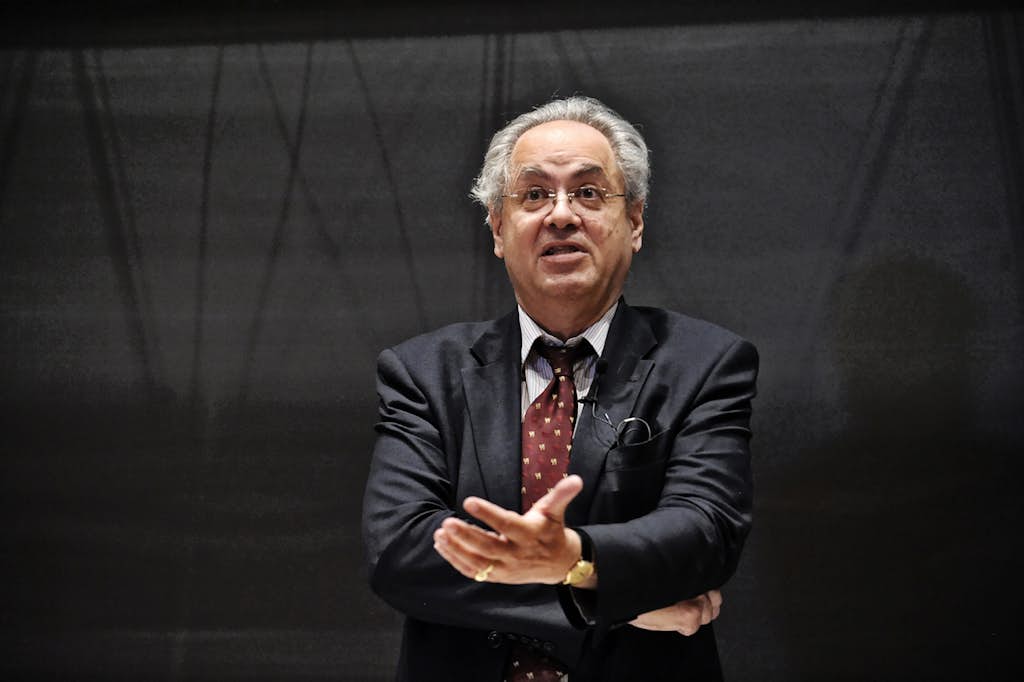
Then, one late summer’s evening in 2021, I joined a garden party at the Woolf Institute and was introduced as “Patrick” to “David”. The man before me was the very image of a Hollywood don: crisp, cream, sleeveless shirt; knee-length colonial shorts; crown of silver hair; searching gaze; book in hand. Having seen his picture when looking him up on Wikipedia, I realised which “David” this was and opened with something stupid like “Professor Abulafia, I’ve heard so much about you!”
For a second he seemed taken aback but quickly rallied and, with a wry smile, replied, “Oh, have you?” before asking about my work and getting right into our shared interest in maritime history (mine shallow and amateur, his profound and encyclopedic). After some time, he was rescued by his equally distinguished and delightful wife, Professor Anna Sapir Abulafia, who ushered him away to meet other guests and admirers.
In those few minutes the austere mystique that had accreted about him cleared long enough for me to glimpse the warm, jolly family man beneath, who cared deeply about ideas, institutions and people many years — and accolades — his junior.
When the Pharos Foundation started to take shape some months later, I had cause to call on him again. We had our executive leadership, we had our first donors and several prospective trustees, but nobody to preside over the organisation and steward our nascent fellowship. That required someone with immense academic heft, considerable experience of college governance, a no-nonsense approach to institutional standards, and a genuine enthusiasm for inspiring young scholars.
Needless to say internal deliberations were brief and, a lunch at the Athenaeum later, David agreed to join the Pharos board and assume the inaugural presidency. His tenure, though now sadly attenuated, was marked by characteristic vigour, rigour and success.
He immediately threw himself into crafting our academic selection process and insisted on recruiting the “very best or none at all”. Nominators were subjected to extreme vetting, applications scrutinised in minute detail, and successful candidates put through their paces at regular face-to-face reviews. If David approved, you knew you were good, and the strict regime he helped create for us is the model of academic excellence.
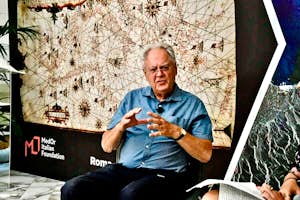
He took a close interest to the very end in our fellows’ progress and wellbeing, and was genuinely loved in return. Beyond Pharos, he cared deeply about the health of every community of which he was a part: Anglo-Jewry, the University of Cambridge, Gonville and Caius, the Athenaeum, the British Academy, the Territory of Gibraltar and many more besides. If he did not always make life easy for the leadership of these institutions, it was always out of well-founded concern and for good reason.
Occasionally, if I made the case for funding a particular project and he disagreed on the merits, I would be met with a brick wall of resistance complete with a fully reasoned brief and menu of more deserving alternatives. When I dared argue the case, I would receive an even more detailed explanation as to precisely why I was wrong in that instance. David’s judgements, in these as in all matters, were rendered with unsparing bluntness.
Yet he was unfailingly polite and judicious, and in every instance he argued solely from evidence and principle, rather than ego or ideology. Disagreements were never personal and always instructive, and when he agreed with you it was never out of expediency or convenience. His presence on the Pharos Board made everyone up their game and, in the end, the Foundation is all the stronger for it. Frankly, a young director in any organisation could not hope for a better trustee and president.
Though we never discussed personal or party politics, his patriotism and popular writing played a major role in my own intellectual formation even before we met. Having in May 2015 argued for Great Britain’s unique and outsized contribution to civilisation ahead of the Brexit referendum in History Today magazine, a snooty open letter in response by 300-odd lecturers intimidated him not one bit: he would publish exactly what he thought about anything he wanted, and inspired others to do the same.
As a mere Bristol law graduate at the time with no appreciation of the man himself, reading a well-reasoned case for Brexit from a Cambridge professor was a personal revelation: someone at the summit of academia could and did think the same way as me and most of the nation about the biggest issue of the day.
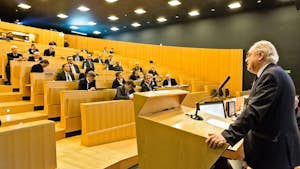
His subsequent writing on ridiculous academic fads from “Muslim Vikings” through “Black Cleopatra” to museum restitutions are models of lucidity and scholarly integrity. One can only hope these are collated and preserved for the benefit of future generations who can no longer enjoy his company.
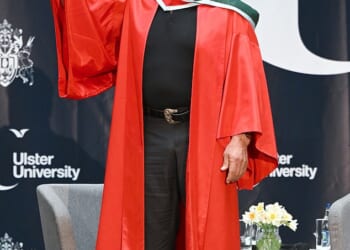
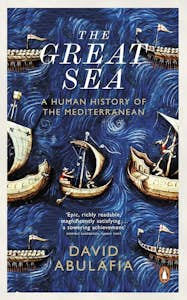
David’s life’s work speaks for itself, and it would be churlish to appraise the record of such a great man here. He forged a stellar five-decades-long career at Cambridge, mastered multiple languages, published seven monumental books and countless academic articles, wrote for the amusement and benefit of the general public, won the Wolfson History Prize and Mountbatten Award, received a CBE for services to scholarship, accumulated a phenomenal range of post-nominals and honours, and taught generations of remarkable historians including, amongst many others, the best-selling Arabist Justin Marozzi. Even Xi Jinping, if his bookshelf is anything to go by, counts himself amongst David’s admirers — a source of great consternation, amusement and dinner conversation for the man himself.
He leaves behind his widow, Anna, his two daughters and their families, many grieving friends and colleagues, and the Caius flag at half-mast. For my part, there is little left to say except: David, it was a pleasure and a privilege — thank you and farewell.