Reform needs to pick hundreds of candidates who are ruthless politically, but not lunatics
This article is taken from the February 2026 issue of The Critic. To get the full magazine why not subscribe? Get five issues for just £25.
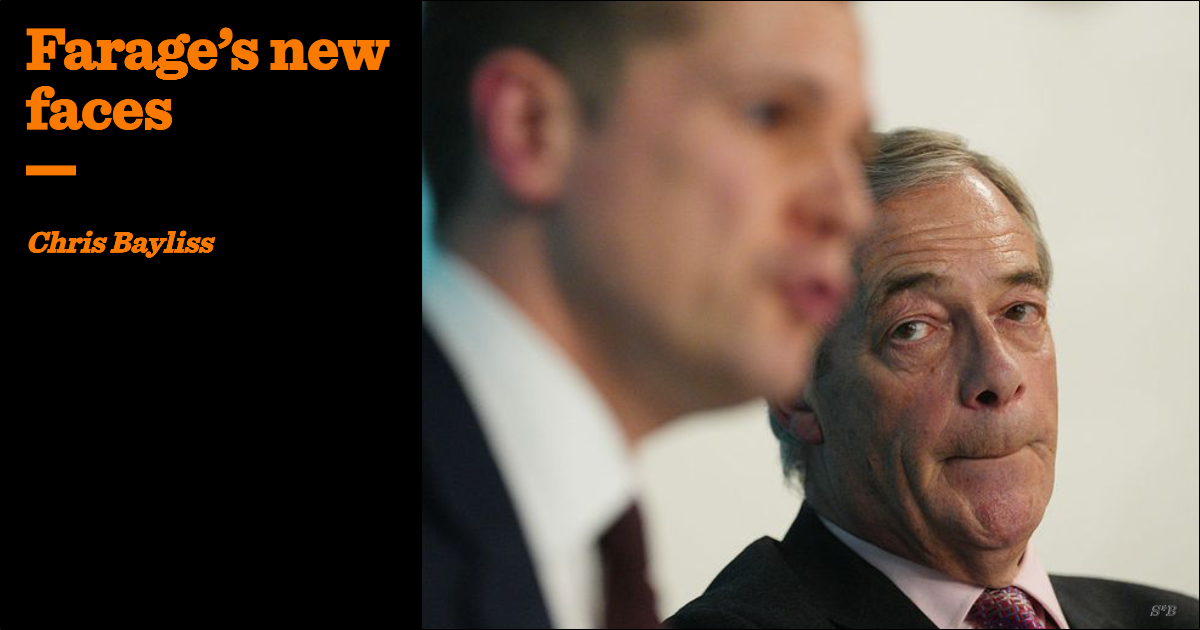
By the time he was on his feet in front of the cameras, it had already been a nervy day for Nigel Farage. He had been caught clearly off his guard at his morning press conference, when a reporter broke the news that whatever plans he had been making to secure Robert Jenrick’s defection had been rumbled by Kemi Badenoch. Farage is the most experienced stump speaker of our current crop of politicians, and connoisseurs could watch a master at work, buying time and regaining composure, as he decided what he was and was not going to admit to.
Five and half hours later, Farage seemed to be back in control of events, as he prepared to welcome Jenrick to the party in front of the assembled lobby. The minute or two that followed, as Jenrick failed to appear from the wings to take his place on the stage, must have been among the most cringe-inducing of Farage’s career. But appear Jenrick eventually did, gaining Reform UK a sixth MP, to be joined over the weekend by a seventh in the form of Andrew Rosindell. All of this overshadowed the earlier defection of Nadhim Zahawi, who, like Rosindell and Jenrick, brings with him baggage from his Tory years.
For Jenrick, it is the albatross of the Afghan resettlement scheme that hangs around his neck, whereas for Zahawi, it is the vaccine programme that sours his arrival for Reform-aligned commentators. Too many ex-Tories, they grumble — but in reality, many of the sort of people now thinking of voting Reform thought that both policies seemed reasonable enough at the time.
While many in the Westminster bubble still associate Reform with the intemperate reactionaries they encounter on social media, the truth is that supporting Farage’s party is now an increasingly middle-of-the-road position in much of the country. Despite a new year lull in its polling figures, Reform have replaced the Tories as the default party for non-Left-wing voters in small town England.
In its march to roughly 30 per cent in the polls, Reform has started picking up a lot of genuinely middle class supporters. These are not the hummus-munching, bien pensant bourgeoisie that Rod Liddle warned you about, but the two or three-bed semi-dwelling middle class to which most people in this country actually belong. In other words; normal people.
Normal people do not obsess about politics. This can be a huge advantage; they are open to changing their minds about an issue without undergoing a crisis of identity. To them, politics is about problems to be solved, rather than an outlet for self-expression. Perhaps this is how Reform will really break the mould; by bringing into politics the undogmatic, non-ideological man and woman of Middle England; the voices of common sense at last?
Behind the scenes, this is already going on. The Augean task is underway to find 650 candidates whose Twitter accounts will bear scrutiny from the media and hostile left-wing NGOs. The trouble with committed supporters of Reform’s type of politics is that they tend to write about it on social media, sometimes in rather colourful terms. Far better to choose people whose social media consists of Facebook posts about family holidays. The added benefit of such people is that they also tend to have wholesome personal lives, in contrast to the predictably seedy backgrounds of the average internet polemicist.
So while the Reform slate in 2029 will include more than a few ex-Tories and faded television presenters, there are likely to be more people with jobs like Senior Account Manager and Deputy Head of Business Development on their neatly drafted CVs. And perhaps Britain could do a lot worse; it would certainly be an improvement on the parliament stuffed with professional activists we have at the moment.
But the real danger for Reform of becoming The Tories 2.0 is not just in recycling the same old faces, but in taking on the Conservatives’ inability to push through controversial policies, or face down determined opposition from vested interests. To succeed in power, Reform will need to pass radical measures on immigration, human rights law and civil service reform. This will require MPs and ministers with intellectual courage, and sheer bloody-mindedness. The sort of people who have already thought about the arguments their opponents will throw at them, and know why they are wrong. It will take people who are willing to be unpopular.
This is where a party with too many normal MPs will come unstuck. Normal people don’t want to be unpopular. People dislike politicians because they are weird, but the traits that make an effective legislator are pretty weird. And this is the challenge on Reform’s hands; they have to find several hundred people from the tiny fraction of the population who have a measure of political ruthlessness, but who are not criminals, or perverts, or lunatics. And they have to find them all in a single parliamentary term, with limited administrative resources.
No wonder it seems easier to pick them off from a party that has already gone through the basic checks.