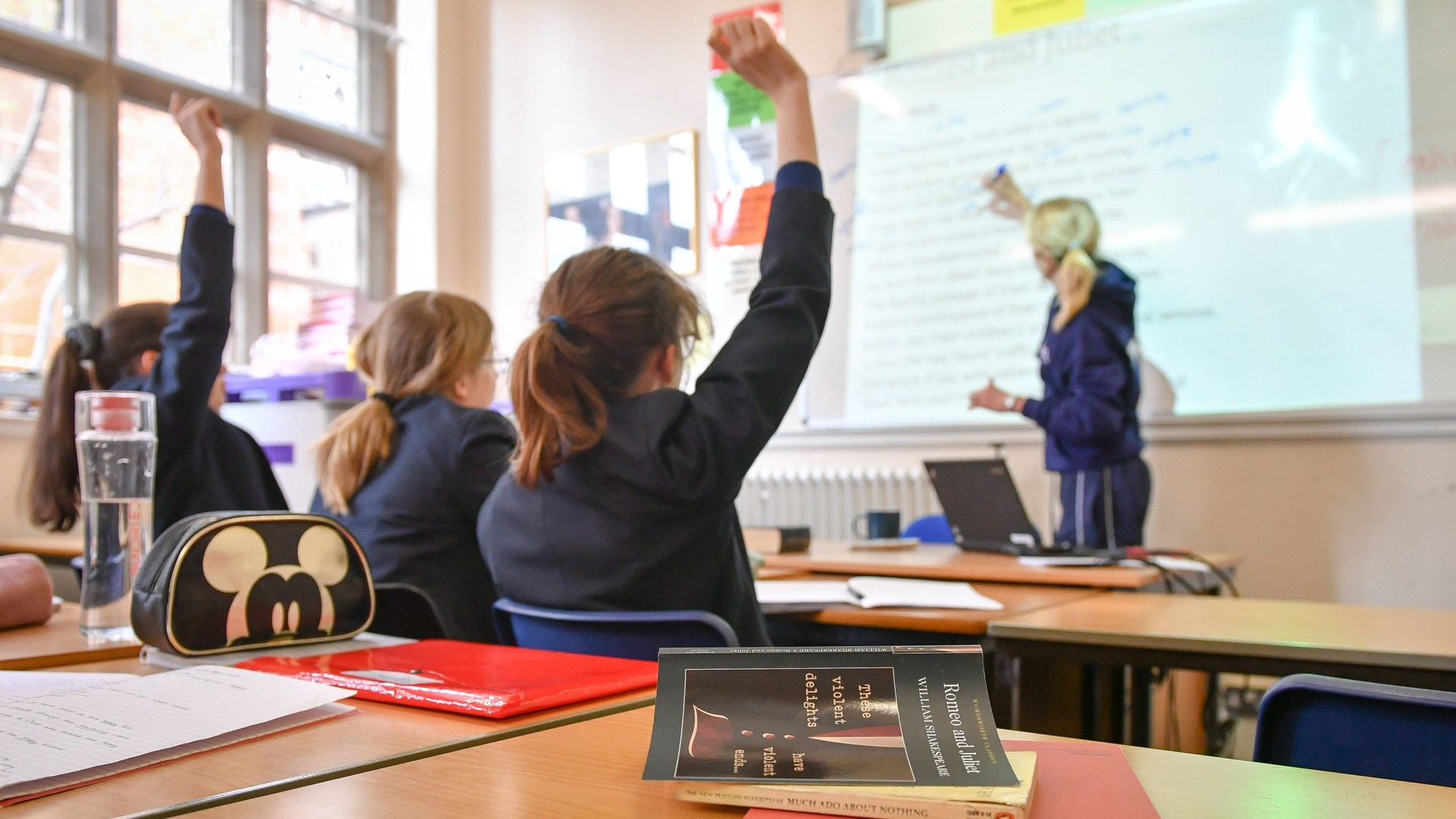
STRUGGLING families are missing out on free childcare and food worth hundreds over the school holidays.
The Government’s Holiday Activities and Food (HAF) programme provides free meals, childcare, sports, music and arts clubs to low income households during the school holidays, including over Christmas break.

But a report published this week by the Local Government Association (LGA) found that eligible children, especially those from the most vulnerable families, are missing out on the scheme.
Local councils warned this was because of transport challenges, language barriers, and a lack of awareness of the programmes.
Some families also struggle to use technology to sign up or find out about the programme, while others are being held back by the stigma around getting free support.
Meanwhile, a lack of data-sharing between schools and local councils also means not all eligible families are being identified.
It comes after the HAF scheme, which is funded by the Department for Education, was extended for another three years in August, with a further £600m in funding provided.
It was first rolled out in England in 2021 to help families over the school holidays, following successful pilots between 2018 and 2020.
Who is eligible for the scheme?
The HAF is administered by local councils, and what’s on offer depends on where you live.
It’s normally available for all children in primary school – from Reception up to Year 11 – who receive free school meals. But some families outside of this group may also be eligible.
Eligible children are normally offered a place at a “holiday activity club”, which includes a free meal and activities such as sports, music and art.
Under the scheme, local authorities are expected to offer the equivalent of six weeks’ face-to-face activities for children over the Easter, summer and Christmas holidays.
Over the Christmas holidays, councils offer at least four days’ of activities, normally for four hours each day.
The programme aims to narrow the “holiday experience gap” for low-income families, by offering children healthy meals and school holiday activities like sports and music camps which parents may not be able to afford by themselves.
Children who take part in the scheme have better school attendance, self-esteem and healthier eating habits, the LGA report found.
If you want to apply, you’ll need to book a place through your local council’s website. Some are on a first come, first served basis, so you should make sure you apply early to secure a spot for your children.
In its report, the LGA has made a series of recommendations to the government to improve the scheme as it’s extended for another three years.
This includes allowing councils more flexibility around which families are eligible for the scheme, and to allow schools, councils, the DWP and the DfE to share data to identify more households that could benefit from the scheme.
Cllr Dr Wendy Taylor MBE, chair of the LGA’s health and wellbeing committee, said: “Extending the HAF funding is an important part of efforts to combat child poverty.
“But as we enter another three years of the HAF programme, it is vital that we tackle the barriers to access and efficiency. Councils are well placed to understand their local picture and explore solutions that work for their residents.
“Now is the time to ensure the programme works for every eligible family. Our recommendations to government focus on integration, flexibility, and inclusion to maximise impact for our children.”
“Child poverty not only limits children’s life chances and their overall health and wellbeing, but it also imposes significant long-term costs on our economy and society.”