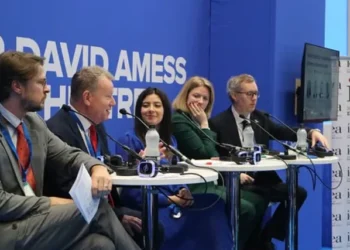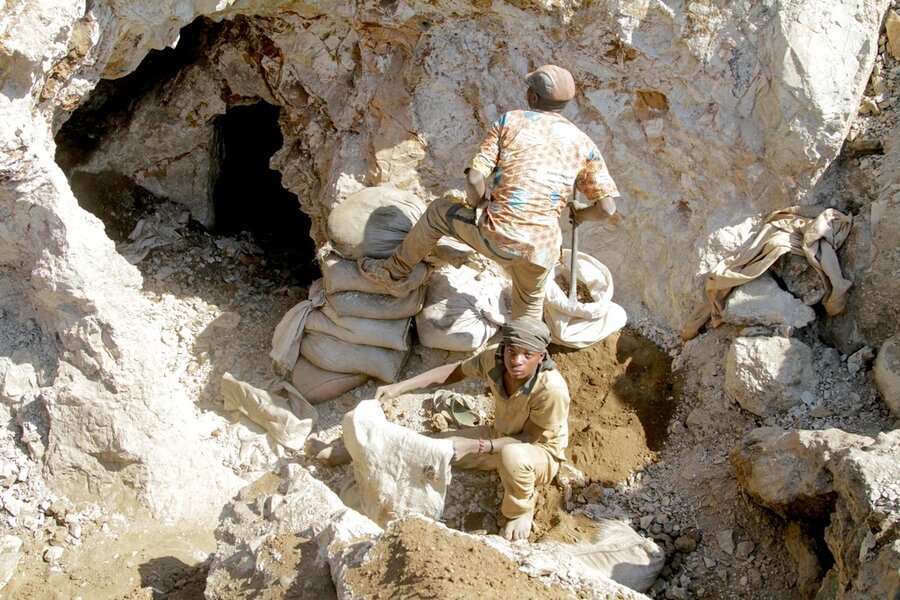
This week, top leaders of Africa and Europe gathered in Angola in an attempt to answer this question: Can ethical business practices win out in the global race to extract Africa’s vast mineral resources?
The moral tone for the summit was set last month by European Commission President Ursula von der Leyen. In a speech, she said Europe seeks critical materials for its China-challenged industries but “not just for Europe’s needs – but with local processing and added value [in Africa].”
In other words, can European mining companies help Africa process its raw minerals into consumer and industrial goods while also boosting local jobs and local skills?
For some countries in Europe, that would mean a shift away from how it often treats former colonies. As President Faustin-Archange Touadéra of the Central African Republic put it in September, “The era of Africa’s dependence is over.” He called for “sovereignty, not subordination; partnership, not exploitation.”
With the global contest for “green minerals” picking up speed, the dynamics for Africa are in its favor. “Economic exchanges for a long time happened in a colonial relationship, but I believe that with the overall shift in global geopolitics, we now have a relationship that is more on an equal footing, less paternalistic,” Pascal Saint-Amans, a professor at the University of Lausanne in Switzerland, told Radio France Internationale.
A good example – and the reason for the summit being held in Angola – is a rail project, funded by the EU and the United States, that would speed up transportation from Africa’s mineral heartland in Zambia and the Democratic Republic of Congo to Angola’s Atlantic coast. If the European Union and its African partners can show mutual benefits from building the Lobito Corridor, as the project is called, it would be a model for all of Africa and its external partners.
“Together, Africa and Europe can lead the way,” Ms. von der Leyen and European Council President António Costa said in a statement. The two blocs can shape “a fairer, greener, and more secure world based on shared values and mutual respect.”
Much still needs to be done to achieve such goals. “Investment must move from PowerPoint to the factory floor,” Ikemesit Effiong of the Nigeria-based consultancy SBM Intelligence told Agence France-Presse. Yet the EU has at least embraced a role as an ethical partner, aiming to lift resource-rich countries as much as it lifts itself.