
The Treasury Committee has been hearing oral evidence about a range of taxes that Rachel Reeves may or may not increase in next month’s budget. This week it was gambling’s turn. As often happens when the issue is fundamentally moralistic, the day was split into two. In the morning, the committee lobbed softball questions at advocates for big government before grilling two industry spokespeople in the afternoon. No consumers were asked to give evidence.
In the hot-seats in the morning session were two think tankers — Carsten Jung from the Institute for Public Policy Research (IPPR) and Theo Bertram from the Social Marketing Foundation (SMF) — and the retired co-founder of Paddy Power, Stewart Kenny. The latter did his poacher-turned-gamekeeper routine while the former tried to look like straightforward wonks rather than killjoy activists.
The mask slipped almost immediately when a twitchy Carsten Jung declared that “gambling is a social harm” in his opening remarks. Was this a Treasury Committee evidence session or a Quakers meeting? He then proceeded to set out his demands. General betting duty should rise from 15 per cent to 25 per cent, he said. Online gambling taxes should rise from 21 per cent to 50 per cent. And machine gaming duty should also be hiked to 50 per cent, from the current rate of 20 per cent. The roundness of these numbers suggests that they did not emerge from hours of careful modelling and since all of these taxes are levied on revenue, not profit, it can be surmised that whoever came up with them does not have the best interests of the gambling industry at heart. The proposed rise in machine gaming duty alone would be enough to wipe out every bingo hall and arcade in the country.
These three taxes currently bring in £2.5 billion a year, with other gambling taxes raising a further £1.3 billion. The IPPR claims that its tax rises would bring in an extra £3.2 billion a year which former Prime Minister Gordon Brown says should be used to “solve” the child poverty “crisis”. The government currently spends the thick end of £400 billion a year on social security and yet relative child poverty persists, so it is far from certain that an extra £3 billion would solve anything, but despite the Treasury’s notorious resistance to hypothecation, anti-gambling campaigners have craftily made the two issues of gambling taxation and child poverty synonymous. Whose side are you on? Hungry children or online casinos? And what kind of monster are you anyway?
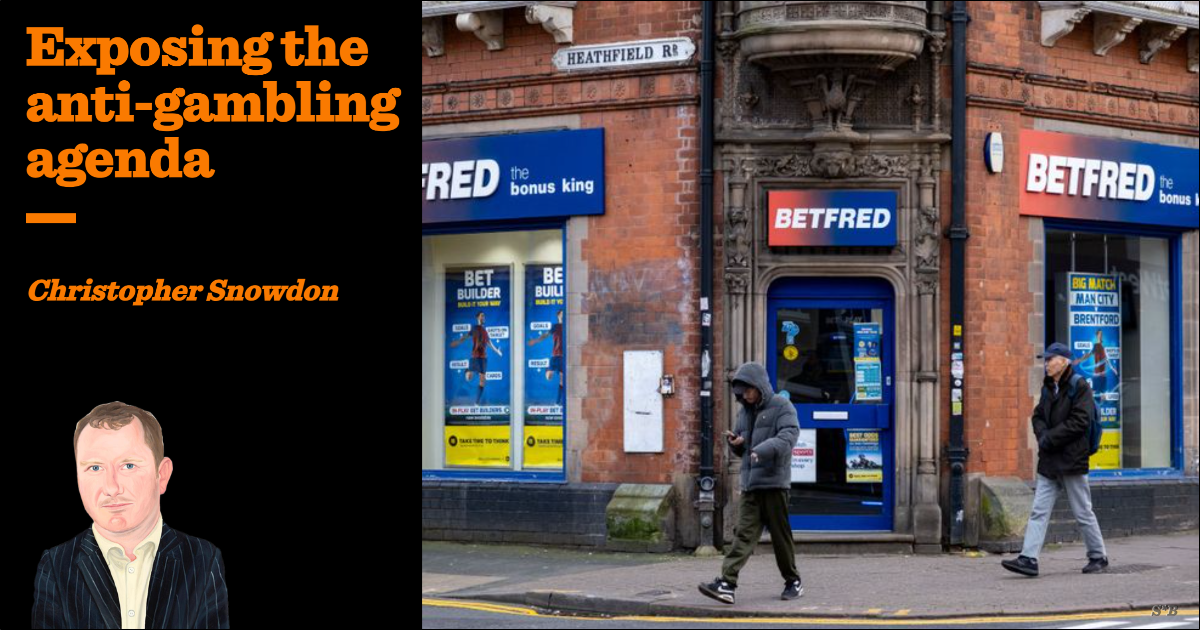
Cunning though it may be, this plan does rather depend on the onshore gambling industry not being a smoldering ruin after these duties have been hiked sky high. Various industry spokesmen, such as Betfred founder Fred Done, say that they will have to shut up shop if taxes get anywhere near the levels recommended by leftwing think tanks. Stewart Kenny assured the committee that this was mere “scaremongering”. “They said exactly the same about fixed odds betting terminals”, he reminisced, “If you over-regulate the fixed odds betting terminals, there will be massive unemployment and it will close every betting shop. It didn’t happen.” According to Kenny, the bookies have plenty of money to spare. “Betting businesses have exploded in profits”, he said.
But no one said cutting the stake limit on fixed-odds betting terminals would close every betting shop. The industry estimated that it would lead to 4,000 betting shops closing and 21,000 people losing their jobs. The anti-gambling lobby said they were scaremongering. Since the stake limits were lowered, 2,628 betting shops have closed and between 10,000 and 15,000 people have lost their jobs. A third of Britain’s betting shops have closed since 2018. The industry predictions were overestimates but it is a push to describe them as “scaremongering” when the anti-gambling lobby was so far off the mark with its own predictions. Nor is the betting industry booming by any reasonable definition. Since 2019, the amount of money wagered with UK operators has declined by 26 per cent in real terms. Unless profit margins have grown to an unfeasible degree, betting profits have not “exploded” but shrunk.
On one issue, the industry and the anti-gambling coalition are in agreement: if taxes go up, punters will get a worse deal. To maintain their profit margin — or to make any profit at all — companies will have to offer worse odds. Carsten Jung admitted that under his tax regime “there is a cost for those who still gamble because they get a poorer deal”. He says that this will deter people from gambling and thereby reduce problem gambling. The industry says it will drive punters to the unregulated websites of offshore gambling companies that pay no tax in the UK (even Theo Bertram admits that “there is this big black market”).
It is for the Treasury to decide whether it can squeeze any more money out of this industry without killing the golden goose, but there is a contradiction at the heart of the argument for higher taxes. How can a tax solve child poverty and problem gambling at the same time? The anti-gambling lobby claims, albeit falsely, that the industry gets most of its money from problem gamblers. Who, then, is going to pay the extra £3.2 billion once the new taxes give gamblers “poorer odds” that make gambling “more expensive as a result”, as Jung puts it.
The destruction of the legal gambling industry is a feature rather than a bug of their campaign
When this question was put to them, the think-tankers suddenly lost faith in the power of sin taxes. They “might prevent some people from becoming problem gamblers on the margin”, said Jung, but “gaming machines and remote betting are fairly sticky, so you can raise the tax more and raise more money”. Good news for the Treasury and the industry if true (spoiler: it isn’t), but terrible news for punters. Asked about the prospect of job losses and betting shop closures, Jung was equally upbeat. Betting on the high street is also “sticky”, he claimed. “Based on the stickiness of customers, you are very much likely to see these shops continue.” More good news for the Treasury, although it would have been more convincing had he not been fidgeting, stuttering and unable to make eye contact as he said it.
Whichever way you slice it, this is just a tax grab. It has nothing to do with problem gambling as a “public health” issue. The mass closure of betting shops and the growth of the black market in recent years shows that gambling in the UK’s onshore market is not “sticky”, and punters will be considerably less likely to stick around if they are given a “poorer deal” and “poorer odds”. Whether this has any effect on how many people gamble overall will depend on how willing they are to seek out offshore operators, but it will clearly have a negative impact on employment and tax revenues. None of this concerns anti-gambling lobbyists for whom the destruction of the legal gambling industry is a feature rather than a bug of their campaign.