THE number of Brits admitted to hospital with horror spider bites has doubled as experts warn of a surge in the UK’s false widow population.
NHS figures show there were some 100 admissions to hospital as a result of “contact with or toxic effect of spiders” in 2025.
This figure has more than doubled since 2015 with just 47 admissions for the same reason seen a decade ago.
The increased hospital admissions are likely a result of a surge in the noble false widow population, experts have warned.
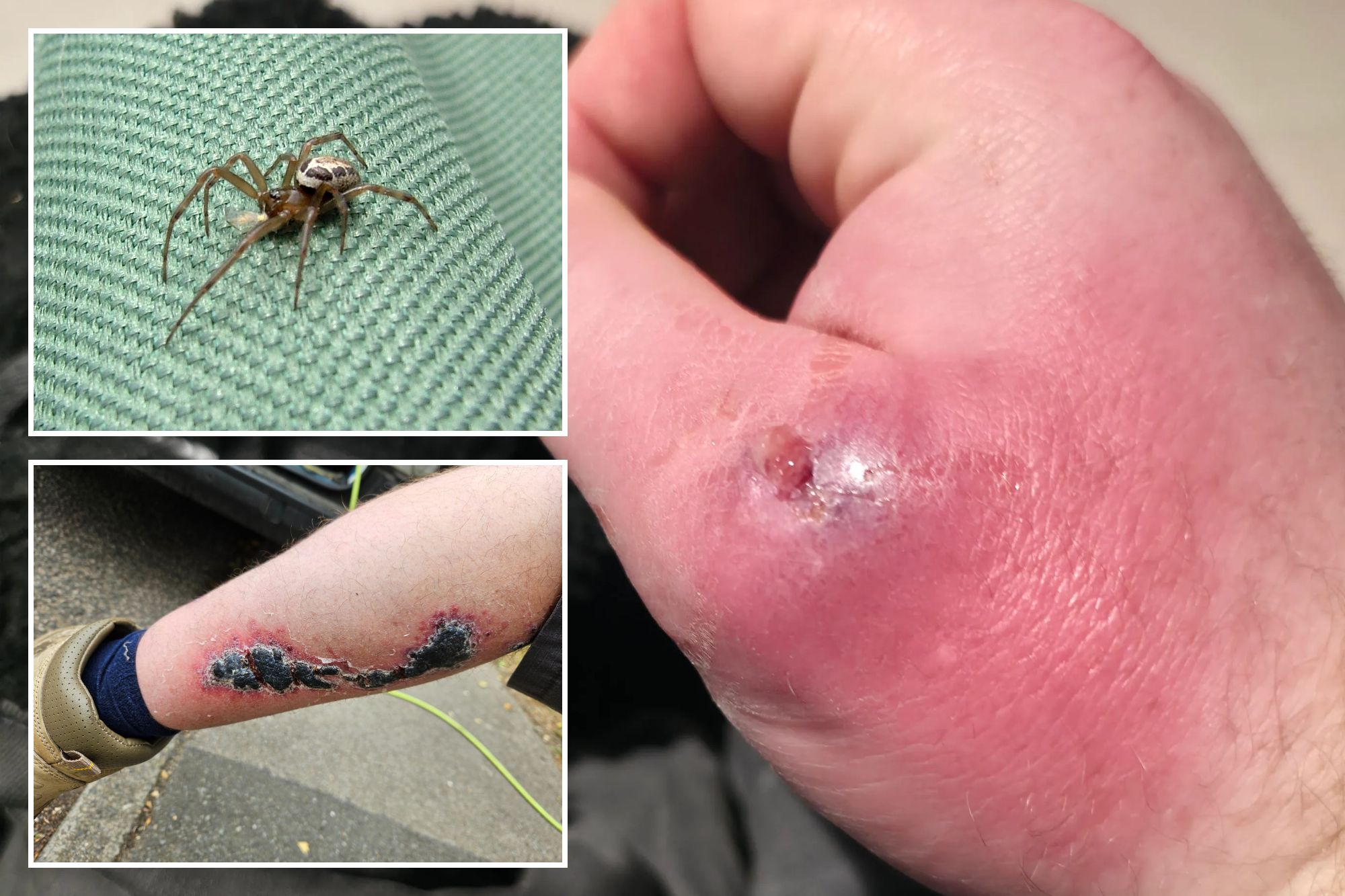
Noble false widows can grow to some 14 millimetres in length, with females usually growing larger than males.
Markings on the spider’s globular body are often compared to a skull.

The species is thought to have come to the UK in 1879 as a stowaway on cargo ships from Madeira in the Canary Islands.
Experts now consider the species, which hides away in kitchens, as the “most dangerous spider breeding in Britain.”
Oxford University ecologist Clive Hambler – a lecturer in biological and human sciences at Hertford College – told The Times: “The days when you could just treat spiders as benign in Britain are over.
“I think if you were going back 50 years, then there would have been hardly any consequences from spider bites in Britain.
“The incidents of severe bites from spiders in Britain will have increased, as this species (false widows) became hugely more abundant in Britain, particularly in the south.”
The species is known to bite if threatened or trapped against the skin, with the academic warning that the spiders were more willing to bite than people expect.
While the spider’s bite is often harmless, their venom can cause pain and itching.
In 2021 there were 43 hospital admissions due to spider bites with the figure increasing to 95 the next year, NHS figures showed.
In 2023 and 2024, there were 91 admissions with two thirds of these requiring emergency care.
Half of the 100 admissions in 2025 were through A&E compared to 38 of the 47 admissions in 2015.
It comes following several reports of people receiving nasty bites and injuries suspected to be from false widows.
Keith Robinson, 65, developed a large, angry inflammation on his leg shortly after clearing out cobwebs at his home in Watford, Hertfordshire.
He believes a noble false widow was responsible for the bite, which was unnoticeable at first, only got worse as the days passed.
Keith visited hospital after his bite became infected and was given a blood test and put on a saline drip.
The spider’s nip left the 65-year-old with a severely swollen and inflamed ankle.
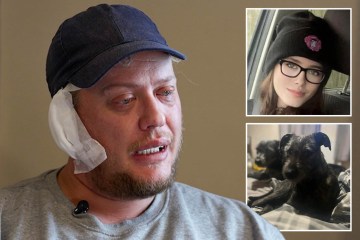
Meanwhile Cambridge pensioner Richard Gallimore, 72, woke up to a strange feeling on his face one day only to discover he had been bitten by a spider in his sleep.
The nasty bite left him unable to see properly out of his left eye and in severe pain.
Richard said the bite began to swell and left him feeling as if needles were being stuck into him.
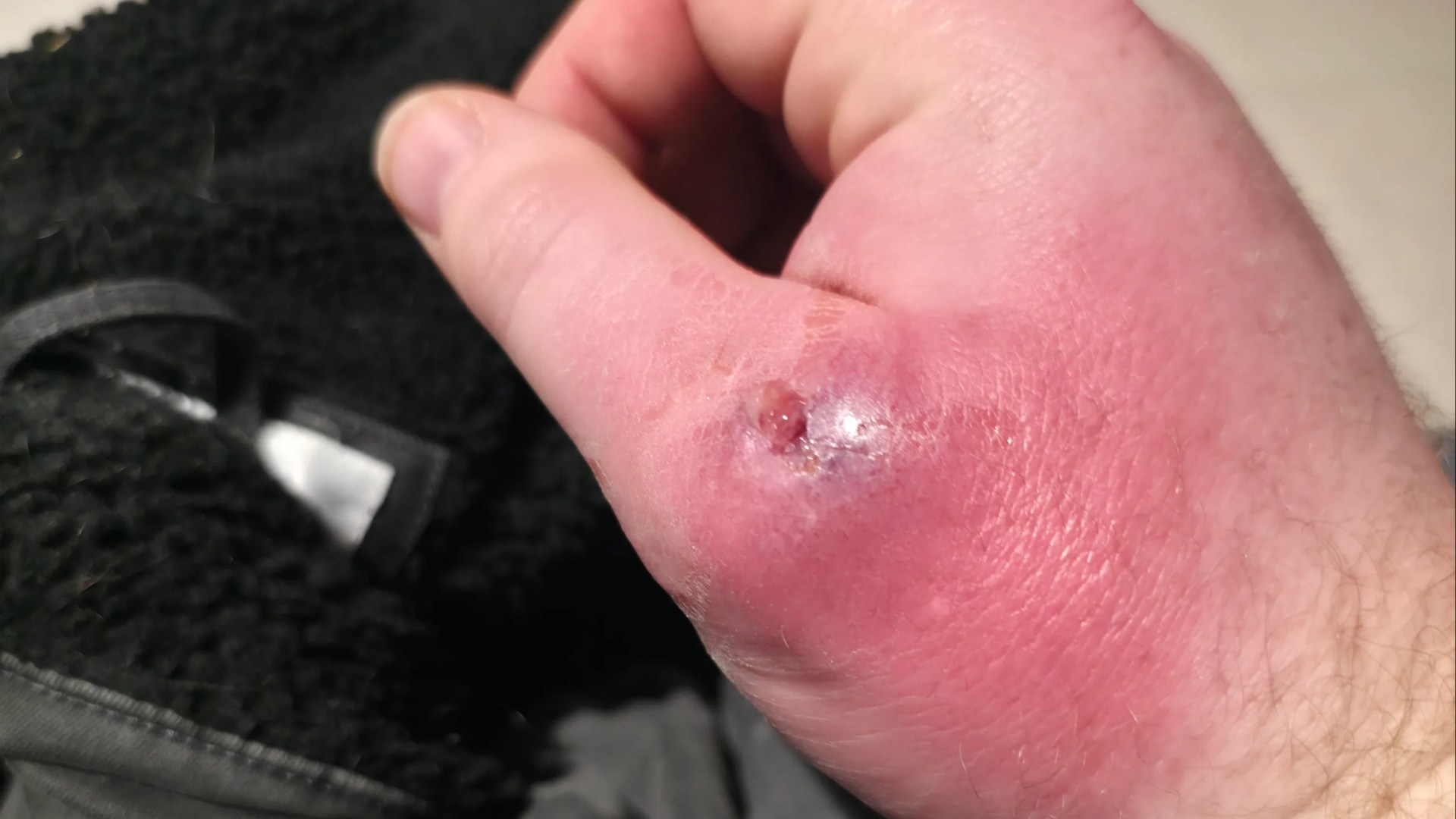
Another man, 40-year-old Chris Keegan, was hospitalised when his hand swelled to the size of a golf ball after he was bitten by a suspected false widow.
After turning red initially, Chris’ hand began to swell and eventually turned purple.
Chris spent five days in hospital and after multiple surgeries he was discharged with six stitches and a scar.
He said: “Something so tiny and trivial if ignored could have led to my thumb or hand being removed, or sepsis could have set in.
“They [doctors] don’t know if the bite was the infection or if the bite was the catalyst for the infection to take hold.”
And Vicky O’Dell, 52, had a nasty encounter with a false widow while on holiday in Skegness, Lincolnshire.
Vicky was nipped on the top of her left thigh – saying the pain was comparable to a bee sting.
It was worse for Stewart from Solihull, who received bites on both his legs and was left experiencing fever-like symptoms and aching in his legs.
Stewart was also particularly unfortunate as someone who is allergic to their venom and was left unable to put weight on his legs.
In September last year 34-year-old Adam Abrehart from Shefford Bedforshire shared how his leg was left swollen and even turned black from a noble false widow bite.
He received it whilst doing a 5km run during the summer and had to go to hospital for three days.
False widow spider bite: How to identify and is it dangerous?
False widows have been described as the “most dangerous spider in Britain.”
They’re often confused with deadly black widow spiders, as they have a similar dark-coloured, globular body.
But they’re nowhere near as dangerous: for context, the venom of the black widow spider tends to be over 1,000 times more powerful than that of the false widow.
In most cases, false widows only give small, relatively harmless bites.
The arachnids are usually black or brown coloured, with a rounded body and relatively small, growing up to about the size of a small fingernail. Females’ bodies grow up to about 15mm.
A spider bite will usually leave you with small puncture marks on the skin, which can be painful and cause redness and swelling, NHS guidance states.
According to falsewidowspider.org.uk, you won’t usually realise you’ve been nipped by a false widow until afterwards when you start to feel some pain radiating from the site.
It ordinarily lasts between one and 12 hours, and rarely for more than 24 hours, according to the Natural History Museum.
Often, the symptoms are no worse than the pain of a wasp sting.
It’s been described as a stinging, burning feeling. You might also notice some swelling and numbness on the site.
In rare cases, some people have come down with horror injuries after reacting badly to being nipped.
If you’re unlucky enough to be bitten by a false widow, you should do the following:
- Wash the area with soap and water to prevent infection
- Apply a cold compress or bag of frozen peas to the bite to minimise swelling, for around 10 minutes
- Apply a bite spray or antiseptic cream to help prevent infection
- You can also use antihistamines to counter any possible allergic reaction
- Seek medical care if your symptoms worsen
- Try and identify the spider that bit you if you can to help medical staff with their treatment – but without getting bitten again!