In those moments when you’re boarding a plane, you might hear a calming, inspirational, soothing soundtrack – or the catchy (if slightly annoying) Jess Glynne song loved and hated in equal measure by passengers on board Jet2 flights.
Either way, the music that accompanies your journey is sure to impact your experience on board.
Max De Lucia, 34, from London, is the co-founder of DLMDD, a music advertising agency responsible for the soundtracks – the ‘sonic branding’ – behind major airlines such as Singapore Airlines and Norwegian Airlines.
Max spoke to the Daily Mail about the secret world behind the music we hear on planes – and it’s not as simple as a 30-second jingle might have you believe.
He says: ‘We always say that an airline or an aircraft is a tin box in the sky until you fill it with all of the elements.’
For Max, an airline’s sound is just as important as its visual logo. It’s one of those things most passengers barely notice, but airlines think about very carefully.
The music that plays as you board a plane is often designed to shape the emotional experience of travel and, done well, can become just as recognisable as a logo or uniform.
Perhaps, the most famous example of music associated with airlines right now is the Jet2 mantra and theme tune.

Maestro Max: Max De Lucia the co-founder of DLMDD, a music advertising agency, told the Daily Mail about the ins and outs of ‘sonic branding’
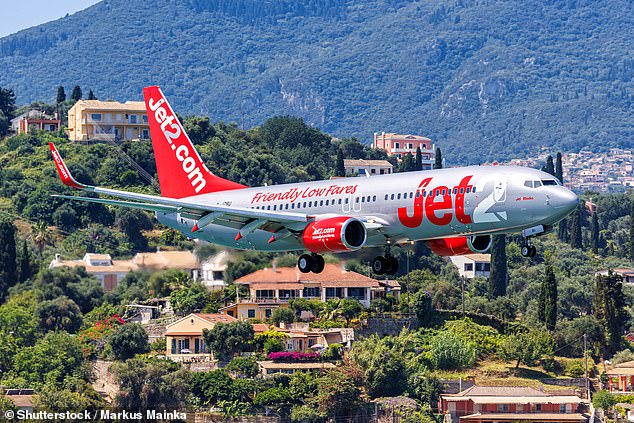
Perhaps the most famous example of music associated with airlines right now is the Jet2 mantra and theme tune
Max explains: ‘Everyone’s aware of it, it’s become completely viral. And they’ve just rammed the Jess Glynne Hold My Hand track absolutely everywhere that they possibly can.
‘Somebody asked me, is it terrible what they’ve done with that song? Well, if you’re the marketing director of Jet2, you’ll be doing a mic drop right about now.
‘That’s a great example of music and sound being used to make a brand famous.
‘I know it probably drives some people mad, but that is the job, to get that brand known and talked about – and look, we’re talking about it, aren’t we?’
Max says a lot of the popularity and dramatic impact of sound – even ‘annoying’ music like Jet2’s brand – has to do with a psychological phenomenon called the ‘mere exposure’ effect.
He explains: ‘The best way of putting it is that if you listen to a song on the radio for the first time you’ve never heard before, you might not like it, you might feel apathetic towards it.
‘Now, you’ll hear that song the next day, potentially two, three times a day if it’s on heavy rotation or the radio.
‘By week three, you actually quite like that song, and know the words and hum along to it – whereas the first time you heard it, you didn’t feel that much towards it at all.
‘Maybe you even didn’t like it the first time you heard it, but by the time you’ve heard it for the 40th, 50th, 60th, 70th time, actually there’s something about it you do quite like.’
Essentially, it’s a psychological phenomenon where people develop a preference for things over time – purely because they are familiar with them.
Max attributes the success of Jet2’s mantra, ‘nothing beats a Jet2 holiday’, to this effect.
But it’s not always as easy as you might think to curate the ideal soundtrack to flights.
Each airline has its own identity, Max explains. Jet2 is about ‘being loud and proud’, Max says.
These are exactly the sort of emotional states they conjure up in passengers through music.
In order to create such an effect, a long process is followed.
Max explains: ‘First thing we’ll do in practical terms is the brand will come and say, “we want to figure out how we sound”. We run a discovery process for the brand, to figure out some musical references that anchor the brand’s image.
‘Then we find brilliant composers and music producers all over the world and build the right creative teams to respond to that brief.’
They then listen to the various options to find the perfect sound.
Max concludes: ‘Probably no one ever thinks, when they sit down on that plane, that the music that’s playing around them has gone through this immensely robust – and sometimes quite tedious – process of stress testing the hell out of it to make sure that it is the right, perfect music for that brand and that brand’s experience.’
Max says: ‘Brands all over the world come to us and say, “we know what we look like, but we want to be famous for how we sound”.
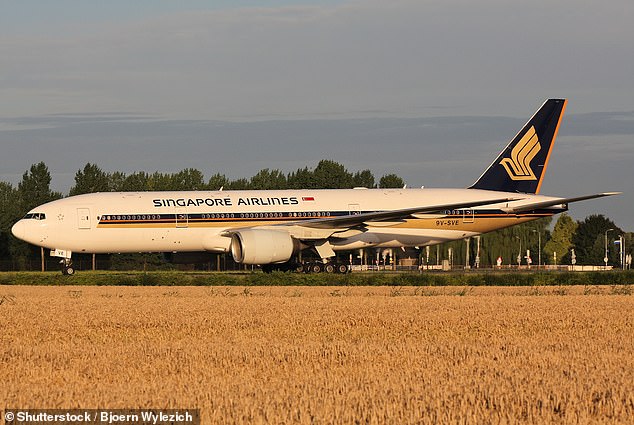
Peaceful passengers: Each airline has its own sound, and Singapore Airlines aims to conjure up feelings of calm and gentleness
‘We work with them to create identities in the world of music. Whenever anyone’s going anywhere in the world or sits down on an aeroplane, they tend to be in quite an emotional state. They’re going somewhere, and your experience with the world is hugely affected by your senses.’
And the statistics back up his argument – sound is around 800 per cent more powerful than visual stimulus, according to Max.
He adds: ‘Airline music on board should be as ignorable as it is interesting. The idea is that if you’re on board the plane, you can sip a glass of wine, read the newspaper, and it just sets that environment.
‘But if your ear latches onto that piece of music, there’s artistic depth to it. There’s beauty in its design. It isn’t just some nonsensical loop.’
For example, DLMDD created the sonic identity for Singapore Airlines, heard by around 40 million passengers a year.
The brief was to translate the airline’s famous floral visual identity into sound.
To do so, the team actually built a custom instrument that converts colour frequencies into musical notes, which composers then used to write the airline’s boarding and landing music, known as the ‘Symphony of Flowers’ – resulting in a piece of music that conjures up exactly the sort of peaceful emotions it wants to embrace.
The ways in which composers create certain moods is complex and technical.
Max says: ‘Like an author of a literary work, a composer has their palette that they can use to work with.
‘They’ve got all these levers they can pull.’
For instance, they avoid minor keys – music with a sadder feel – when composing airline music.
The rhythm and melody also need to provide a ‘sense of going somewhere’, he explains, and it can’t be overly repetitive – it can’t just keep going round and round. That would alienate and irritate passengers.
And it gets more poignant and technical if the airline is a flag-carrier.
He says: ‘We might choose certain modes, scales, that take us more towards the Middle East or the USA, for instance.’
United Airlines, for instance, used Gershwin’s famous masterpiece, Rhapsody in Blue, for years, given its highly American, New-York style – making you feel as though you are well and truly in an American setting.
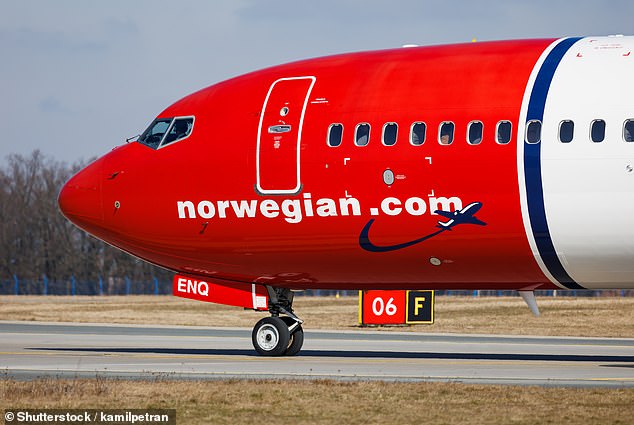
Nod to Norway: To capture the essence of a national carrier, Max and his team worked with composers to distill the feelings and emotions required
Similarly, when Max worked with Norwegian airlines, the aim was to ‘capture the essence of Norway and their sound, and we recorded in a place called Trondheim, where it doesn’t get dark’.
Recording with the Trondheim Orchestra, they ‘just injected it with Norwegian musicians. All recorded in this amazing studio on the fjords of Trondheim, looking out over Norway. It does feel very Norwegian in its nature. It’s very clean and future-facing, and beautiful’.
‘Everybody wants their Netflix level of fame,’ Max explains, referring to the two-second sound everyone associates with the brand.
He finishes: ‘For many of the carriers they are carrying not just the brand, but often the nationality as well.
‘Getting to that level of ubiquity takes many, many years of commitment.’