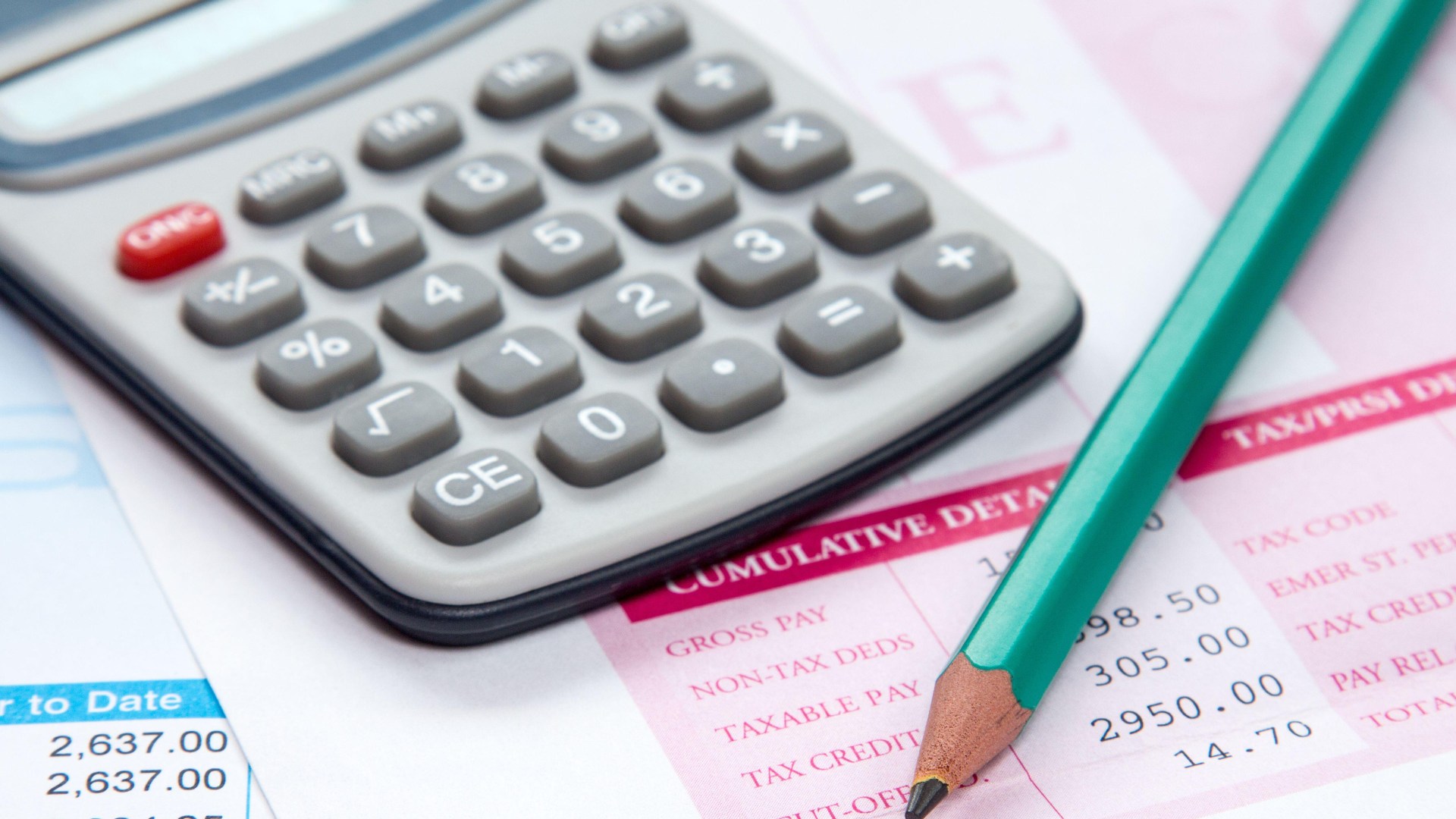
WORKERS are being urged to check their payslips to find out if they’re due a tax refund.
As many as £5.6 million workers have been overcharged £3.5 BILLION, according to accountancy group UHY Hacker Young – that’s an average of £625 each.
This is usually happens due to HMRC issuing an incorrect tax code on a worker’s payslip often due to changes in their employment.
Anyone paying tax as they earn could be inadvertently giving more money to HMRC than they need to.
HMRC is under no obligation to tell them, though it often does refund overpaid tax automatically.
Neela Chauhan, partner at UHY Hacker Young, said: “Millions of people are paying the wrong amount of tax simply because HMRC is almost guessing what they earn.


“For too many people, this will go completely unnoticed.
“HMRC won’t always correct overcharging mistakes automatically. If you don’t check your tax code or your PAYE [pay as you earn] calculation, you may never get your money back.
“The onus is on taxpayers to spot HMRC’s errors.
“Individuals must check their tax codes and year-end PAYE summaries for mistakes.
“Particularly those with any form of non-PAYE income or company benefits.”
To find out if you’re due a tax refund, you should check the tax code on your payslip.
An HMRC spokesperson told The Sun: “Everyone is responsible for ensuring their own tax code is correct, and they can manage and update their details quickly and easily via the HMRC app or their online tax account.
“Customers should also discuss any tax code issues with their employer first.
“The vast majority of repayments are paid promptly, and we are investing £500 million in digital services to help customers pay the right tax first time so fewer refunds are necessary.”
What does my tax code mean?
The amount you can earn each year before paying tax is £12,570.
That means that the standard tax code for the majority of people with just one job is 1257L.
Letters in your tax code refer to your situation, and how it affects your tax-free personal allowance and the rates of tax you pay, according to gov.uk.
The full list of tax codes and what they mean is as follows:
- 0T Your Personal Allowance has been used up, or you’ve started a new job and your employer does not have the details they need to give you a tax code
- BR All your income from this job or pension is taxed at the basic rate (usually used if you’ve got more than one job or pension)
- C Your income or pension is taxed using the rates in Wales
- C0T Your Personal Allowance (Wales) has been used up, or you’ve started a new job and your employer does not have the details they need to give you a tax code
- CBR All your income from this job or pension is taxed at the basic rate in Wales (usually used if you’ve got more than one job or pension)
- CD0 All your income from this job or pension is taxed at the higher rate in Wales (usually used if you’ve got more than one job or pension)
- CD1 All your income from this job or pension is taxed at the additional rate in Wales (usually used if you’ve got more than one job or pension)
- D0 All your income from this job or pension is taxed at the higher rate (usually used if you’ve got more than one job or pension)
- D1 All your income from this job or pension is taxed at the additional rate (usually used if you’ve got more than one job or pension)
- K You have income that you are not paying tax on which is more than your Personal Allowance – find out about a K in your tax code
- L You’re entitled to the standard tax-free Personal Allowance
- M Marriage Allowance: you’ve received a transfer of 10% of your partner’s Personal Allowance
- M1 You’re on an emergency tax code
- N Marriage Allowance: you’ve transferred 10% of your Personal Allowance to your partner
- NONCUM You’re on an emergency tax code
- NT You’re not paying any tax on this income
- S Your income or pension is taxed using the rates in Scotland
- S0T Your Personal Allowance (Scotland) has been used up, or you’ve started a new job and your employer does not have the details they need to give you a tax code
- SBR All your income from this job or pension is taxed at the basic rate in Scotland (usually used if you’ve got more than one job or pension)
- SD0 All your income from this job or pension is taxed at the intermediate rate in Scotland (usually used if you’ve got more than one job or pension)
- SD1 All your income from this job or pension is taxed at the higher rate in Scotland (usually used if you’ve got more than one job or pension)
- SD2 All your income from this job or pension is taxed at the advanced rate in Scotland (usually used if you’ve got more than one job or pension)
- SD3 All your income from this job or pension is taxed at the top rate in Scotland (usually used if you’ve got more than one job or pension)
- T Your tax code includes other calculations to work out your Personal Allowance
- W1 You’re on an emergency tax code
- X You’re on an emergency tax code
How do I check my tax code?
Take a look at your payslips from your employer, or log into your personal tax account online or via the HMRC app.
You’ll need your Government Gateway ID and password to hand, or your National Insurance number plus two of the following:
- A valid UK passport
- A UK photocard driving licence issued by the DVLA (or DVA in Northern Ireland)
- A payslip from the last three months or a P60 from your employer for the last tax year
- Details of a tax credit claim if you have made one
- Details from a self assessment tax return (in the last two years) if you made one
- Information held on your credit record if you have one (such as loans, credit cards or mortgages)
Follow HMRC’s advice here regarding checking your tax code is correct.
Why am I on the wrong tax code?
This usually happens if your salary changes or if you move jobs.
It can also happen if HMRC assumes that an employee is receiving company benefits-in-kind such as company cars even they they no longer are.
Incorrect assumptions about an employee’s additional income, such as rental income or freelance work, can also be the cause.
HMRC may also issue an incorrect tax code if there is confusion over how many jobs an individual is currently working, or if employer payroll information is submitted late, or is out of date.
If you think that your tax code might be wrong, update your details online here.
Or write to them at: Pay as You Earn and Self Assessment. HM Revenue and Customs, BX9 1AS, United Kingdom.
You should be reimbursed for any tax that you have overpaid. The vast majority of cases are paid within a few days.
Likewise, if you have find that you have underpaid tax then should contact HMRC and you will usually have 12 months to pay the money back.
HMRC might get in contact with you to say that you’re owed a tax rebate too.
In this situation they would send you a P800 or a simple assessment letter in the post.
A P800 might tell you if you’ve not paid enough tax and have to pay it back. It will show if you can claim online or through the government’s website.
If it says you will be paid via cheque then you should receive it within 14 days of the date on your letter.
If you need to claim online, you’ll have to provide your Government Gateway ID and password.
The money will then be sent back to you within five days.
How to cut your tax bill
THERE are several quick and easy ways you can cut your tax bill and increase your take-home pay. We explain how.
Tax relief
One way to reduce your tax bill is to claim tax relief.
You could be missing out on tax relief on your job expenses, which could let you take home more of your income and pay less tax.
To be eligible you need to use your own money to buy items you need for your job and only use for work.
You can claim for items including working from home, uniforms, work clothes, tools, travel and overnight cost.
You can’t claim tax relief if your employer gives you all the money back or alternative equipment.
You will get the relief based on what you have spent and the rate at which you pay tax.
For example, if you claim £60 of tax relief and usually pay tax at 20% then you will get £12 back.
For more information visit gov.uk/tax-relief-for-employees.
Claim your mileage
You may also be able to claim tax relief on your mileage if you drive a car or van for work.
You can claim 45p tax relief on every mile you do for the first 10,000 a year of business journeys.
If you travelled this distance in a year then you would get £4,500 in tax relief.
But if you drive more than 10,000 miles then you can claim 25p tax relief per mile.
You can also get an additional 5p per mile in relief if you carry a passenger.
For more information visit gov.uk/tax-relief-for-employees/vehicles-you-use-for-work.
Marriage allowance
If you are married or in a civil partnership then you could be missing out on a tax break that could save you £252 a year.
Every worker has a Personal Allowance, which is the amount of money you can earn every financial year before you start to pay Income Tax.
For the current tax year the Personal Allowance is £12,570.
But if you earn less than this then you usually don’t have to pay Income Tax.
But Marriage Allowance is a special tax rule that lets you transfer £1,260 of your Personal Allowance to your husband, wife or civil partner.
To be eligible your income must be below £12,570 a year and your partner must pay Income Tax at the basic rate, which usually means their income must be between £12,571 and £50,270.
For more information visit gov.uk/apply-marriage-allowance.