Do you think of Picasso as a lecherous old goat whose behaviour towards women was shameful? Or as the greatest artist of the 20th century? I’d say ‘both’ – the fascinating question being just why he became all those things.
The psychotherapist Andrew Jamieson has come up with an answer, or rather a perceptive, nuanced, highly intelligent analysis of Picasso’s life and work using Sigmund Freud’s theory of the unconscious as a touchstone. This is his approach, applied to big ‘names’, throughout this book.
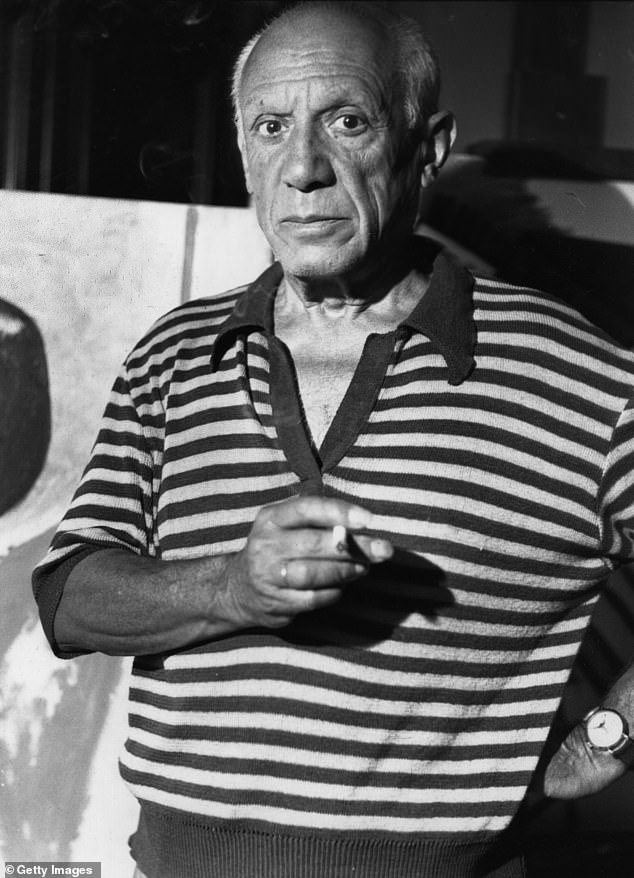
Picasso’s personality was formed by a failure of a father and a strong, unconditionally adoring mother
The combination of a failure of a father and a strong, unconditionally adoring mother was the starting point: ‘As the only son of an extended family of women [Picasso] had enjoyed a lavish degree of attention and adoration that he viewed always as his right, a sense of entitlement amplified by the power of his ego, which was suffused by a great girdle of ever-expanding grandiosity and hyperbolic ambition.’
Jamieson’s analysis of the great artist combines biographical detail, references to various theories of Jung and Freud, and his own final insight, which succeeds in evoking compassion for the aged, isolated man, ‘a prisoner of his terrified, blazing, gargantuan unconscious’. Of course, it may well send you back to the paintings wishing you didn’t know so much. Some people don’t want their heroes dissected on the shrink’s couch. Some might actually prefer awestruck ignorance.
Yet Jamieson’s method satisfies the avid curiosity about personalities that is the spirit of the age. In the last few years a new dialect has swept through Britain. I call it therapy-speak, but the less neutral term is psychobabble.
You will certainly recognise the stock phases trotted out everywhere with confidence in social situations. So-called celebrities talk of ‘triggering’ and ‘trauma’, users of social media will spout about ‘boundaries’, and feeling ‘comfortable’ or ‘threatened’ or ‘gaslit’, and identify ‘narcissism’ or ‘co-dependency’ or ‘toxicity’ in people they know. That’s when they’re not claiming themselves to be ‘on the spectrum’ or suffering from ADHD because they can’t get off their phones, or OCD because they like their clothes arranged a certain way.
Every human weakness, it seems, is pathologised by giving it a label. And personally (here I must speak ‘my truth’ in order to feel ‘validated’) I suspect that many of the (roughly) 289,000 therapy professionals in the UK have helped spread the acceptance of therapy-speak as well as the notion that everybody needs counselling, even if they don’t know it.
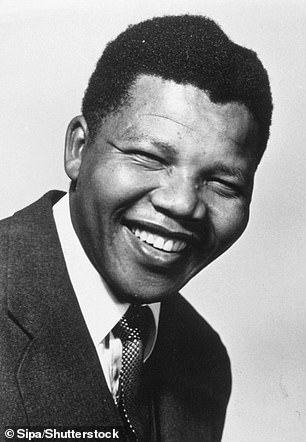
Nelson Mandela’s is one of the 20 minds that Jamieson delves into
Where does all this stuff come from – and is it doing this anxious society any good? The astonishing work pioneered by Sigmund Freud and Carl Jung at the end of the 19th and early 20th centuries provided radical insights into the human mind and soul and, very gradually, changed the way people looked at each other’s problems.
Their followers and practitioners (people such as Melanie Klein, John Bowlby, Viktor Frankl and Donald Winnicott) helped make the complexity of the human psyche comprehensible, even when they disagreed with each other, even when they had serious hang-ups themselves, and even when they fell inappropriately in love with their patients to the point of having affairs – which happened disconcertingly often.

Jamieson believes Putin’s invasion of Ukraine is down to his narcissism and ‘grandiosity’
Jamieson explains that therapists ‘are prone to depression, low self esteem and relationship collapse’, a mindset that makes the admiration of a client ’seductive’. Maybe you should be wary of encouraging your partner to try counselling…
The author of this absorbing book doesn’t shirk some of the issues. In On The Couch, Jamieson offers concise biographies of those pioneers and explains some of their key concepts – such as the unconscious, individuation, attachment theory and so on.
For that reason alone the book will be invaluable to anybody who wants to know more about our ‘Civilisation and its Discontents’ (to quote the title of Freud’s influential work) – all the more so if they are concerned (as I am) about the uninformed adoption of half-baked theories to the point of cliché. Jamieson’s summaries of psychoanalytic ideas are invaluable.
But the book’s excitement lies in the authoritative way the author illuminates key theories by applying them to the lives of 20 truly remarkable individuals whose names are famous – even if the detail of their lives is not so well known.
For example, it’s absolutely heartbreaking to read of the luminous Marilyn Monroe’s fragmented girlhood, beginning with abandonment by her mother, followed by a process of being shunted from foster parent to foster parent, before her climb to tempestuous stardom and then a lonely, suspicious death.
Jamieson sums up: ‘The lack of both a mother and a father compelled her to pursue her longing for a relationship that could provide her with Eros-driven elation.’

Marilyn on the couch: After a heartbreaking childhood it makes sense that the actress would ‘pursue her longing for a relationship that could provide her with Eros-driven elation’
On his metaphorical ‘couch’, as well as Picasso and Monroe, we find the great Nelson Mandela, the exotic dancer Josephine Baker, film star Cary Grant, Charles Darwin, and writers Virginia Woolf, Franz Kafka, W. B. Yeats and Ernest Hemingway, as well as international politicians Angela Merkel and Vladimir Putin.
There are many others too, including the inspiring Viktor Frankl, who survived a number of concentration camps, and Carl Jung’s wife, Emma.
Each case study is discussed in the light of one or two specific theories, for example John Bowlby’s attachment theory, Freud’s Eros and Thanatos (love and death) theory, and (ominously) ‘the Shadow’, espoused by Jung – which seems appropriate for Putin.
Jamieson’s personal musings are rooted in his own psychotherapeutic practice over many years.
He admits his judgments are ‘coloured by my own particular preferences and prejudices and viewed through the skewed prism of my own psychobiography with all its woundings and distortions, clouding any hope of objective perception’.
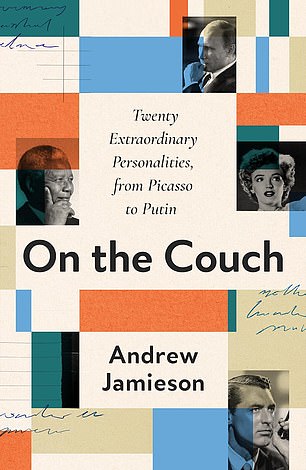
On The Couch is available now
That helps explain why, discussing Mandela and Merkel, he makes statements of astonishing naivety about their respective political legacies. In spite of all his experiences – in life, work and reading – the author, now in his 70s, clearly wants outcomes to be better than they usually are.
Discussing the narcissism and ‘grandiosity’ behind Putin’s invasion of Ukraine, he comments, ‘such monstrous behaviour will hopefully be one of the last experiences of this re-emergence of the wounded inner child in global politics’.
Given all he’s explained in this fascinating book – all the vulnerability, culpability, love, longing and sins of wounded humanity – you can only scoff (sadly), ‘Really?’