A recent rise in anti-corruption movements in Europe has upended politics from Serbia to Bulgaria to Romania. Now, one of the continent’s most entrenched leaders, Prime Minister Viktor Orbán of Hungary, faces a serious challenge this April in a parliamentary election that could be determined by what one commentator calls a public “yearning for integrity.”
For the European Union, too, the stakes in the election are high. Mr. Orbán and his ruling populist conservative party, Fidesz, have often obstructed the 27-member bloc in helping Ukraine and countering Russia. The EU has also held back funds for Budapest over its shrinking rule of law.
After nearly 16 years in power, Mr. Orbán has left Hungary with the lowest household living standards in the EU. The country of 9.6 million people has experienced three years of economic stagnation. It is also ranked by Transparency International as the EU’s most corrupt nation.
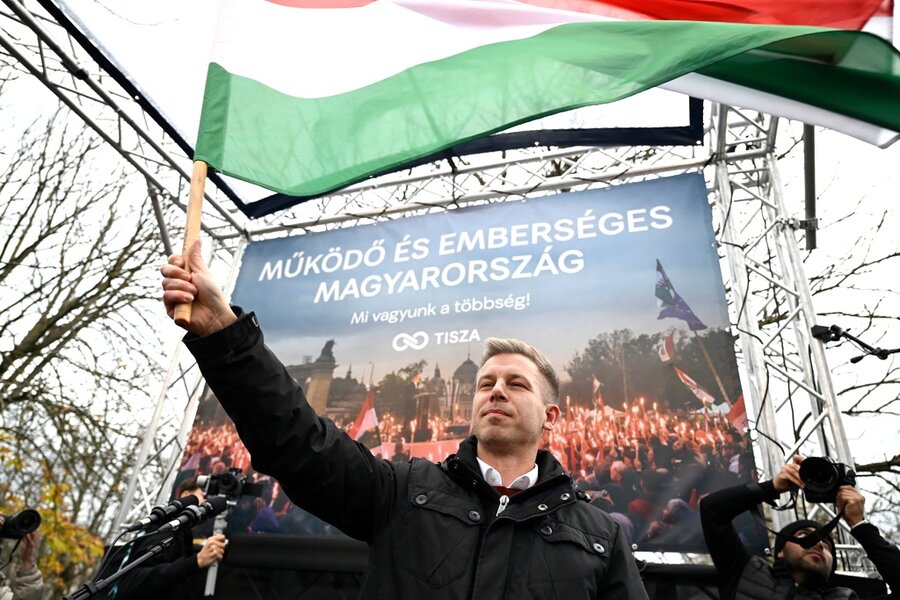
Voters are finally linking this antidemocratic misrule with their economic misery. Independent polls show an anti-corruption party, Respect and Freedom (or Tisza party) with a wide lead over Fidesz. The party’s leader, Péter Magyar, has shot up in popularity after two years of touring the country with warnings about the private use of public money by Fidesz.
Tisza is “much more than me … it’s a movement of the vast majority of the Hungarian people against corruption, lies, propaganda, and autocracy,” Mr. Magyar told Deutsche Welle. He promises to strengthen judicial independence, end nepotism in government, and make other reforms to curb graft.
Mr. Orbán’s political machine might yet prevent a victory for Tisza. He controls much of the media. But if current polls hold, states Gary Cartwright, editor of EU Today, “Hungary is on the brink of one of the most significant political transformations in its recent history.”
“In the crucible of early 21st-century European politics, Magyar’s ascendancy is a reminder that democratic renewal remains possible – even after years of drift towards authoritarian proximity and geopolitical ambivalence.”