For most of the four-year war in Ukraine, Russia’s trading partners in Africa have maintained a studied silence on the issue. These nations rely on Russia for crucial imports – especially the oil that fuels their modernization and the wheat that feeds their burgeoning populations.
But recently, civilians in several of these trade-dependent countries have pushed their governments to speak up about a much different, much murkier type of trade with Russia – the deceitful trafficking in humans who are forcibly thrown into the Russian battlefront in Ukraine.
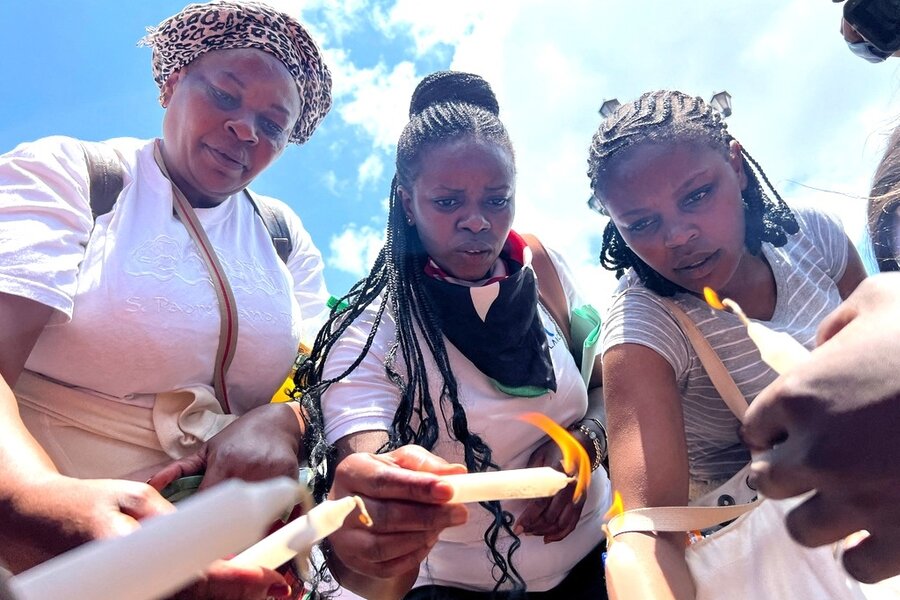
Last month, families of Kenyan men allegedly duped into fighting for Russia held protests in Nairobi, as the government revealed that more than 1,000 citizens had been so recruited. “These are … matters of human rights, national responsibility, and continental dignity,” declared the Centre for Investigative Journalism in Zambia. “When African lives are treated as expendable labour or disposable combatants in a foreign conflict, governments have a duty to ask hard questions, and to act.”
This week, Kenya’s foreign minister visited Moscow and announced that Russia has agreed to stop using Kenyans in its war in Ukraine.
According to the Switzerland-based investigative group Inpact, more than 1,400 Africans had contracted with the Russian army as of last September – and over 300 of them were killed within months of arriving at the front. Inpact described how Russia uses social media influencers and intermediaries to draw in Africans with promises of jobs or scholarships. On arrival, their passports are taken, they are forced to sign Russian-language contracts they don’t understand, and they are shipped to the front.
While human trafficking is a crime under international law, recruiting from third countries is not unusual to boost troop contingents. The number of recruits joining Russia’s military has been steadily dropping, most recently by 6% from 2024 to 2025. (Early in the war, North Korea sent 14,000 of its soldiers to fight alongside Russians, earning foreign exchange.) Nonnative fighters have also joined on the Ukrainian side – but they have done so voluntarily.
Russia, on the other hand, “relies on systematic deception” and the exploitation of citizens facing “economic desperation” and “weak institutions,” according to the Swedish publication Engelsberg Ideas.
However, “The growth of Russia’s influence is not inevitable,” analysts William Mockapetris and Ryan Jurich wrote encouragingly in The International Affairs Review last month. “A comprehensive strategy to engage at-risk nations” and “dismantle trafficking networks” can curb Russia, they said.
Despite economic and institutional challenges, African governments are stepping up. Kenya recently shut down more than 600 recruitment agencies suspected of duping applicants with promises of jobs overseas. And along with South Africa, Ghana, and Botswana, among others, Kenya is working to repatriate nationals – from Russia’s military ranks and from prisoner-of-war camps in Ukraine.
Preventive and restorative actions such as these are essential – and effective – in upholding individual dignity and national accountability.