An electric car that killed a five-year-old boy after suddenly surging forward was in perfect working order and could only have moved because the driver pressed the accelerator instead of the brake, a court heard.
Ashenafei Demissie, 53, was driving an electric Volkswagen ID.4 when it struck five-year-old Fareed Amir and Demissie’s own 12-year-old son, Raphael, in a car park outside his flat near London Bridge Station.
Fareed later died in hospital from a fractured skull.
Demissie has denied causing death by careless driving and causing serious injury by careless driving, claiming the car moved on its own due to a fault.
But a senior Metropolitan Police collision expert told jurors there was no mechanical defect and no way the vehicle could have moved without driver input.
The Old Bailey heard the incident happened on 25 November 2022 as Fareed was walking home from primary school with his mother, Maryam Lemulu.
They stopped to speak to Demissie’s wife, Yodit Samuel, who had known Ms Lemulu for 13 years. Fareed reportedly called Demissie ‘Uncle Ash’.
Prosecutor Michael Williams said the Volkswagen suddenly shot forward after Demissie, a taxi driver, offered Fareed a treat from inside the car.
The vehicle hit both boys before crashing into five other parked cars and coming to a stop.
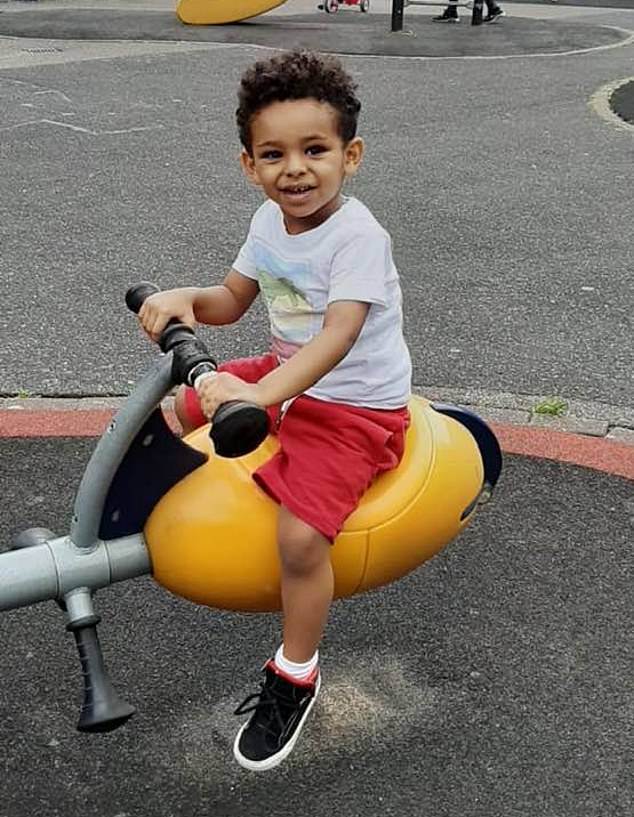
The first picture released of Fareed Amir who was killed when a family friend’s electric car allegedly ran over him
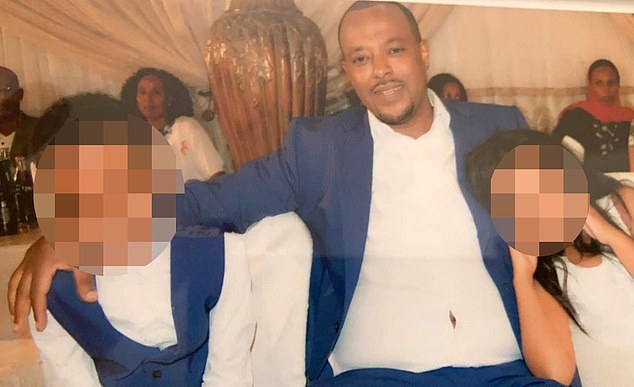
Ashenafei Demisse claims the vehicle moved on its own while he was sitting inside it and denies the charges against him
Fareed’s mother carried him to Guy’s Hospital, where he was pronounced dead. Raphael spent a month in hospital after breaking both legs.
Demissie was interviewed by police on the day of the incident and told them he had the car since December 2021.
He said he had taken Raphael to school that morning before working as a taxi driver until 1.15pm before going to have lunch and watch the 2022 World Cup.
Demissie said: ‘I picked up my youngest son from school, he was in the front passenger seat. I drove into the car park outside my house and saw Rosa who was with her son Fareed.
‘I stopped in the middle of the car park.’
He said he remained in the car with his younger son while he chatted to the women about how his wife had made the lunch too spicy.
‘I had brought some sweets and offered one to Fareed. He came round the side of the car but Rosa said not to give it to him.
‘Fareed was by the sensor in front of the car and suddenly the car jumped.
‘I believe the car jumped because Fareed triggered the sensor.
‘I have been driving 21 years and never seen anything like it. I’ve never experienced any mechanical problems with the car before.
‘I stopped the car pressing the brake pedal with my foot. I took my foot off the pedals.’
Asked questions by the officer he repeatedly blamed Fareed for making the car jump forward saying he was touching the sensor and may have touched a wire.
He told police he was sorry for Fareed’s death and wanted to offer his condolences to his family.
Mark Still, a Senior Forensic Collision Investigator for the Metropolitan Police, told the jury he examined the year old Volkswagen and found no faults that could explain the crash.
‘I was unable to make the car accelerate without driver input,’ he said.
Mr Still said the vehicle could not be put into gear without a foot on the brake and there were no issues with the braking system. A mechanical examination found no fault with the operation of the vehicle.
He explained that while the car had cruise control, it could only accelerate automatically if a driver deliberately set a speed and pressed the accelerator and even then, pressing the brake would immediately override the system.
Mr Still said the car was accelerating at near maximum speed when it struck the other vehicles and there was no evidence of braking.
He told jurors there have been many cases of drivers confusing the pedals.
‘The driver may put their foot on the accelerator assuming it is the brake,’ he said.
‘The car will start moving but because the driver believes they put their foot on the brake they will push harder trying to make it stop and you will get rapid acceleration when the driver thinks they’re putting the foot on the brake.’
Mr Still said damage was found to the front right of Demissie’s car, including dents near the headlight and a torn tyre, but nothing that could have caused unintended movement.
‘I concluded that the accelerator was pressed,’ he said.
‘The vehicle could not be made to move without input from the driver. The brakes could bring the vehicle to a stop if acceleration had been started.’
Demissie, from Southwark, continues to deny both charges. The trial is ongoing.