Britain’s election watchdog was last night accused of a ‘reckless’ attempt to water down voter ID rules that risks ‘opening the floodgates’ to fraud.
The Electoral Commission wants the Government to allow ‘vouching’ of voters who do not have identity documents when they go to a polling station.
It would mean that those without any valid forms of voter ID – such as illegal migrants or others with no right to vote – could vote by simply getting someone else who did have the correct identification to vouch for them.
Critics last night warned that the Commission’s ‘alarming’ proposals would encourage even more fraudulent ‘family voting’, which was observed in record numbers at last month’s Gorton and Denton by-election in Manchester.
The illegal practice often involves a man entering a polling booth with his wife or other relative and telling them how to vote.
The introduction of ‘vouching’, also known as attestation, could also encourage impersonation of legitimate voters and intimidation of voters, it was claimed last night.
Legal expert Dr Patrick Nash said: ‘This is the Electoral Commission itself calling for vouching to be used. It is incredibly alarming and counterproductive. You would have someone with ID saying “I can vouch for this person”. In reality that person could be anyone. It destroys any kind of security whatsoever.
‘We have already seen high levels of family voting during the Gorton and Denton by-election and this would open the floodgates further to voter fraud.
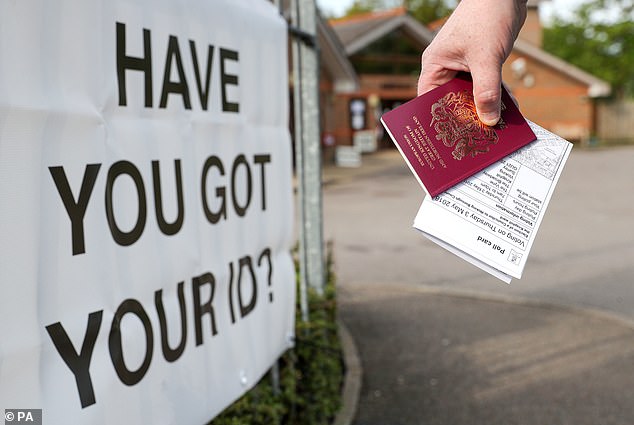
The Electoral Commission wants the Government to allow ‘vouching’ for voters who do not have identity documents
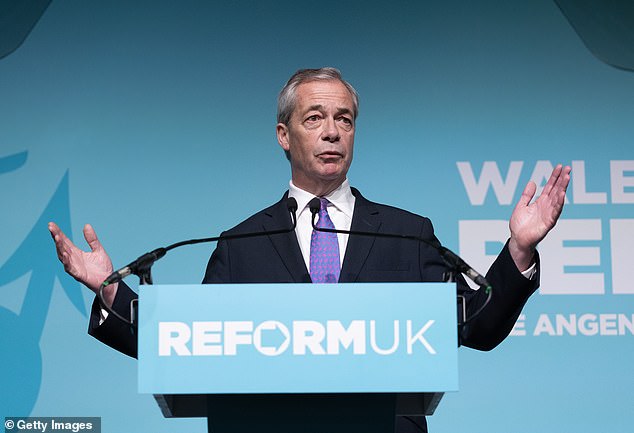
Nigel Farage has claimed Reform UK were robbed of victory in the last month’s Gorton and Denton by-election by foreign-born voters
‘It is extraordinary that the Electoral Commission is advocating for this.’ Independent election observers estimated that up to one in eight votes could have been affected by family voting at last month’s by-election.
Reform leader Nigel Farage sensationally claimed in last week’s MoS that his party was robbed of victory by foreign-born voters.
In a bid to combat fraud the previous Tory government introduced new laws which mean voters must show photo ID in a polling station before being issued with a ballot paper. But last month Labour unveiled the Representation of the People Bill, which will water down the Tory reforms by letting voters ‘prove’ their identity using just a UK bank card.
While the Electoral Commission has warned this change ‘may not help improve security and voter confidence’, it says vouching can be a good solution.
‘The UK Government should enable registered voters who do have accepted ID to make an attestation at their polling station on behalf of someone who does not have any form of accepted ID (also referred to as “vouching”),’ the Commission’s website says.
‘Canada uses “vouching” at its federal elections. It allows registered voters with an accepted form of ID to vouch for someone who does not have accepted ID.
‘It keeps a link with a named voter who can prove their ID.’
But last night former Communities Secretary Lord Pickles said he was ‘deeply alarmed’ at the vouching proposals.
‘This would open the door to further family voting, intimidation and impersonation,’ he said.
‘I have seen first‑hand how fragile the secrecy of the ballot can be.
‘Once you let one person validate another, you destroy that secrecy and invite abuse back into our elections. We worked hard to close these loopholes.
‘Reopening them would be reckless and would do lasting damage to trust in British democracy.’