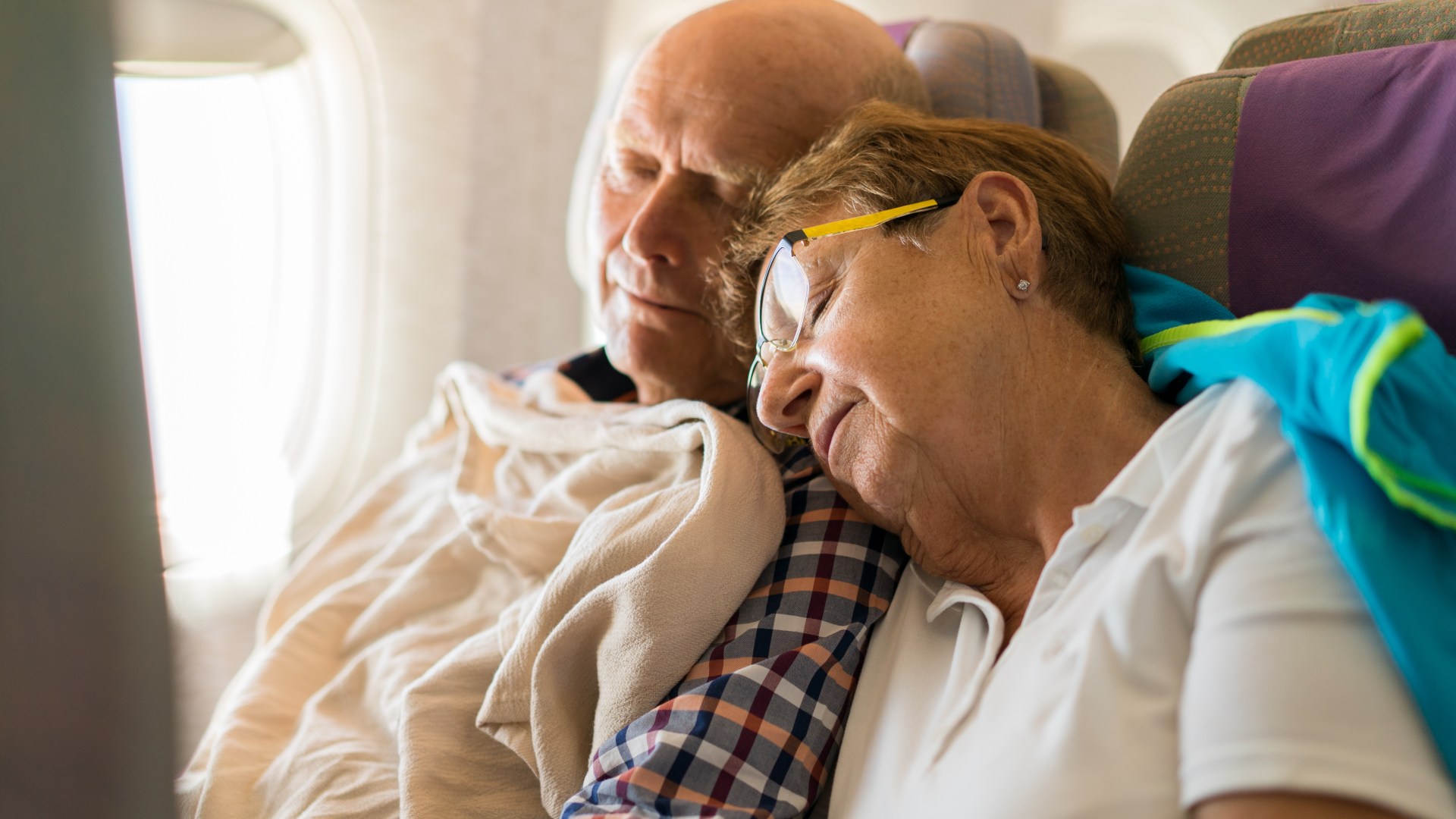
ELDERLY flyers should be split up around planes to speed up emergency evacuations, scientists have suggested in a shock new study.
Safety rules require aircraft to be able to evacuate a flight within 90 seconds.
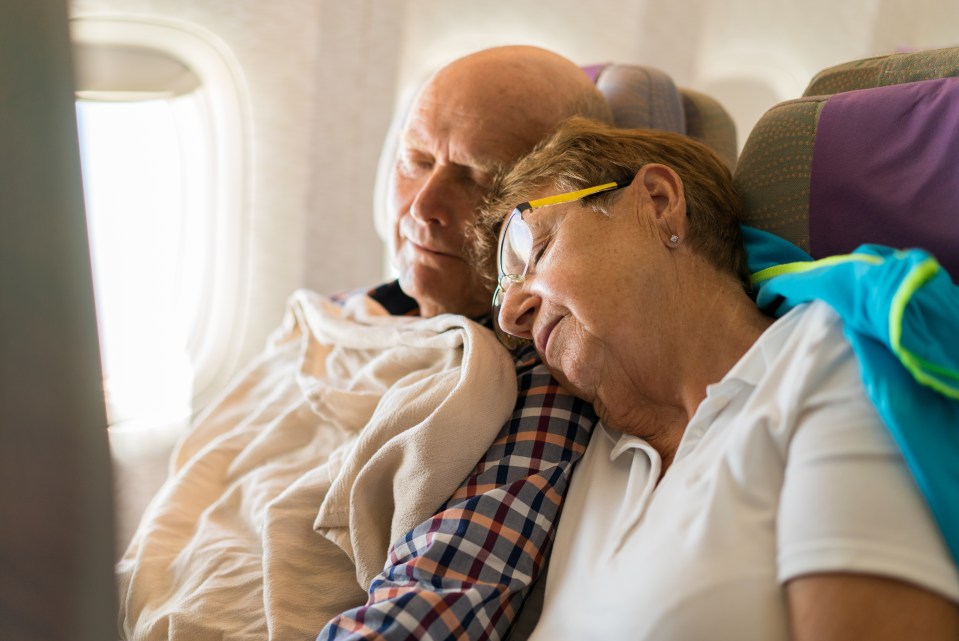
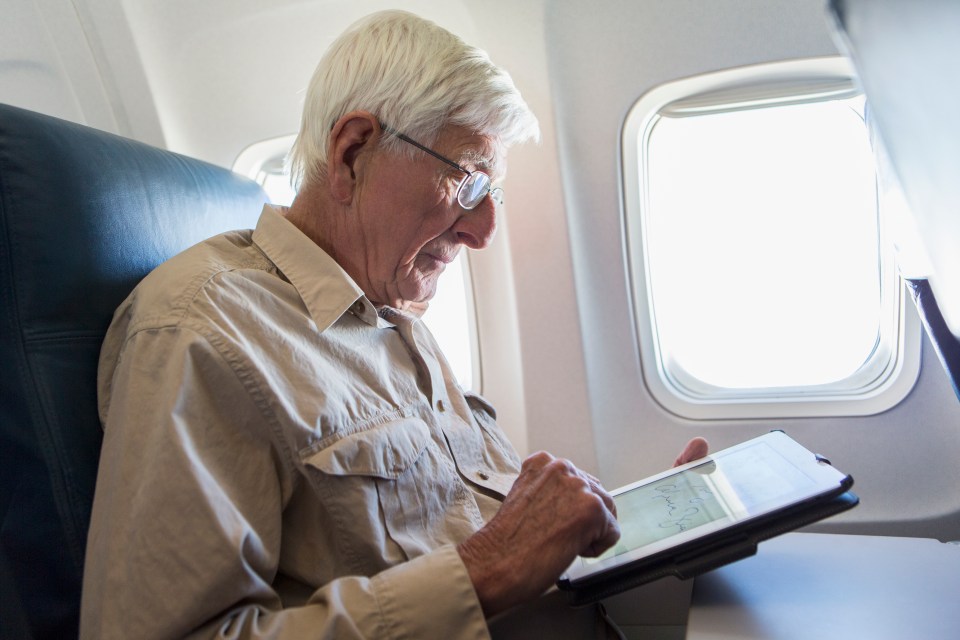
But tests indicate a growing number of older passengers pose “new challenges” to that important time limit, which is set by the US Federal Aviation Administration (FAA) and followed globally.
Experts simulated 27 different evacuation scenarios in case of a dual-engine fire on an Airbus A320, one of the most popular narrow-body aircraft in the world.
They tried various cabin layouts and ratios of aged passengers aged 60-plus.
Alarmingly, in all cases they failed to reach the 90 second deadline.
The fastest option took 141 seconds for all the passengers to reach the ground – while the longest took a staggeringly slow 218.5 seconds.
Researchers found the proportion and location of elderly passengers with limited dexterity have the largest effect on evacuation time.
They’ve made a number of recommendations to address the problem, suggesting that the elderly should be evenly distributed around the aircraft.
The study notes that reduced mobility of older flyers “may lead to localised congestion and obstruct the movement of other evacuees”.
“Furthermore, age-related cognitive decline and heightened stress sensitivity can impair situational awareness, delay decision-making, and reduce compliance with crew instructions,” it explains.
They recommend designating seats for elderly passengers that are evenly distributed near exits to improve evacuation times.
Sign up for The Sun Tech newsletter for gadgets, games & more

Hello! I’m Sean Keach, The Sun’s Head of Technology and Science
I’ve been writing about gadgets, games and the future of technology for more than a decade.
During that time I’ve penned thousands of articles, filmed hundreds of videos, talked tech on TV and radio, and travelled around the world to bring you the latest on Apple, Meta, Google, Amazon, Netflix and more.
And I’ve got a weekly newsletter called The Sun Tech that you can read for free every Thursday.
I bring you the latest from the world of tech, including behind-the-scenes action, exclusive content, expert analysis, and plenty of help advice – so please follow along!
It’s also proposes enhanced visibility of safety instructions, better support structures such as wider aisles, clearer floor path markings and armrests designed for assisted mobility.
“While a dual-engine fire scenario is statistically rare, it falls under the broader category of dual-engine failures and critical emergencies in aviation,” said author Chenyang (Luca) Zhang, whose study is published in the AIP Advances journal.
“History has shown that dual-engine failures and emergencies, such as the famous ‘Miracle on the Hudson’ involving Captain Sullenberger, can happen and lead to severe consequences.
“Our study focuses on these low-probability but high-impact events to ensure the highest safety standards.”
The team want to investigate whether children and pregnant women have an impact next.
“We hope these findings help airlines proactively mitigate risks,” Zhang added.
“By understanding how passenger distribution affects evacuation, airlines could potentially implement more strategic seating arrangements to optimise safety without compromising operational efficiency.”