Fifteen words changed my world on November 12, 2018. I knew something was terribly wrong when two officers got out of a police car outside our house, took off their hats and walked up our driveway.
I heard my mother answer the door and then scream. They entered the room. ‘We found him. He’s not alive and it’s clear he’s done it to himself.’
I thought I was going to pass out and sat on the floor, completely unable to understand what anyone said to me beyond the fact my husband was dead.
One of the first questions that arises around suicide is, ‘Could I have stopped it?’ Were there signs? Did they say anything that gave a clue?
I now think of suicide as a tunnel, and although I don’t believe everyone can be saved, I do believe that the right words or signposting can turn someone around as they hover at that tunnel mouth.
Steve was a lovely, funny, decent bloke who wanted an easy life. When I met him in 2000, we had a wonderful time together. One moment we’d be off to Spain, another we’d go to Australia. Years later, we weren’t in the honeymoon period any longer, but we were mostly happy.
He was 47 when he left home that day to go to his new job and obviously I had no idea that my two young daughters, Evie, then nine, and Ada, two, and I would be plunged into a world of unimaginable grief.
The statistics on suicide are quite horrifying, especially for men, whose lifetime risk is 17.6 deaths per 100,000 – about three times higher than the female rate. About one in five people will lose someone close to suicide and, for every suicide, at least 135 people are affected – family, friends and colleagues.
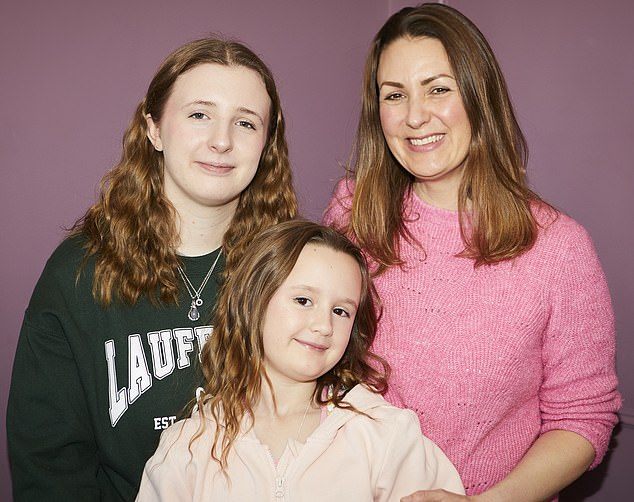
Caroline Roodhouse with daughters Evie and Ada
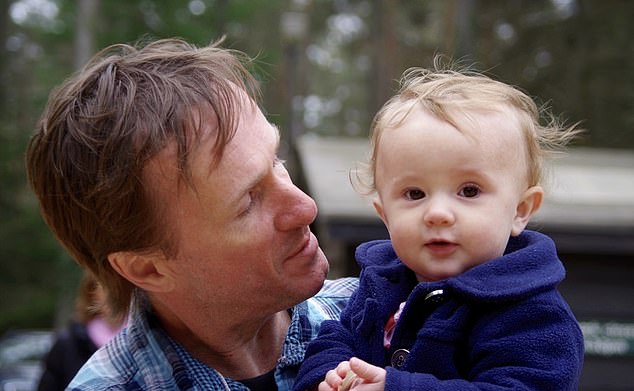
Her husband Steve with one of the girls. He was a lovely, funny, decent bloke who wanted an easy life, says Caroline
Despite thriving as a manager and leader earlier in his career, Steve was having a miserable time in his job. He worked in telecoms and had been viciously bullied by one of his clients.
Starting a new job and managing a team again was, I felt, evidence that he was turning a corner. I was half-surprised that he didn’t seem excited, but put that down to being older and more tired, especially as a parent of two.
That morning I had a sore throat and Steve, who was always thinking about others, went flying up the stairs to find me some throat sweets. He kissed me, said he’d see me later and confirmed that he’d collect Evie from Cubs.
But at 10.30am, Steve’s office called. He hadn’t turned up. It was a shock, but I assumed that his car had broken down.
Things started to unravel. I called Steve and both his mobiles went straight to voicemail. With rising panic, I began to phone around the hospitals, until eventually his office suggested I call the police. For the next two days, the girls and I were in a terrible limbo, with no idea what had happened to him. Were there signs with Steve? It’s impossible to work out.
A friend of his had been at the pub with him a few days previously and Steve had talked about Gary Speed, the Welsh former footballer and manager, who took his own life in 2011. I’ve always said that his friend couldn’t have known what was to come.
A couple of weeks before Steve died, I said he needed to stop complaining about work because it was impacting us all, and he threatened to leave his new job. I said he couldn’t – we needed him to work. Obviously, that haunted me for a while, but I chose to stop letting it torment me.
On the previous Sunday, I was out with Evie when my mum popped to visit Steve and Ada. She said he seemed frustrated and worried about work. Yes, he was a bit withdrawn. But suicidal?
The first night after I’d reported him missing, the police came and searched the entire house. I was stunned, but they explained that sometimes people bang their heads and pass out in attics or sheds. The officer acknowledged Steve didn’t appear to have mental health problems, so he wasn’t considered high risk.
As the days unfolded, I became more sure he must be dead, but suicide still wasn’t on my mind. Then, that awful morning, the police came. They told me he’d been found in his car by a member of the public. Those first few days and weeks were a blur.
I walked to the school to tell Evie. It was the hardest thing I’ve ever done. The deputy head was standing by the gates with Evie, who was smiling innocently. Then she saw my face. She was crying before I said her daddy had died.
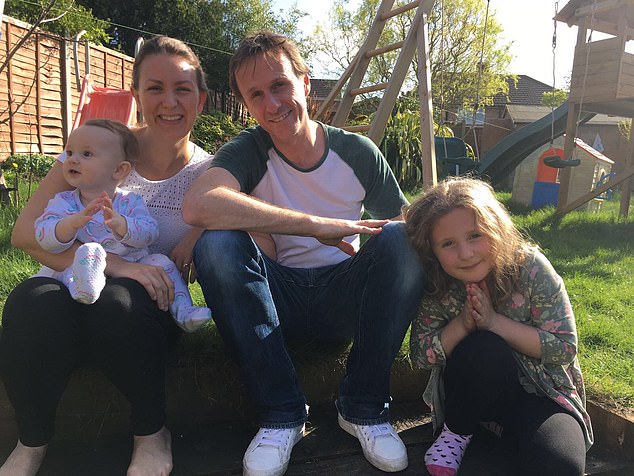
When he left home that day to go to his new job and obviously I had no idea that my two young daughters, Evie, then nine, and Ada, two, and I would be plunged into a world of unimaginable grief, says Caroline
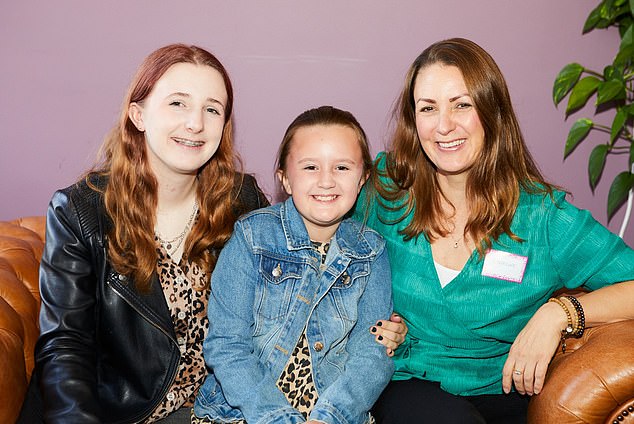
You have to try to get back to some semblance of normality in a world that has been turned upside down, says Caroline
Nobody tells you about the admin that comes with death, especially sudden death. There’s the horror of a funeral held far too soon, where nobody has any idea what to say. There’s the starkness of holding a death certificate for your still-young husband. I was only 39 – and a widow.
I’m aware there’s a great deal of shame around the subject of suicide. Not for me. I was very clear to my children that their daddy was desperately unwell, not that he wanted to leave them. To be honest, the main emotion was anger – towards Steve and with the situation generally – so much so that I don’t think there was room for anything else.
You have to try to get back to some semblance of normality in a world that has been turned upside down. I’ll always be grateful that I was put in touch with the charity Winston’s Wish early on. They told me to tell the girls the truth, and that’s what I’ve always done.
In fact, Evie did an assembly about the subject in 2025. At the time, she was in Year 11, when boys and girls don’t really speak. One boy broke away from his group and said, ‘Mind if I shake your hand?’. ‘That was incredible,’ he told her
Sometimes, she says, ‘I don’t want to hear about suicide this week.’ And that’s fine.
But last year, it became my full-time job. I first started posting on LinkedIn a couple of years ago, pointing out that suicide is also a workplace issue. This isn’t to say that anyone is to blame or, indeed, responsible. But acting on signs, or signposting to support, might save a life. The response was overwhelming and I’ve now started giving talks to corporations and firms.
On one occasion, I was talking to a construction company – 300 men in hard hats. I told them my story and at least 20 were crying by the end. We talked about people they’d lost to suicide and their own mental health. I even wrote a book about my experiences called Daddy Blackbird.
Last year, for the British Standards Institution (which publishes industry standards and guidance across a range of areas, including workplace well-being) I wrote the First Steps Guide to accompany its first-ever standard on suicide awareness – Suicide and the Workplace. Since its launch in November, it has had 8,500 downloads in more than 100 countries.
If I’m telling my story and men say, ‘I’m not killing myself today,’ or if companies download the BSI standard, or boys hear Evie’s story and shake her hand, you realise there is a difference to be made.
I did a podcast with the director for mental health from the Princess Alexandra Hospital in Brisbane. He asked me what Steve would say if he was standing in front of me now. The question knocked me off my feet and, in that moment, any blame was gone. I knew Steve would say how sorry he was for causing us any pain.
What to watch out for in your loved ones…
1. Some changes might give cause for concern: withdrawing from others, changes in mood or sleep, talking about feeling hopeless or like a burden, or putting affairs in order. Several together can suggest they need support.
2. Asking directly if someone is thinking about suicide may open a conversation that can be life-saving.
3. There’s a myth that talking about suicide means that someone is not at risk. Take every disclosure seriously.
4. Be prepared to help. Ask directly, listen with empathy, signpost to professional help and escalate to emergency services if necessary.
5. If you know someone who has been bereaved by suicide, check in on them. You don’t need the perfect words. There’s no timescale or ending for this sort of grief.
Anyone in crisis can contact Samaritans for free at any time on 116 123. If you are bereaved by suicide, visit UKsobs.com
As told to Alice Smellie