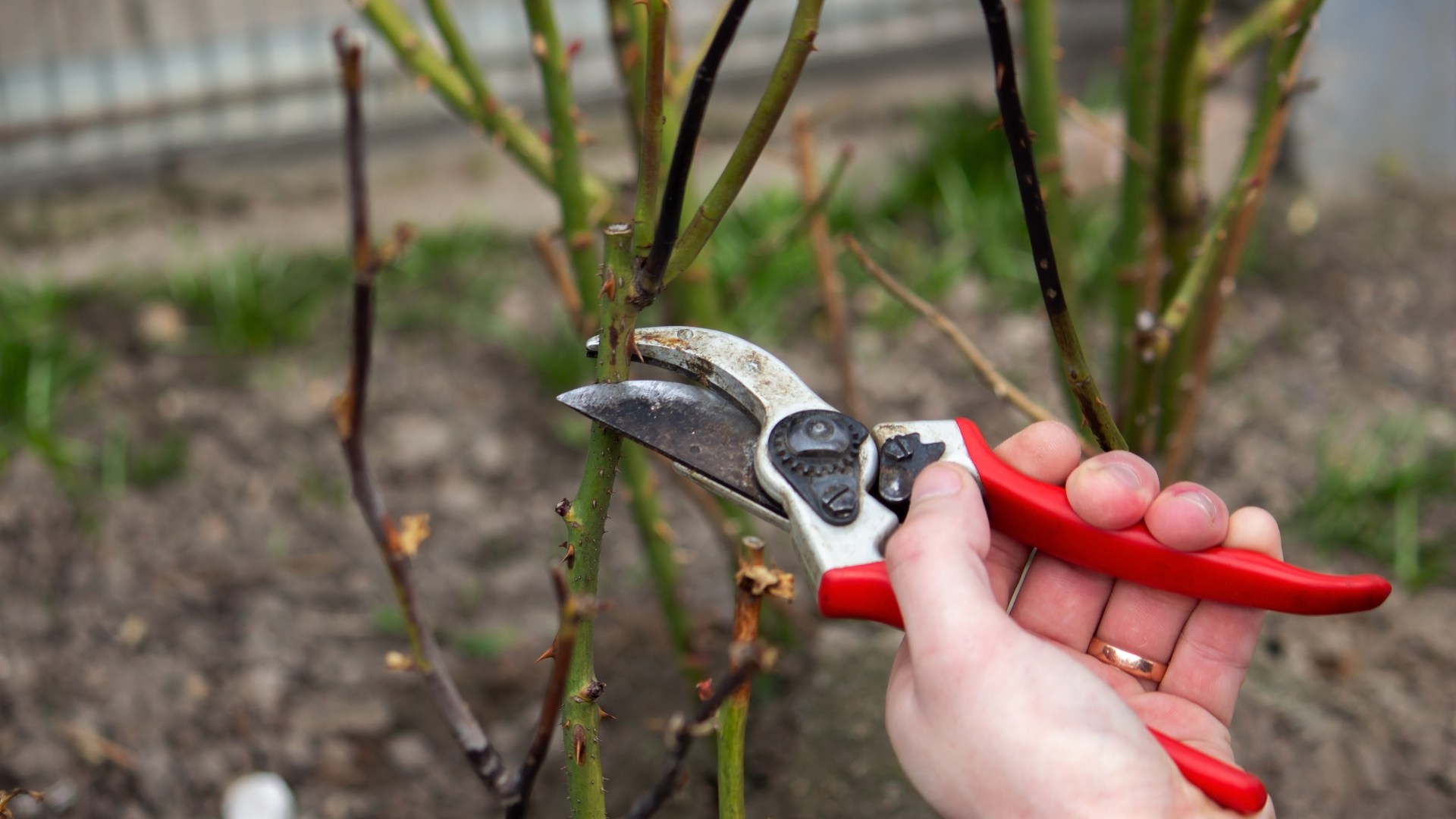
YOU might think there is very little to do in a winter garden, besides sweeping up soggy leaves and mulching your beds.
But don’t be fooled — now is the perfect time to sharpen those loppers and secateurs and get pruning.
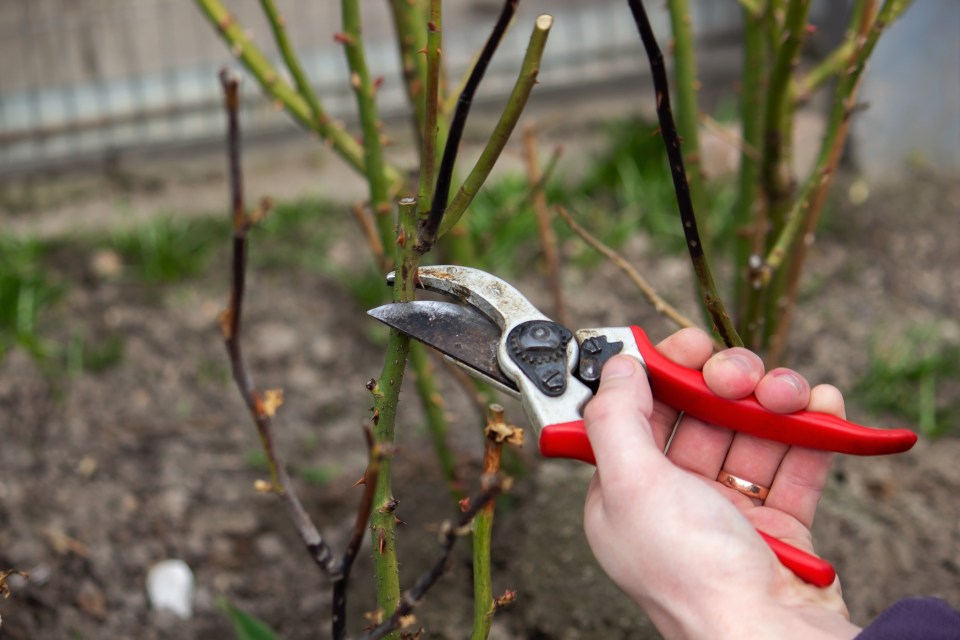
Certain trees, shrubs and fruit bushes will positively thrive come spring, with sensible cutbacks done now.
Alison Smith, botanical horticulturist at London’s Kew Garden, told Sun Gardening: “A vital winter job is spur-pruning flowering climbers such as wisteria, schisandra, climbing roses and vines.
“It’s a chance to shape the structure, and it is a way of manipulating the plant into doing what we want — restricting buds, minimising leaf growth and diverting more energy into flowering.”
APPLES AND PEARS: Remove the three Ds — dead, diseased and damaged — plus rubbing crossing branches.

Thin out the centre to let light and air in. Don’t take off more than a third. Don’t prune cherries and plums.
CLIMBING ROSES: Focus on retraining, bending and tying in flexible stems to encourage more flowers.
BUSH ROSES: Remove inward growing stems to create a goblet shape and let in air and light.
Cut back remaining stems by about a third to just above an outward-facing bud.
PERENNIALS: Remove rotting Hosta foliage — especially to deter slugs and snails. Same with daylilies once the foliage has died down.
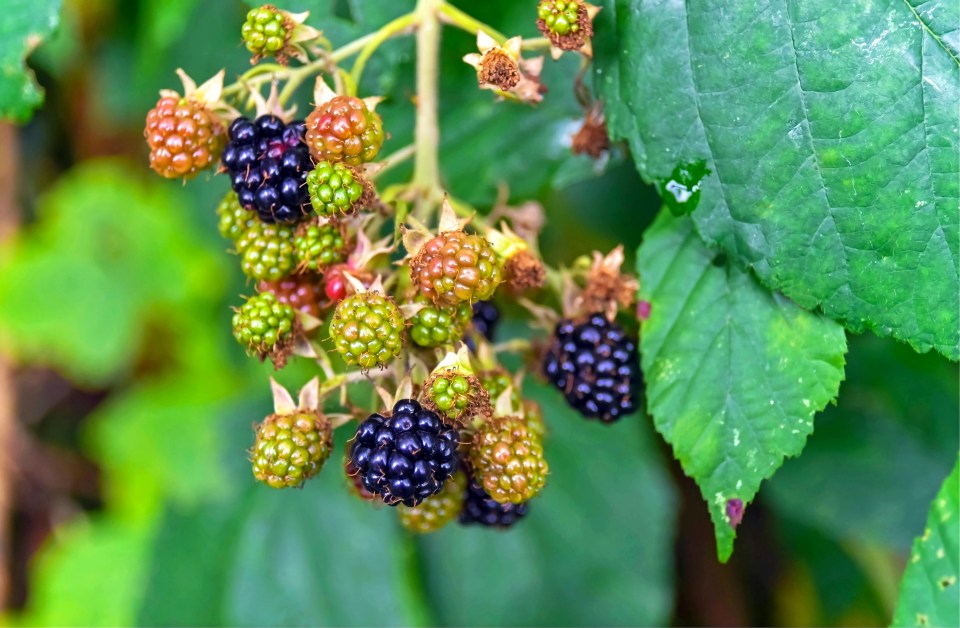
FRUIT BUSHES: Blackcurrants — remove a third of the oldest, darkest lower branches to ground level to promote new, fruiting wood.
Gooseberries, redcurrants and whitecurrants — aim for the goblet shape.
Autumn-fruiting raspberries — cut canes to 5cm above the ground to get fruit in late summer.
WISTERIA: Cut summer-pruned side shoots back to two to three buds.
GRAPEVINES: Cut back to the main rods you’re training along support.
HEDGES: It’s a good time for deciduous hedges like beech, hawthorn, hornbeam and hazel — you can reshape or hard-prune.
Make sure the base is wider than the top, so light can get to all of it.
Also in Veronica’s Column this week….
For more gardening content, follow me @biros_and_bloom
SAVE! GET pruning with this handy Niwaki folding saw for £39 from Amazon, or go for the Hawksmoor one from Toolstation for £6.99.
WIN! VONHAUS is giving one lucky reader a two-in-one scarifier and aerator worth £139.99 and a cordless pole hedge trimmer worth £114.99.
For a chance to win, visit www.thesun.co.uk/Vonhaus or write to Sun Vonhaus competition, PO Box 3190, Colchester, Essex, CO2 8GP.
Include your name, age, and email or phone.
- UK residents 18+ only. Entries close 11.59pm. Feb 14, 2026. T&Cs apply
LEARN! Q) IS it better to plant onions from seed or use sets? Sarah Davey, Cambridgeshire
A) Good question. Sets are the tiny bulbs that offer easier planting and faster, more reliable growth – but they are prone to bolting (sprouting stems prematurely). Seeds are cheaper with more variety and higher yield, and they store better.
JOB OF THE WEEK! CARRY on mulching, start choosing your seed potatoes and summer-flowering bulbs, start sowing veg seeds under cover and flowers like petunia and salvias.
PLANT OF THE WEEK! CEANOTHUS (California lilac) is evergreen with beautiful blue clusters in early to mid-spring. For 20 per cent off, see thompson-morgan.com/sunoffers. T&Cs apply.
SPRING KEEN: THIS year’s Plant Fair Roadshow series kicks off on Sunday near Rolvenden, Kent.
The Snowdrop & Spring Plant Fair, at the 16-acre Hole Park Garden, will feature more than a dozen dedicated growers and nurseries from across the South East.
As well as speciality snowdrops, they will also sell hellebores, daphnes, aconites and other winter-flowering plants.
The fair runs from 11am to 3pm. Entry to the fair and garden is £8. See plantfairsroadshow.co.uk.
BUG’S STRIFE IN ’25: THE results of last year’s Garden Organic survey are in – with 2025 dubbed The Year of the Aphid.
Runner beans performed worst overall for the second time in recent dry years, with nearly half producing poor or no yields due to lack of water and poor pod set.
Lettuces bolted rapidly in summer heat, forcing fast-succession sowing.
Well-established squashes with reliable water did well, but 40 per cent produced poor or no yields.
Brassicas struggled early due to aphids, cabbage white butterflies and bolting, but crops that survived recovered later to deliver good autumn harvests.
Onions delivered mixed results. Carrot germination often failed and potatoes struggled in hot, dry soil.