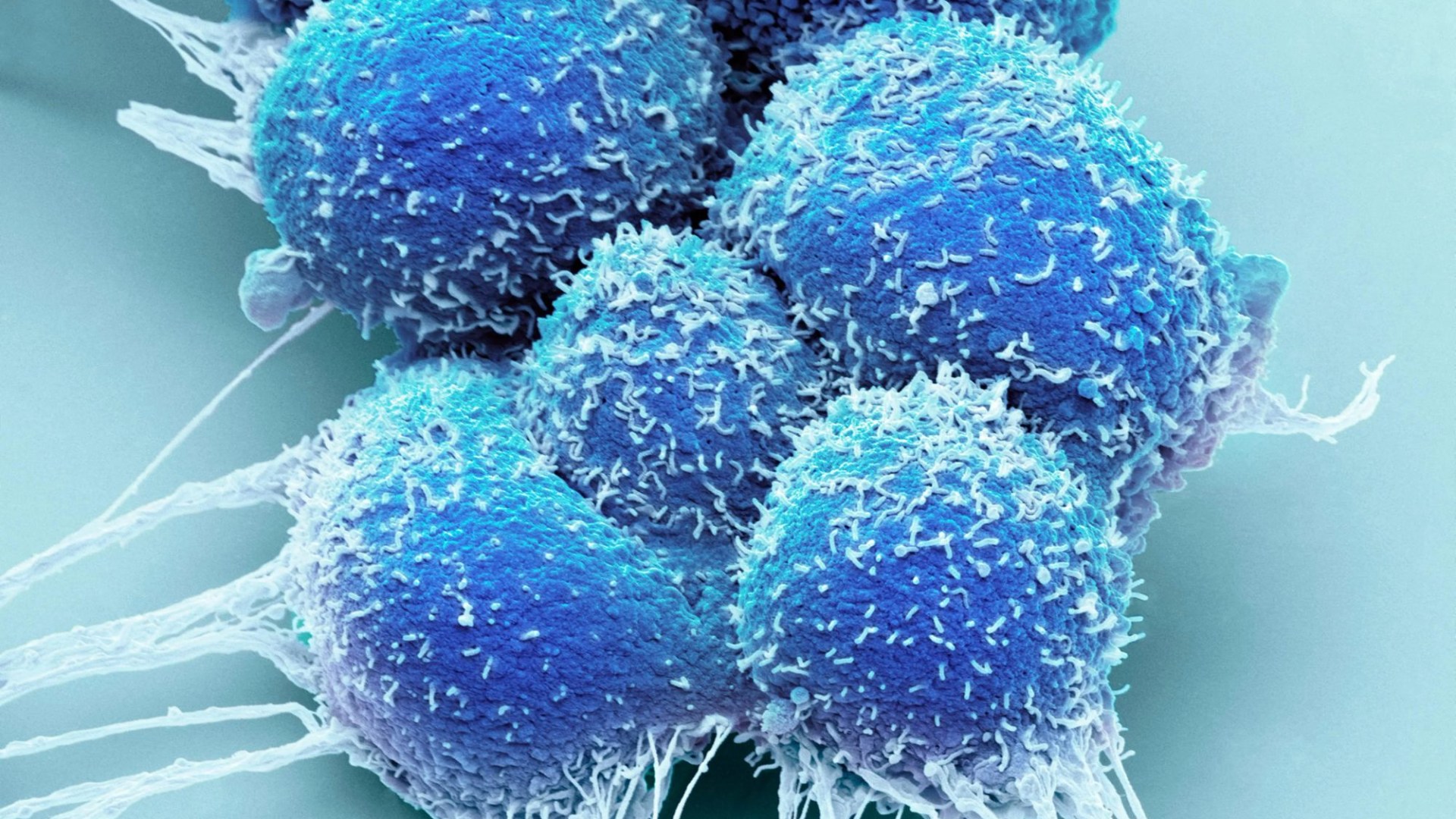
A DRUG that shrinks tumours in patients with untreatable prostate cancer has shown “remarkable” results, scientists have said.
The treatment, called VIR-5500, harnesses the body’s immune system to fight the disease and appears to avoid many of the harsh side effects seen with similar therapies.

Until now, prostate cancer has seen little benefit from immunotherapies, which have often failed to shrink tumours and caused harsh side-effects, like erectile dysfunction.
But the new drug uses a so-called “cloaking device” that keeps it inactive in the bloodstream and only activates when it reaches cancer cells helping to minimise side-effects.
Reporting their findings at the American Society of Clinical Oncology (ASCO) Genitourinary Cancers Symposium, researchers described how the drugs were tested on 58 men with advanced prostate cancer that had stopped responding to other treatments.
Almost half (45 per cent) of 11 patients saw their tumour shrink.
Read more on prostate cancer


Among the 17 patients given the highest dose, more than half (53 per cent) saw their levels of prostate-specific antigen (PSA), a blood marker which indicates prostate disease, drop by 90 per cent.
Overall, 82 per cent saw their PSA levels halve.
And across the trial, 88 per cent of patients experienced only very mild side-effects.
“Pending further clinical validation, available data are suggestive of a generally favourable safety profile, with evidence of meaningful anti-tumour activity,” according to the abstract presented at the conference.
The drug is called a “T-cell engager” and works by binding to the body’s immune T-cells and to a protein found on the surface of prostate cancer cells.
When it binds to the cancer cells – wherever they are in the body – it brings the T-cells into contact with them, enabling the attack.
The Institute of Cancer Research (ICR) said VIR-5500 also contains a “cloaking device” which keeps it inactive until it reaches the cancerous cell.
This helps prevent side-effects and allows it to stay in the bloodstream for longer meaning fewer doses may need to be given to patients, according to the study, which was funded by Vir Biotechnology.
Researchers presented details of specific cases, including a 63-year-old man whose cancer had spread to his liver.
Some 14 cancerous liver lesions were “completely resolved” after six cycles of treatment.
A 70-year-old whose cancer had spread outside the prostate saw a “complete resolution” of these additional small tumours and reported that he was enjoying an “excellent” quality of life.
Meanwhile, a 77-year-old man involved in the study had “undetectable” levels of PSA after 17 cycles of treatment.
Prof de Bono said: “T-cell engagers empower the body’s own immune system to give cancer cells the kiss of death.
“It is really remarkable to see early signs that this T-cell engager drug can have a profound anti-cancer effect for patients with advanced prostate cancer, who desperately need new treatments.
“It’s very positive to see that very few patients have experienced major side-effects, as this has been a key challenge in treating prostate cancers with immunotherapies in the past.
“This clinical trial is ongoing, and the drug will now progress into larger trials so that we can study its effect on patients’ long-term outcomes.
“There is certainly hope that drugs such as this will increase the likelihood of a cure even from advanced prostate cancer that has already spread, in the not-too-distant future.”
Professor Kristian Helin said: “Immunotherapy has transformed the outcomes for many people with cancer but for those with prostate cancer its benefits have often remained out of reach.
“It’s encouraging to see this innovative approach showing promising effects in early clinical studies, and I look forward to following its continued development.
“I hope that VIR-5500 may offer a new treatment option for patients with advanced prostate cancer, who urgently need more effective therapies.”
One in eight men will get prostate cancer
The risk of developing prostate cancer depends on many factors, here are some of the facts about the disease and how many men it affects.
- One in eight men will get prostate cancer in their lifetime
- It is the fourth most common cancer worldwide, and the most common in men
- There are 63,000 new cases every year in the UK, and 1.5million globally
- Around 12,000 people lose their lives to prostate cancer annually in the UK and almost 400,000 around the world
- Prostate cancer accounts for 28 per cent of all new cancer cases in men in the UK, and 14 per cent of all new cancer cases in men and women combined
- Prostate cancer survival has tripled in the last 50 years in the UK
- More than three-quarters (78 per cent) of patients survive for 10 or more years
- About 510,000 men are living with and after prostate cancer in the UK
- It is most common in men aged 75 to 79
- Since the early 1990s, cases have increased by 53 per cent in the UK
- Mortality rates are up 16 per cent since the early 1970s in the UK
- Incidence rates are projected to rise by 15 per cent in the UK between 2023 to 2025 and 2038 to 2040
- Mortality rates are expected to fall five per cent in the UK over the same years
BRCA genes and risk of prostate cancer
BRCA1 and BRCA2 are two genes that everyone has. They keep healthy cells growing normally and prevent the growth of cancer cells.
In a small number of people, these genes change and don’t work properly – this is called a gene variant. Your body can create these gene variants over time, or they can be inherited.
Men with a BRCA2 gene variant have a higher risk of developing prostate cancer during their lifetime.
If you have a BRCA1 variant, your lifetime risk of developing prostate cancer may only increase slightly.
Some research suggests that having a BRCA1 or BRCA2 gene variant may also increase your risk of being diagnosed with prostate cancer at a younger age or having aggressive prostate cancer.
In the general population, around 1 in 300 to 400 people have a BRCA gene variant.
But people from an Ashkenazi Jewish background have a higher risk – around 1 in 40 people may carry a BRCA gene variant.
NHS England is offering free BRCA gene testing for anyone living in England who is aged 18 or over and has one or more Jewish grandparent. For more info, visit jewishbrca.org or nhsjewishbrcaprogramme.org.uk.
Source: Prostate Cancer UK, World Cancer Research Fund International and Cancer Research UK