A DRUG prescribed to thousands of Brits a could reduce the risk of a heart attack or stroke, according to a new study.
Researchers found colchicine – an inexpensive drug used to treat gout – could cut heart attacks and strokes in people with cardiovascular disease, researchers said.
If you thought gout – a type of arthritis linked to booze and large meals – was a relic confined to the Tudor era, you’re a bit far off.
The condition, which causes hot, swollen joints, actually affects one in 40 Brits, according to the UK Gout Society.
And many are treated with the prescription drug colchicine, which treats inflammation and pain caused by gout.
Scientists say cardiovascular disease is often driven by chronic low-grade inflammation, which contributes to recurrent cardiovascular events such as heart attacks and strokes.
Read more on heart disease

Colchicine has anti-inflammatory properties that could make it a promising option for people with heart disease.
The new review examined the effects of low doses of the drug.
It included 12 trials involving nearly 23,000 people with a history of heart disease, heart attack or stroke.
The studies looked at patients who took colchicine for at least six months, with doses of 0.5 mg once or twice a day.
Most of the participants were male, and the average age was 57- to 74-years-old.
Half received colchicine, while the other half received either a placebo or no additional treatment alongside their usual care.
Overall, those taking a low dose colchicine were less likely to experience a heart attack or stroke.
For every 1,000 people treated, there were nine fewer heart attacks and eight fewer strokes compared with those not taking the drug.
Researchers identified no increase in serious side effects from the drug.
However, patients who took colchicine were more likely to have stomach or digestive issues, though they were usually mild and didn’t last long.
Co-lead author Dr Ramin Ebrahimi said: “Among 200 people with cardiovascular disease – where we would normally expect around seven heart attacks and four strokes – using low-dose colchicine could prevent about two of each.”
Dr Ebrahimi, of the University Medicine Greifswald, Germany, added: “Reductions like this can make a real difference for patients who live with ongoing, lifelong cardiovascular risk.”
As cardiovascular diseases are the leading cause of death globally, the researchers say colchicine presents a “promising inexpensive and accessible option” for prevention in high-risk patients.
Senior author Professor Lars Hemkens, from the University of Bern, Switzerland, said: “These results come from publicly funded trials repurposing a very old, low-cost drug for an entirely new use.
“It shows the power of academic research to reveal treatment opportunities that traditional drug development often overlooks.”
The evidence is less clear when it comes to whether colchicine affects overall death rates, according to the findings published in Cochrane Database of Systematic Reviews.
The signs of stroke and heart attack
The FAST method – which stands for Face, Arms, Speech, Time – is the easiest way to remember the most common symptoms of stroke:
F = Face drooping – if one side of a person’s face is dropped or numb then ask them to smile, if it’s uneven then you should seek help.
A = Arm weakness – if one arm is weak or numb then you should ask the person to raise both arms. If one arm drifts downwards then you might need to get help
S = Speech difficulty – if a person’s speech is slurred then this could be a sign of a stroke
T = Time to call 999 – if a person has the signs above then you need to call 999 in the UK or 911 in the US for emergency care.
Other symptoms include:
- sudden weakness or numbness on one side of the body
- difficulty finding words
- sudden blurred vision or loss of sight
- sudden confusion, dizziness or unsteadiness
- a sudden and severe headache
- difficulty understanding what others are saying
- difficulty swallowing
Heart attack symptoms
Symptoms of a heart attack can include:
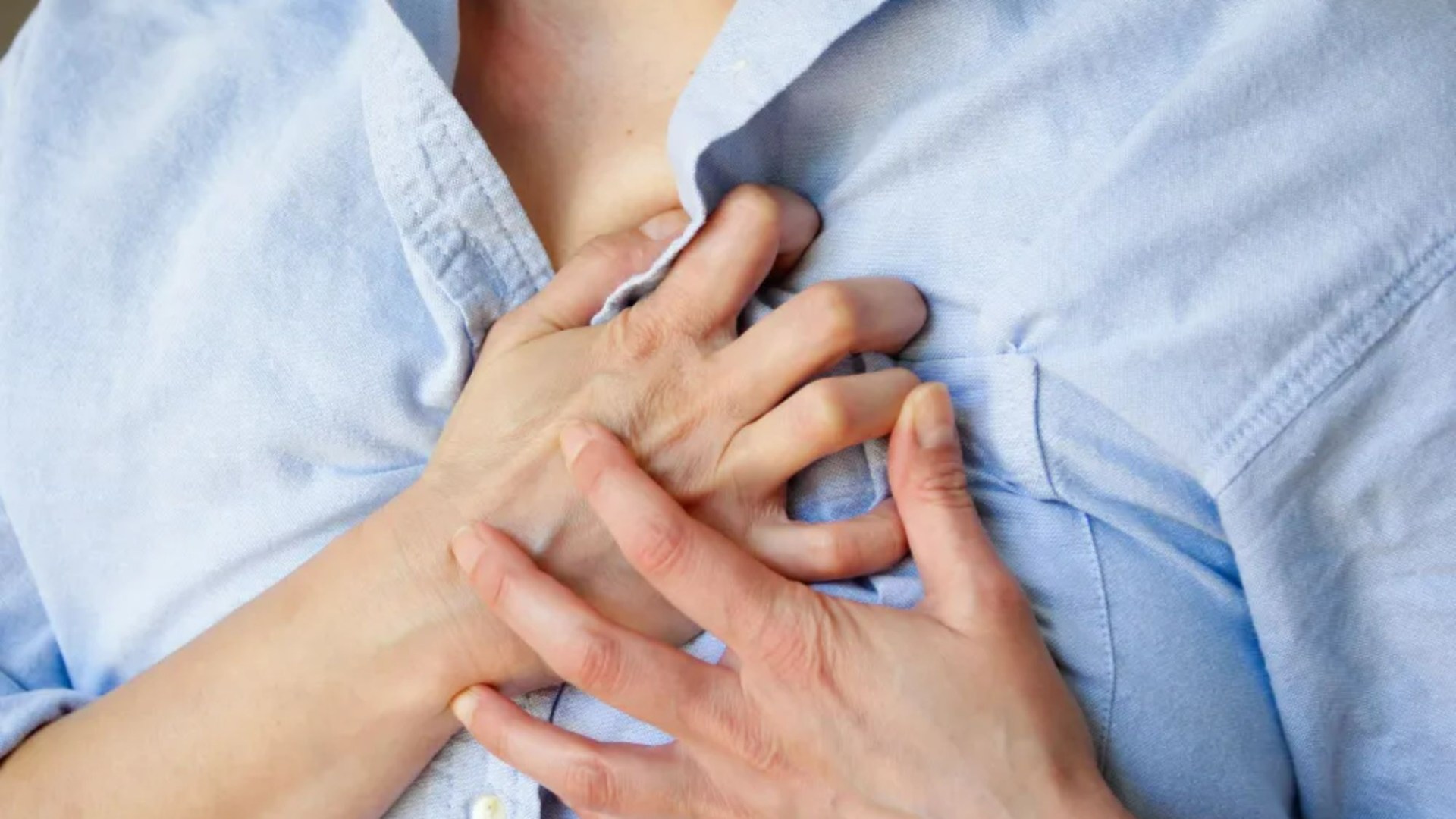
- Chest pain – a feeling of pressure, heaviness, tightness or squeezing across your chest
- Pain in other parts of the body – it can feel as if the pain is spreading from your chest to your arms (usually the left arm, but it can affect both arms), jaw, neck, back and tummy
- Feeling lightheaded or dizzy
- Sweating
- Shortness of breath
- Feeling sick (nausea) or being sick (vomiting)
- An overwhelming feeling of anxiety (similar to a panic attack)
- Coughing or wheezing
The chest pain is often severe, but some people may only experience minor pain, similar to indigestion.
While the most common symptom is chest pain, symptoms can vary from person to person. Some people may have other symptoms such as shortness of breath, feeling or being sick and back or jaw pain without any chest pain.
The study didn’t provide any information on whether the drug improves quality of life or reduces hospital stays.
The research team said further studies are needed in those areas.
Gout is a form of inflammatory arthritis caused by excessive uric acid in the blood.
It causes tiny, needle-like crystals to form in the joints, triggering inflammation that leads to pain, swelling, and redness – most commonly in the big toe.
If left untreated, it can lead to joint deformities, kidney stones and even heart disease.


In the UK there are around 100,000 hospital admissions each year due to heart attacks.
And another 100,000 people have strokes every year.