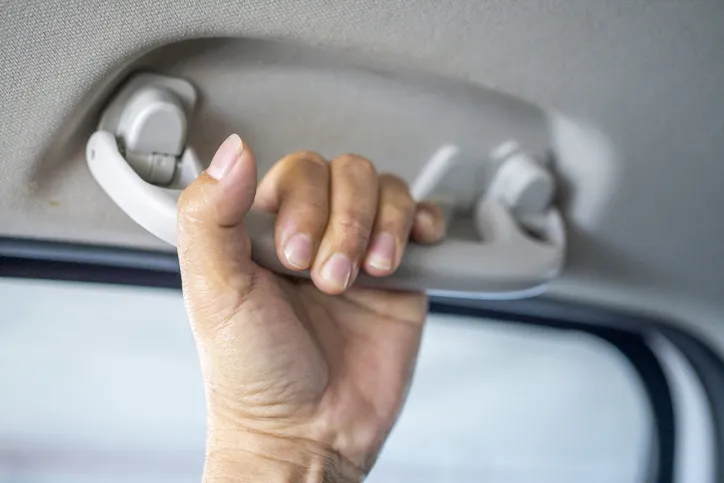
GRAB handles above the doors of cars aren’t just there so passengers can hang on through hairpin bends – as you may think.
In fact, their main job is to give stable support to people who need a bit more extra help getting in and out – such as wheelchair users, older passengers or anyone with reduced leg strength.
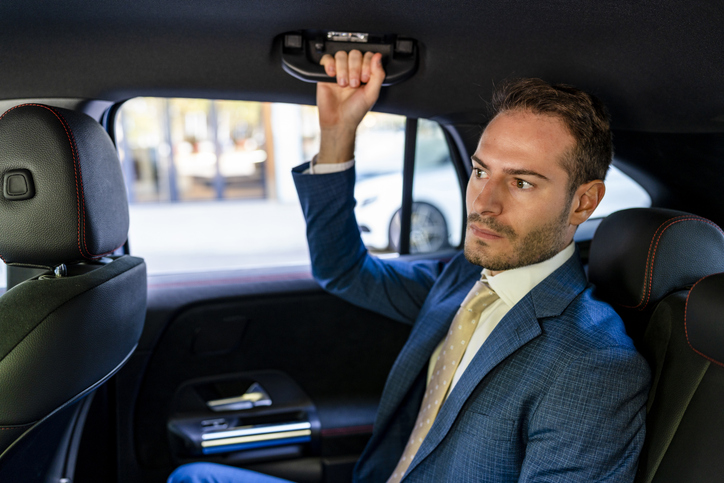

As cars.com reported, via Nottingham Live, they’re designed to make getting in, getting out and settling into the seat easier and safer.
In that sense, they’re closer to bathroom grab bars, offering leverage, balance and a solid point to hold while you move.
Positioned around shoulder height, they let you control your movement, take strain off your knees and hips and cut the risk of slips or awkward twists – whether you’re transferring from a wheelchair or climbing into a taller car.
They’re handy once you’re seated, too.


A quick steadying grip can help while you reach for the seat belt, adjust a cushion or settle your posture, without yanking on flimsy trim.
And in real-world situations, like tight parking spaces, high door sills, sloping driveways or when the door can’t open fully, they’re a small but genuinely useful bit of design that makes everyday motoring easier.
This perhaps even explains why a grab handle can be found on the drivers’ side.
Drivers are also releasing the secret behind the black dots around the edge of the windscreen.
That dotted band – known as the “frit” – is more than a decorative border.
It’s actually baked-on black enamel that gives the adhesive something to grip, shields the urethane sealant from UV light and hides the glue line so the screen looks neat.
The solid black strip also heats up faster than the surrounding glass, which can warp your view and make straight lines look bowed.
So, the dots create a gentle fade from solid black to clear glass, spreading heat more evenly and cutting down on optical distortion.
Experts at Autoglaze explained: “The black dots, or dot matrix, actually help distribute temperature evenly to lessen optical distortion.
“This happens when the frit band (the solid black one) heats up much faster than the windscreen’s glass, creating an optical distortion that makes either straight lines look curved or bowed inwards toward the centre.
“Those ‘gradually sinking’ black dots help lessen this phenomenon by dissipating the heat and spreading it out evenly.”