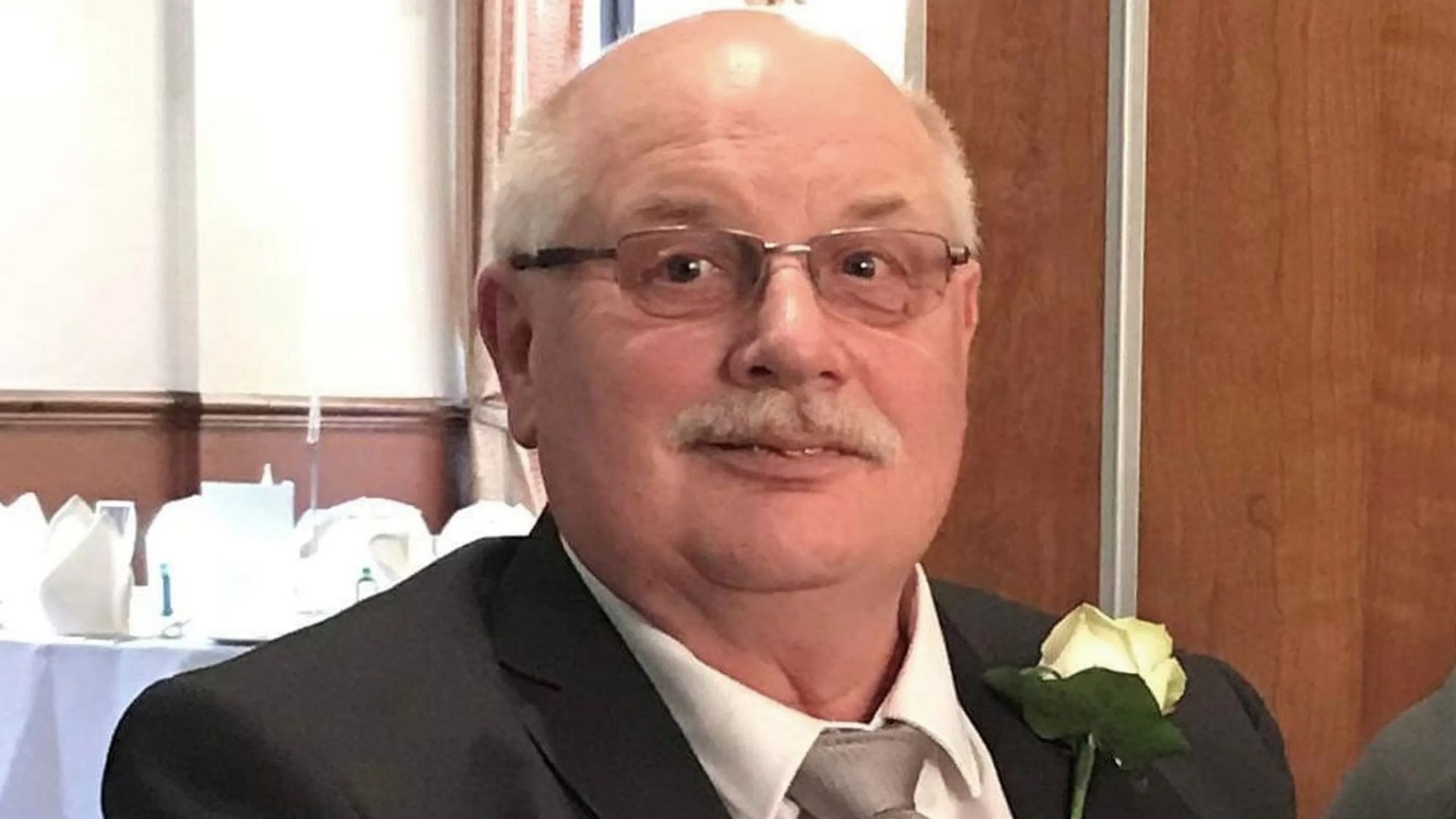
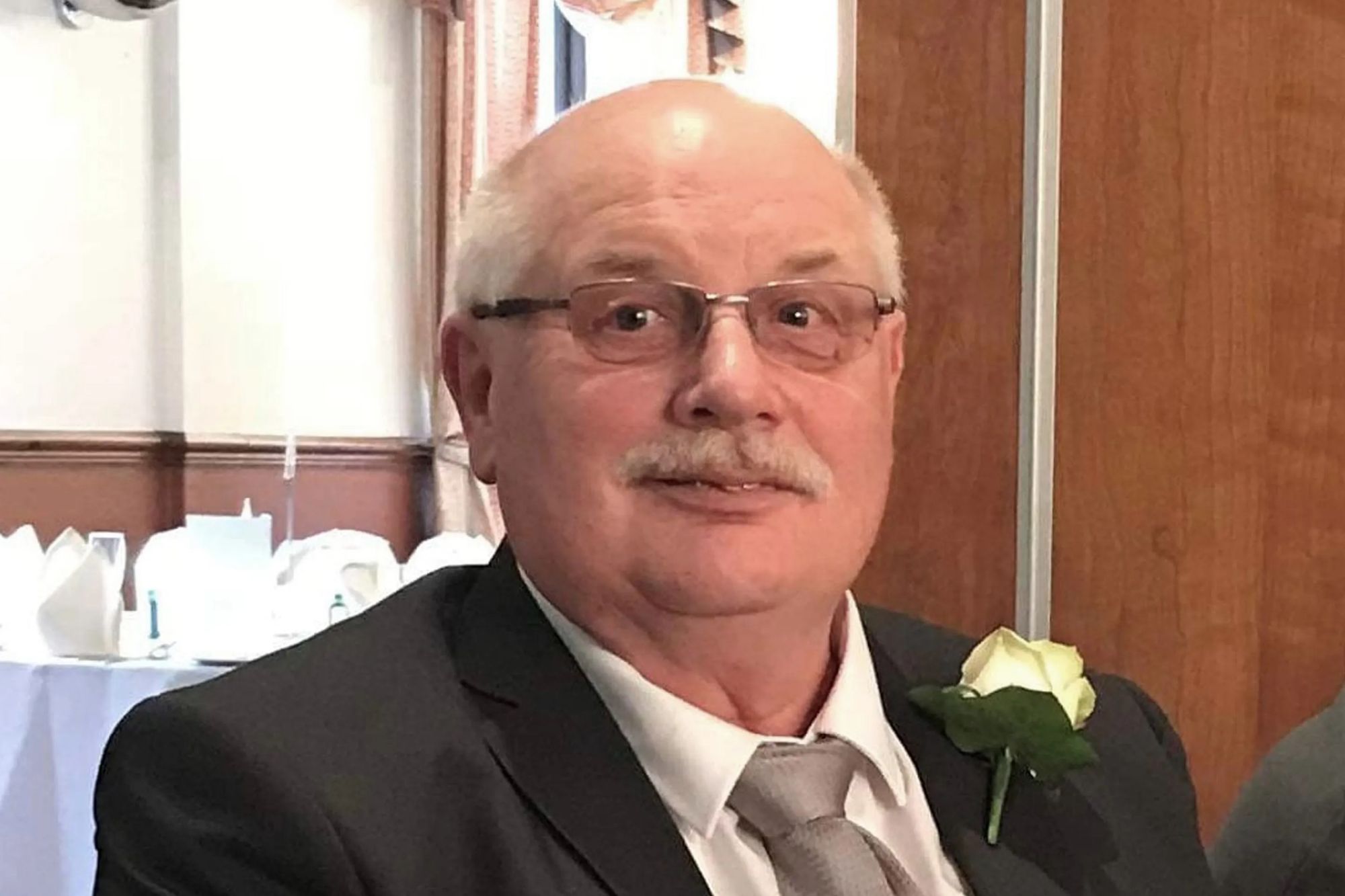
A DOG walker who was brutally knifed to death “fought with everything he had”, his heartbroken family said.
Paramedics found Roger Leadbeater with 57 stab wounds and 19 incisions after the “barbaric” attack in Shortbrook Park, Sheffield.
The 74-year-old had been walking his dog, Max, when Emma Borowy, 32, killed him on August 9, 2023.
Mr Leadbeater, who drove children with special needs to school, was tragically pronounced dead at the scene.
An inquest heard mum-of-one Borowy was an artist from Bolton who had been diagnosed with schizophrenia.
She regularly used cannabis and refused anti-psychotic medication due to the side-effects.


Borowy told cops she killed Mr Leadbeater as a “ritual sacrifice” and the devil had tricked her into believing she had to.
The 32-year-old also thought she was an alien and extra-terrestrial beings could talk to her through crystals.
An inquest heard Borowy had managed to abscond a mental health facility in Greater Manchester just two days before the horror.
Mr Leadbeater’s family said he was failed “on every level” by the police and mental health bosses, as reported by Yorkshire Live.
In a statement outside court Angela Hector, the victim’s niece said: “On 9 August 2023, our lives were shattered forever.
“Roger was brutally attacked by a stranger while walking his beloved dog, Max. What happened that night was not just violence, it was barbaric beyond comprehension.
“He was stabbed through his eye, his skull, his body torn apart. The only organ left intact was his heart.
“He fought with everything he had. Defensive wounds covered his hands, arms, and legs but Emma Borowy kept going, even as Roger lay dying, trying desperately to crawl away.
“This is like a horror film you cannot switch off. Except this is real. And it was Roger. Our Roger. The nightmares never end.”
Sheffield Coroner’s Court heard Borowy was diagnosed with paranoid schizophrenia.
The inquest was told a period of escorted leave had been granted due to miscommunication between police forces.
Senior coroner Tanyka Rawden told the hearing Borowy had escaped her ward nine times and, attempted to abscond 15 times, and failed to return from leave three times.
Despite this, Borowy was still granted permission for two days of escorted leave when Greater Manchester Mental Health NHS Foundation Trust failed to conduct an accurate risk assessment.
The coroner said it was “likely” a full assessment would have ruled the 32-year-old was too high risk and not allowed leave.
Just five days before the murder, Borowy had absconded from an escorted leave and threatened to kill a friend who lived in South Yorkshire.
The woman called South Yorkshire Police scared for her safety and said: “Emma gets angry easily and wants to murder people.”
Officers found her and completed a vulnerable adult form in which Borowy was described as “delusional” and “suicidal”.
The paperwork also reported she had been talking about hurting people.
However, this document was never passed on to the mental hospital in Greater Manchester.
Borowy’s care was transferred to a new psychiatrist consultant Dr Dilraj Sohi three days later.
The psychiatrist granted a period of escorted leave, without meeting with Borowy, and with an unsuitable risk assessment.
The incorrect assessment even wrongly claimed there was no evidence Borowy had been known to carry weapons.
In fact, Borowy had been sectioned under the Mental Health Act since October 2022 after she killed two goats with a knife, the inquest heard.
Borowy also repeatedly physically assaulted staff, took drugs, and claimed Lucifer told her to harm and kill animals and people, the coroner was told.
A multi-disciplinary team meeting, during which Borowy could have been properly assessed, was set for the following day.
Coroner Ms Rawden ruled it wasn’t reasonable to sanction leave before this meeting.
Ms Rawden also slammed South Yorkshire Police and Greater Manchester Police for their failure to properly communicate with each other.
Borowy died in custody of suspected suicide in December 2023 after being charged with Mr Leadbeater’s murder.
Ms Rawden is set to publish a Prevention of Future Deaths report about both forces, writing to the Home Office, the College of Policing, the National Police Chiefs’ Council, and the Association of Police and Crime Commissioners.
Addressing the police forces and the mental health trust, Mr Leadbeater’s niece Ms Hector said: “Emma Borowy put her trust in you to keep her safe and well. The public put their trust in you to protect us. You all failed on every level. You failed Roger. You failed us.
“To everyone involved in Emma’s care, whether from a health or policing perspective, I ask you to walk in our shoes for just one day.
“Feel what it’s like to live with the consequences of your decisions. I am certain you would think twice before granting leave, before withholding vital information, before ignoring clear warnings.
“Roger will never come home. That outcome cannot change. But you must make sure no other family suffers this devastation.
“You must make sure lessons are learned. You must make sure that, for once, accountability leads to effective action. That is the only justice left for Roger and the only way to honour his memory.”
Detective Chief Superintendent Laura Koscikiewicz, head of crime at South Yorkshire Police, said: “We fully accept the learning opportunities highlighted during the inquest and that changes should have been made sooner around the handover of missing people to other agencies, to ensure key information is passed on.
“We are sorry that these processes were not in place at the time and we are committed to delivering continuous improvement around missing people investigations to ensure this does not happen again.”
How to get help
EVERY 90 minutes in the UK a life is lost to suicide
It doesn’t discriminate, touching the lives of people in every corner of society – from the homeless and unemployed to builders and doctors, reality stars and footballers.
It’s the biggest killer of people under the age of 35, more deadly than cancer and car crashes.
And men are three times more likely to take their own life than women.
Yet it’s rarely spoken of, a taboo that threatens to continue its deadly rampage unless we all stop and take notice, now.
If you, or anyone you know, needs help dealing with mental health problems, the following organisations provide support: