A dog that vanished after the Spanish train disaster has been found and reunited with his owner.
Ana Garcia Aranda, 26, was among the more than 150 people injured alongside her pregnant sister in the high-speed train collision in Adamuz, southern Spain, on Sunday.
For reasons that remain unclear, the tail of their train car jumped the rails and smashed into another train – killing 45. Ms Garcia and her sister were helped by rescue crews out of the tilted train car, where she last saw her dog, Boro, before he bolted.
Ms Garcia made pleas to find her missing pet, telling a local broadcaster with bandages on her face how she and her sister had been returning to the capital, Madrid, after visiting family for the weekend in Malaga.
‘Please, if you can help, look for the animals,’ a limping García told reporters at the time, choked up and holding back tears.
‘We were coming back from a family weekend with the little dog, who’s family, too.’
Photos of Boro, a medium-sized black dog with white eyebrows, went viral alongside phone numbers for García and her family, and Spanish television broadcasters and newspapers covered the search.
On Thursday, a miracle happened – forest firefighters in southern Spain found the beloved pooch, and posted images of Ms García with one leg in a brace hugging Boro.
She smiled as she told reporters: ‘Many thanks to all of Spain and everyone who has got involved so much. It gave me great hope and we’ve done it.
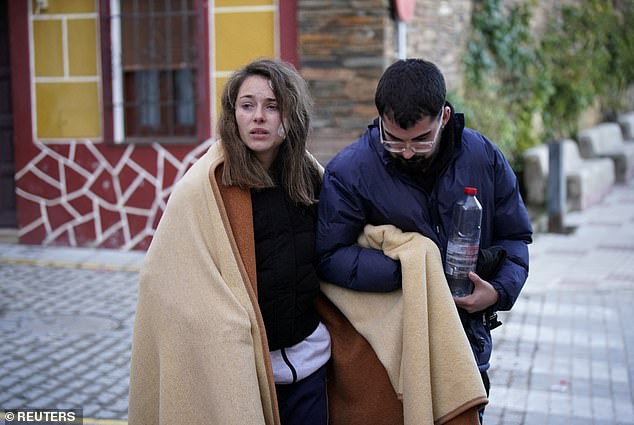
Ana Garcia Aranda, pictured on Monday, made a desperate plea for help to find her dog who vanished during Sunday’s train crash – which left her hurt
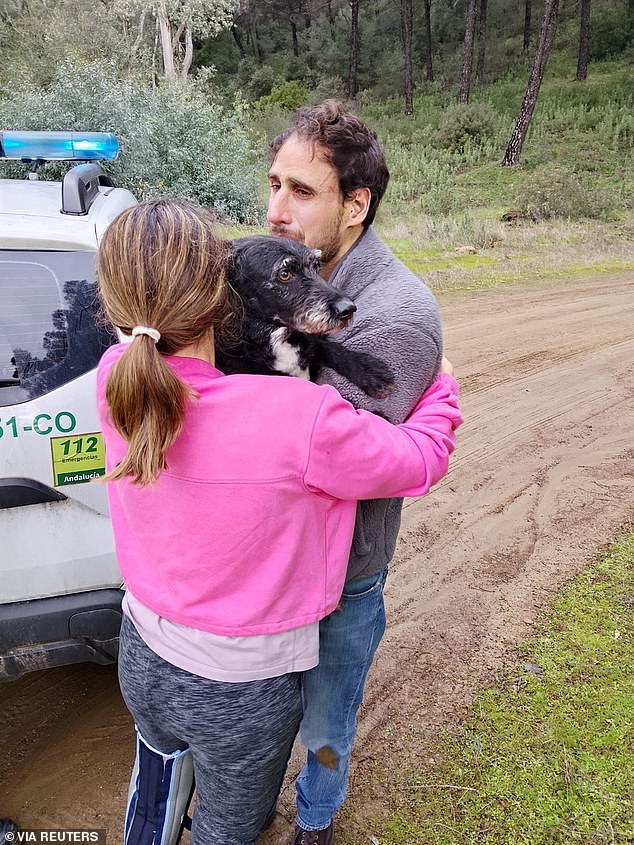
Ana Garcia Aranda embraces Boro, her beloved pooch, after he was found on Sunday
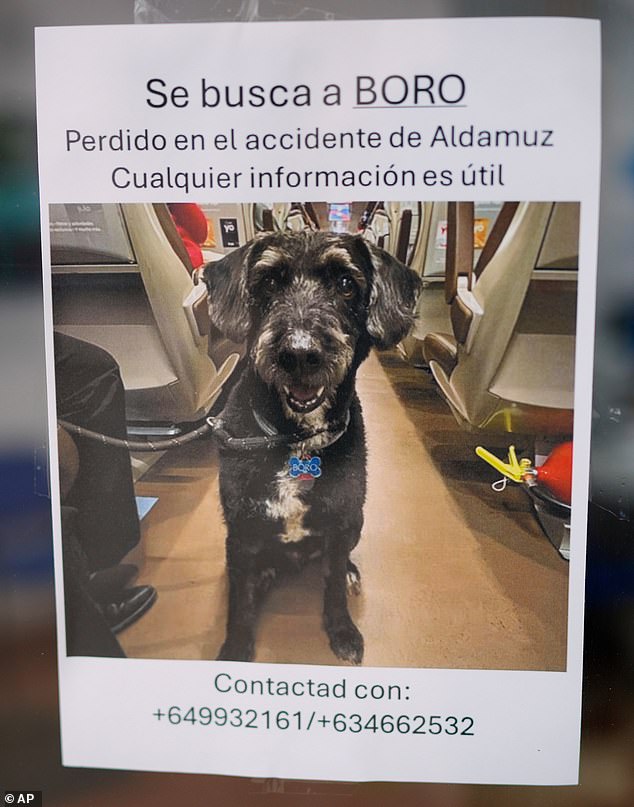
Photos of Boro went viral alongside phone numbers for Garcia and her family, and Spanish television broadcasters and newspapers covered the search
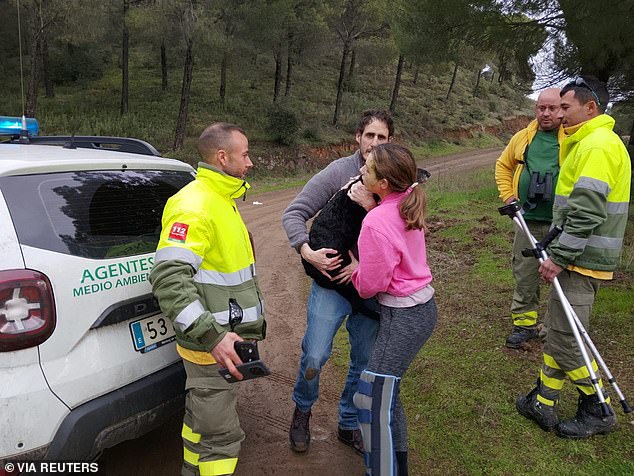
Forest firefighters hand over the missing pooch to Ms Garcia, still injured and in a brace after surviving the crash
‘Now we have him and we have him for all our life. Now let’s go home, buddy.’
The search for Boro appeared to provide Spaniards something to hope for amid the week’s tragedy, and ultimately something to celebrate.
Spain’s worst rail accident in more than a decade has sent shockwaves across the world – worsened by a third train collision today as a commuter service slammed into a crane on Thursday, leaving at least six people injured.
The midday crash took place near Alumbres, Cartagena, in southern Spain, and although the cause of the collision has not yet been determined, it is believed the FEVE-operated train struck a crane while on its journey.
It follows two bodies being found on Thursday from the wreckage of the high-speed train collision on January 18, which took the death toll to 45.
Spain observed three days of national mourning after Sunday’s collision in the southern region of Andalusia.
An Andalusia emergency services spokesman told AFP two bodies had been recovered from the train operated by state company Renfe, which smashed into another service by private firm Iryo that had derailed and crossed onto its track.
‘In theory, they are the two people’ yet to be recovered from a total of 45 reported as missing following the disaster, which also injured more than 120, the spokesman said.
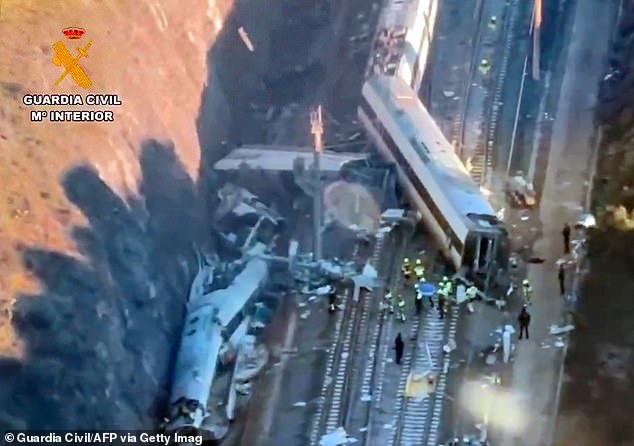
Emergency workers are seen at the site where a high-speed Iryo train derailed and was hit by another train in Adamuz, southern Spain, on January 19. 45 people have now been confirmed dead
Rescuers found the two bodies after conducting a ‘more thorough’ search of two carriages that ‘were in a severely deteriorated condition’, the head of the Civil Guard’s investigative unit, Fernando Dominguez, told a news conference.
Of those 45 people, all are Spanish apart from three women from Morocco, Russia and Germany, according to the latest update from a body set up to coordinate the identification work.
Spain is searching for answers to what the transport minister has called an ‘extremely strange’ disaster, which happened on a recently renovated stretch of straight, flat track and involved a modern Iryo train.
The back-to-back rail accidents just days apart have raised doubts about the safety of train travel in the European Union’s fourth-largest economy, a top tourist destination boasting the world’s second-largest high-speed network.