HEARING the word ‘dementia’, my body froze. I tried to focus on what the doctor was saying, but all I wanted to do was weep.
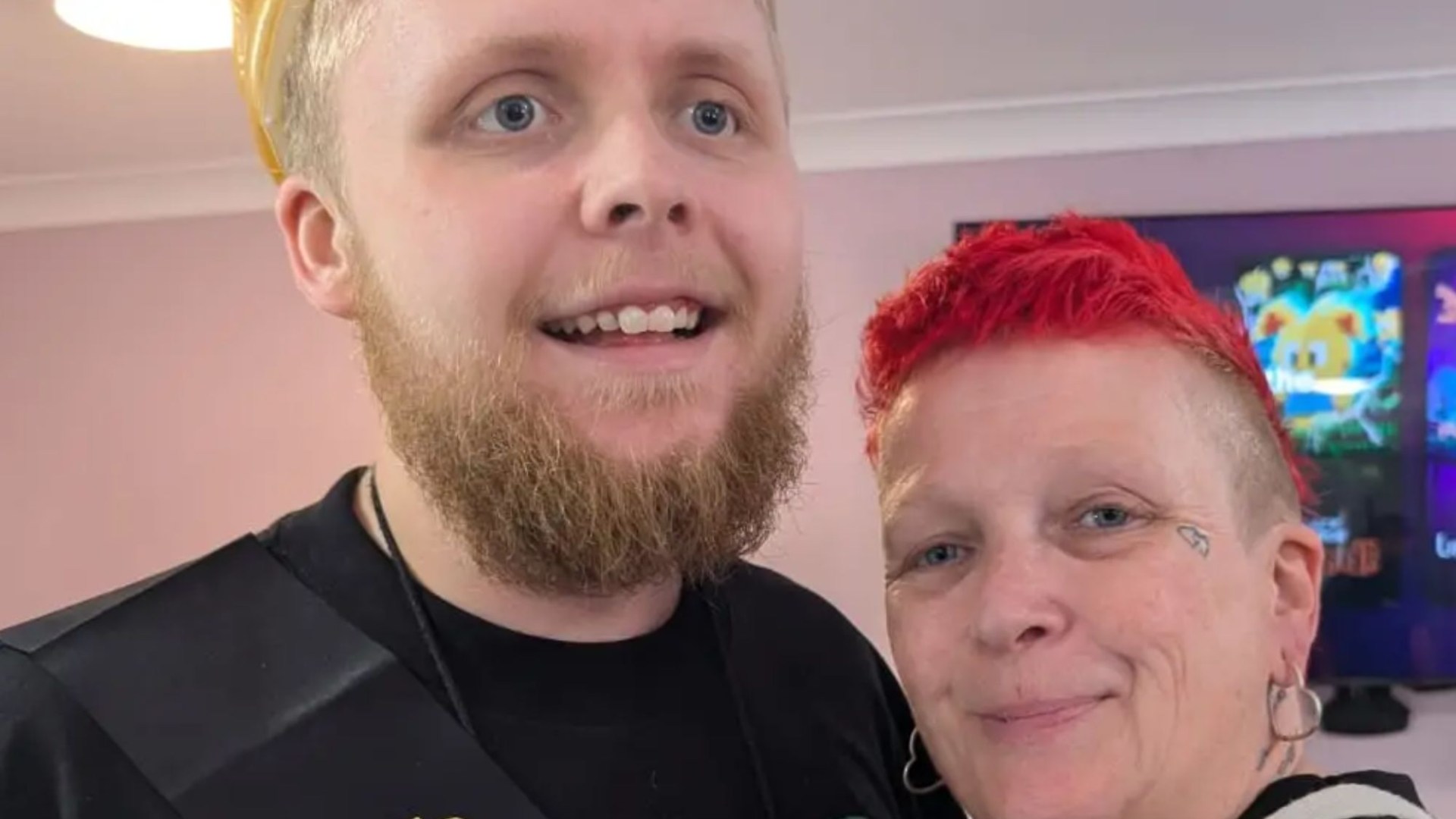
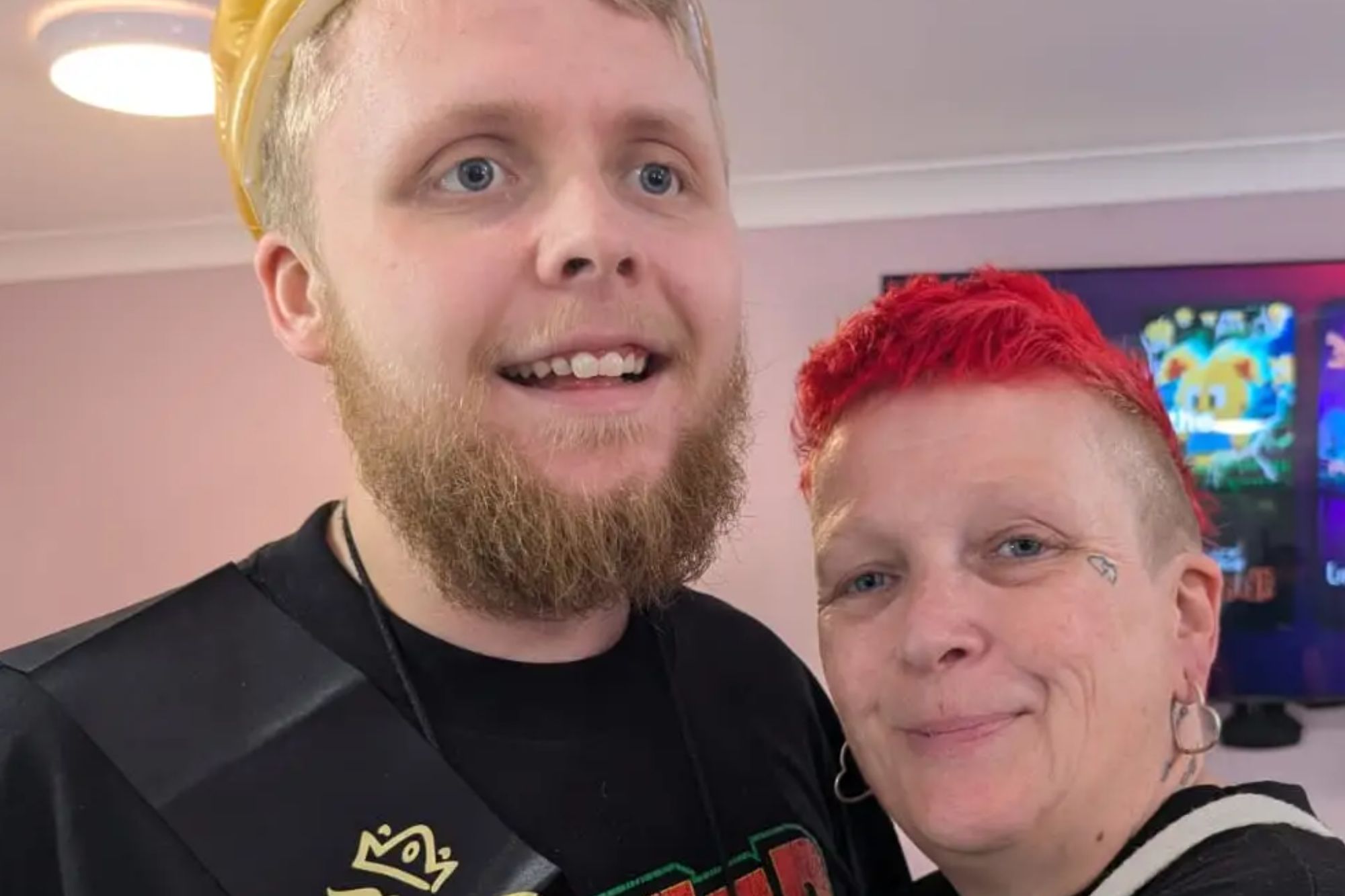
However, I wasn’t in the consultant’s room to discuss an elderly parent. The doctor was talking about my 22-year-old son Andre.
Andre was lovely, cheeky and full of mischief. He was close to his brother Tyler, who was a year younger, and was definitely a mummy’s boy.
He struggled with his learning at school and left before GCSEs, so I was really proud when he got a job at a car factory.
I was a single mum for most of his childhood, then met my husband Alastair at work in 2020, when Andre was 19. Andre and Tyler gave me away when I married Alastair in November 2022. It was that day that I first noticed Andre, then 21, wasn’t himself.
‘Lovely, cheeky and full of mischief’
He seemed withdrawn and left the reception early. I assumed he was tired, but within weeks he started adding repetitive words like ‘then’ to the end of every sentence. Plus, whenever I asked him to do something, he’d look at me as if he didn’t understand.
I’d worked with people who had learning disabilities in the past, and I wondered if Andre could be autistic, and this could explain his behaviour.
So, in June 2023, I took him to the GP to find out. After being referred, Andre was diagnosed with autism three months later. But my intuition told me that didn’t explain everything.
Andre was forgetting more words, and he’d go to the shop then not know what he’d gone for. He’d open endless cans of cola and forget about them, leaving 20 half-full cans around the house.
He’d try to make himself dinner, but put himself in danger by placing a can of soup in the microwave. I gave up my job to care for him, then that August, I was rushed to hospital with a suspected stroke, which turned out to be stress.
In October 2023, the consultant told us if he hadn’t known Andre’s age, he’d have thought he was looking at the test results of a 70 year old with dementia.
I took Andre back to the GP, who referred him for an MRI scan. He didn’t understand that anything was wrong, which was frightening.
I was stunned into silence. How could this possibly be happening to my boy?
While waiting four months to see a specialist, Andre began having toilet accidents.
In February 2024, during a cognitive test, he confused a crocodile with a dog, and instead of drawing a triangle, he did a squiggle.
A wave of sadness crashed over me. The doctor said Andre would need a blood test to find out which kind he had, but the diagnosis was clear – he had dementia.
What is young-onset dementia?
YOUNG or early-onset dementia usually describes symptoms of the brain-robbing disease that strike before the age of 65.
The likelihood of developing dementia increases significantly with age, with over 900,000 Brits living with the condition.
When a person develops dementia before the age of 65, this is known as ‘young-onset dementia’.
Over 70,800 people in the UK have young-onset dementia, according to Alzheimer’s Society.
According to the charity:
- A wider range of diseases cause young-onset dementia
- A younger person is much more likely to have a rarer form of dementia
- Younger people with dementia are less likely to have memory loss as one of their first symptoms
- Young-onset dementia is more likely to cause problems with movement, walking, co-ordination or balance
- Young-onset dementia is more likely to be inherited – this affects up to 10 per cent of younger people with dementia
- Many younger people with dementia don’t have any other serious or long-term health conditions
According to Dementia UK, disease affecting the frontal and temporal lobes of the brain are more common in younger people, so it is more likely that the early symptoms may include changes in:
- Personality
- Behaviour
- Language
- Social functioning
- Relationships with others
- Activities of everyday living
- Motivation
- Mood, such as depression, anxiety
- Concentration levels
- Decision making and problem solving
- Vision and spatial awareness
I knew there was no treatment, but the speed with which Andre deteriorated meant there wasn’t time for grief. Soon, he couldn’t talk, he just made noises. He couldn’t be left alone, as he would just wander off, and he paced around the house from morning till night.
He received his formal diagnosis of frontotemporal dementia in June 2024, just before his 23rd birthday. The cause was genetic – a mutation in the MAPT gene. But this meant nothing to him.
He even fist-bumped the doctor, which made me laugh through my tears.
When the doctor gently asked if, when the time came, we’d consider donating his brain, I instantly said yes. If there was anything we could do to aid research, we’d do it.
Last September, Andre moved into a care home. It was heartbreaking, but by then he was struggling to stand. Within a month, he was in a wheelchair.
On December 27, he passed away in his sleep. A nurse called at 5.50am to say he was gone. In anguish, I screamed out that I wasn’t there for him. It was devastating, but I knew he was finally free from pain.
Now, I want to start a foundation to help other families. When I think of Andre, I see his huge smile. He will always be in my heart.