
“Diversity is our strength” is a slogan that has been repeated to the point of being a cliché. Nowadays, even Sadiq Khan has the self-awareness to put the sentiment into different words.
Of course, there can be truth to it. Institutions should contain a variety of perspectives if they are going to be dynamic and accountable. But it is not something which is necessarily true.
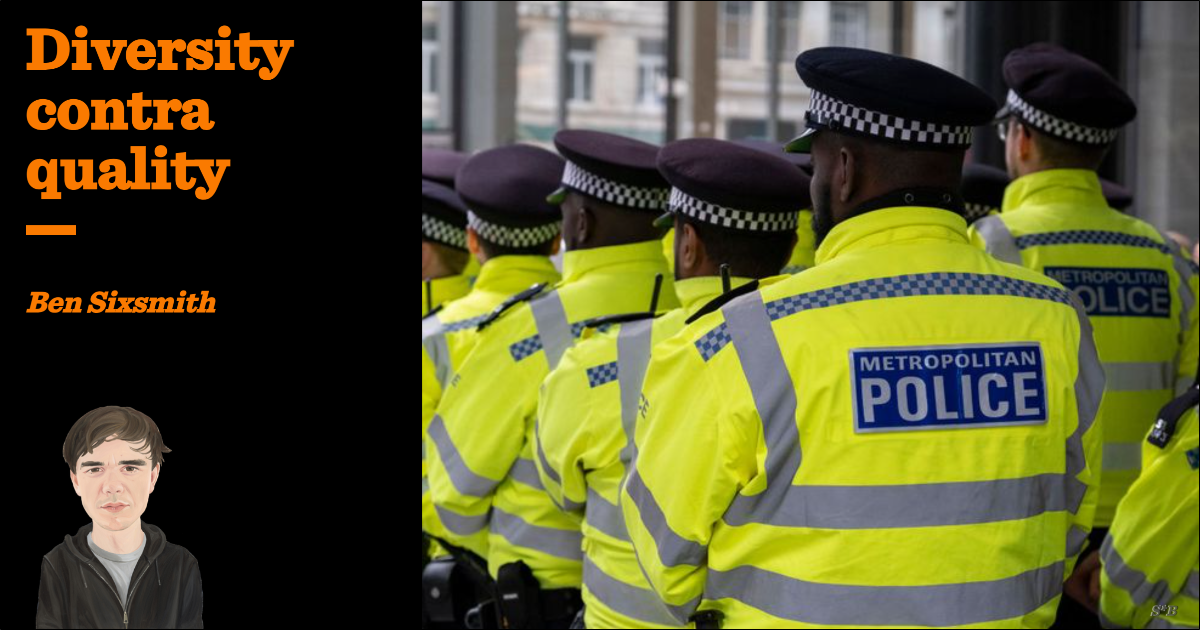
“Met hired child rape suspect in diversity drive” is the sort of headline which sounds like it was manufactured by a right-wing satirist — plucked, perhaps, from the pages of Richard Littlejohn’s To Hell in a Handcard. Alas, like many things, it actually happened.
According to a recent report, in 2018 the Metropolitan Police established a “Vetting Panel” designed to “consider applicants, particularly from underrepresented groups, who had been denied vetting clearances”. This, according to the report, was in line with “ambitions to have a workforce which was more representative of London’s communities”, and stemmed from a “well-meaning intent to respond to known disproportionality in vetting decisions”.
Alas, as the report delicately says, in some cases “the panel overturned the decision of vetting officers despite adverse intelligence existing”. More specifically, it seems that out of the 114 people whose denials vetting clearances had been overturned, 25 people — more than 1 in 5 — have gone on to commit misconduct or criminal offences.
Their number includes Cliff Mitchell. Mitchell was recruited despite facing an allegation that he had raped a child. The Telegraph reports that he was later convicted on 13 counts of rape, including six against a child. Mitchell kidnapped and raped one of his victims while armed with a knife, the BBC reported in 2024, and warned her “no-one would believe her if she said anything because he was a police officer”.
Of course, it would be farcical to write as if the Metropolitan Police had hitherto been made up entirely of good-hearted, law-abiding citizens. Bad cops did not emerge as a phenomenon in 2018. The Met had contained the likes of David Carrick, a serial rapist who had stayed with the force despite multiple complaints, and Wayne Couzens, who brutally assaulted and killed Sarah Everard.
What makes the hiring of men like Mitchell especially eccentric is that vetting checks were not simply inadequate. They were deliberately lowered. That “well-meaning intent to respond to known disproportionality in vetting decisions” stemmed from the idea that if police hires did not reflect what was deemed to be an appropriate demographic mix, that had to reflect problems with hiring procedures and not the quality of the applicants.
In 2020, Cressida Dick, then Met Commissioner, insisted that 40 per cent of new recruits had to be from ethnic minorities. But what if people from ethnic minorities did not make up 40 per cent (or more) of the high-quality applicants? Well, just hire low quality applicants I suppose — even if they include people who were alleged to have raped a child.
This is by no means a lone example of diversity being emphasised above quality in hiring. In 2019, West Midlands Fire and Rescue Service was accused of setting the threshold in its language and numerical tests higher for white males than for women and members of ethnic minorities. (I’m sure it would have comforted people who were burning to death to know that diverse firefighters were tackling the blaze.) This year, NHS trusts have been accused of fast-tracking members of ethnic minorities to top jobs.
I doubt that many people would object to the lowering of unreasonable barriers in front of applicants, if such barriers existed. But these cases are not examples of barriers being lowered but of people being given a head start. The assumption is that in a just system, the demographic make-up of applicants for a job would reflect the demographics of a nation, but this assumes that there are no pre-existing disparities in terms of preferences and talents.
More “diverse” recruits are not necessarily better
This might sometimes sound like a rather abstract complaint. In reality, it means that a man who had been rejected a potential recruit for the Met on the basis of an accusation of raping a child could be hired and go on to commit multiple rapes and use his employment as a means of intimidating a victim.
Again, I know the Met had hired a lot of criminals before. But that wasn’t an excuse to hire criminals wokely. More “diverse” recruits are not necessarily better.